Most AI engines read a snapshot of the web. Grok reads the live feed.
That one difference drives everything about Grok SEO. Grok is xAI's assistant built into X, and it answers by pulling from the live X post graph and the open web at the same time, then citing what it used. It reached roughly 117 million monthly active users by March 2026 per SpaceX's IPO filing, which makes getting cited there a real channel, not a curiosity.
This guide covers how Grok decides what to cite, how to earn those citations, why your X account is a ranking input, how Grok differs from ChatGPT, and how to measure your Grok visibility when the answers keep moving.
Is Grok big enough to optimize for?
Yes, and the usual traffic charts understate it. Grok took roughly 17.8% of the US chatbot app market by January 2026 per Reuters and Apptopia data, behind ChatGPT at 52.9% and Gemini at 29.4%. A year earlier its share was under 2%.
Here is the part most analyses miss. Similarweb data puts Grok's web-visit share much lower, around 3.4%, because most Grok use happens inside X rather than on a standalone site, so web-only metrics undercount it badly. The audience is bigger than the browser numbers suggest, and it is native to a platform your competitors may be ignoring.
How does Grok decide what to cite?
Grok retrieves from two pools at once, the live X post graph and the open web, scores what it finds for relevance and recency, then writes an answer that attributes claims back to specific pages or posts. Its developer API exposes this directly: results come back with a citations list on the response object. Grok is a retrieval engine with receipts, not a closed model guessing.
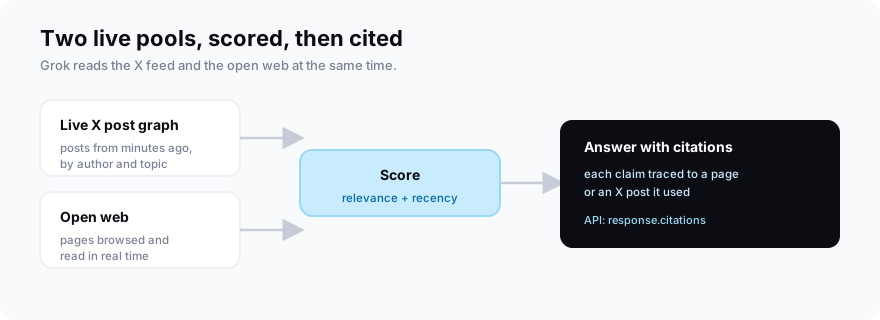
Recency is the lever that sets Grok apart. It can cite an X post published minutes ago, and the same prompt run an hour apart can return a substantially different set of citations. For breaking topics Grok leans on X and news; for evergreen ones it leans on authoritative web pages.
That has a direct consequence for you. On a fast-moving query, the freshest credible source often wins the citation, not the oldest and most linked one. Publishing and posting at the right moment is a real tactic on Grok in a way it never was on classic search.
Grok also has a heavier mode called DeepSearch, an agentic research process that queries and re-queries both pools and returns a longer cited report. DeepSearch runs on paid tiers, X Premium or SuperGrok, and it reads more sources per answer. The more thorough the mode, the more your depth and sourcing decide whether you survive into the final report.
Does Grok actually show its sources?
Sometimes. Grok attaches a visible citation list when it leans on live web or X data, but plenty of answers summarize from the model or from X context without surfacing your page as the named source. So there are two separate wins to track: being the source Grok pulls from, and being the source Grok shows. You can have the first without the second.
This is the same mention-versus-citation split we cover for other engines. A mention is your brand named in the answer text. A citation is your URL listed as a source the answer drew from.
The practical implication is that you cannot judge Grok by what you see on screen. Being pulled but not shown is invisible to a human spot-check, and only surfaces when you inspect the citations the API returns. That gap is the whole case for measuring Grok programmatically instead of eyeballing a few answers.
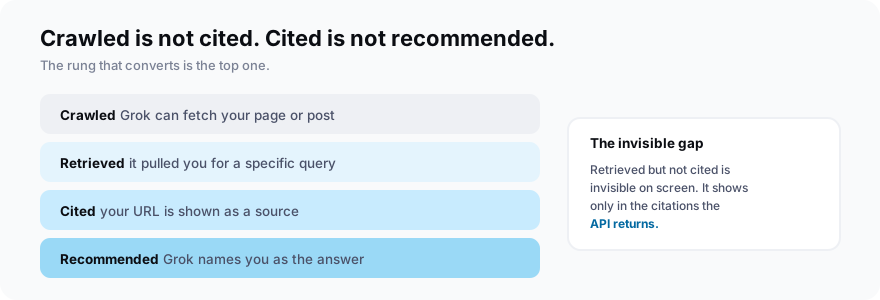
The one that pays is recommended: Grok naming you as the answer, not just listing you in a footnote. Getting there means being the clearest, most trusted answer on the question, which is what the next section is about. For the ChatGPT version of this same idea, see our guide to checking ChatGPT mentions.
How do you get cited by Grok?
You get cited by being the clearest, best-sourced, most recent answer to a real buyer question. Lead each page with a direct answer a model can lift, back it with named statistics and sources, and keep it fresh. This is not Grok folklore. It is what the controlled research on AI citations keeps finding.
The Princeton team behind the original Generative Engine Optimization study (KDD 2024) tested nine content changes and found the biggest visibility gains, on the order of 30 to 40%, came from adding verifiable statistics, credible quotations, and citing your sources. Fluency and clarity edits helped less. Authority signals helped most.
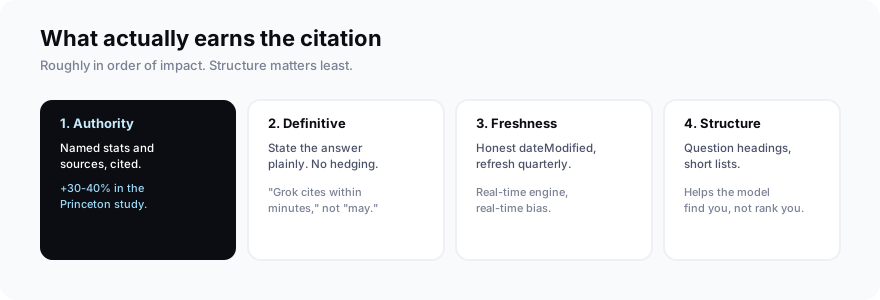
Write in definitive language, not hedged language. A separate 2026 study, What Gets Cited: Competitive GEO in AI Answer Engines, found that confident, plainly-stated claims were favored for citation across the models it tested. It did not test Grok directly, so treat it as a strong signal rather than a Grok law, but it points the same way: say "Grok cites X posts within minutes" rather than "Grok may sometimes cite recent posts."
Then structure for extraction, lightly. Question-form headings and short lists make a self-contained answer easy to lift. The caveat from that same study is that formatting alone did little, so headings help the model find your answer, but they do not substitute for having a better-sourced answer than the competitor above you.
Freshness is not a vague virtue here. Put an honest dateModified in your Article schema and refresh your highest-intent pages on a real cadence, quarterly at least, with new data and examples. On a real-time engine, a page that has not moved in two years reads as stale even when the facts still hold.
Point all of this at the questions your buyers actually ask Grok, not your brand name. Category comparisons, definitional answers, and use-case questions are where a citation turns into a customer. Win a handful of those decisively before you chase the long tail.
Grok does not reward the page that looks the most optimized. It rewards the freshest credible source that states the answer plainly.The one-line rule
Does your X presence affect Grok citations?
Yes, and this is what makes Grok different from every other engine. Grok has a dedicated X Search tool that runs keyword, semantic, and user search across the live post graph, so a credible account posting on your topic is a direct retrieval input. Your owned social channel is not marketing around the ranking. On Grok, it is part of the ranking.
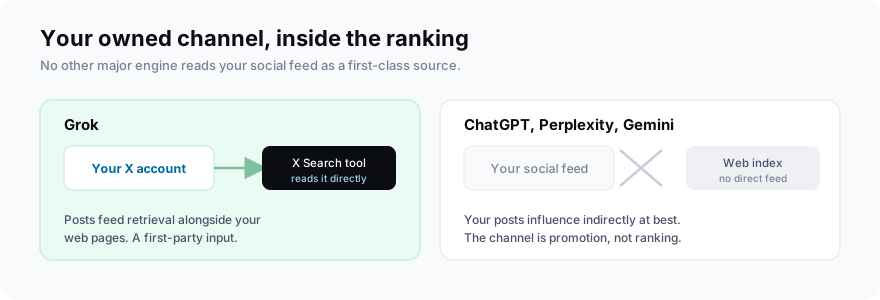
The practical move is to treat your X account like a publishing surface, not a billboard. Post clear, factual takes on the questions your buyers ask, from an account with a real profile and history, because on Grok the poster can matter as much as the post.
Concretely, that means a complete bio that states what you do, a consistent topic focus so the account reads as a subject-matter source, and posts that make a claim and cite a number rather than chase engagement. An account that reliably answers your category's questions in public is exactly what the X Search tool is built to surface.
One honest caveat. Because Grok favors X and the open web, the Reddit-and-forum work that lifts you in Perplexity matters less here. Grok visibility is won more on X and on your own well-sourced pages than in community threads.
How is getting cited in Grok different from ChatGPT?
Grok is real-time and X-native; ChatGPT is index-based and web-only. Grok can cite a post from minutes ago and shuffles its sources hour to hour, while ChatGPT reads a Bing-backed index that moves more slowly and never reads your X feed as a first-class source. The tactics diverge because the plumbing diverges.
| Factor | Grok | ChatGPT search |
|---|---|---|
| Primary sources | Live X posts + open web | Bing-backed web index |
| Recency | Minutes old, real-time | Days to weeks |
| Your X account | A direct ranking input | Not a first-class source |
| Same prompt twice | Different citations hour to hour | Largely stable |
| Crawl control | robots.txt unreliable | Honors GPTBot token |
| What wins | Freshness + authority + X | Authority + Bing visibility |
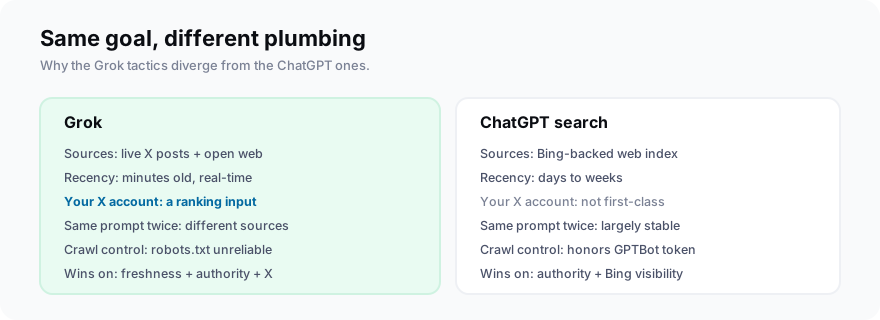
If you already run a ChatGPT playbook, keep it, because authority and clear answers help everywhere. Then add the two Grok-specific layers: publish and post with recency in mind, and build a credible X presence. Our ChatGPT SEO guide and Perplexity guide cover the other engines in the same series.
Can you block or control Grok's crawling?
Not the way you block other bots. xAI publishes crawler user-agent tokens, but its retrieval is widely reported to fetch with browser-like user agents that do not reliably honor robots.txt, so a disallow rule is not a dependable off switch. This is the opposite of a bot like GPTBot, which respects its token.
If you genuinely need to keep Grok out, server-level or WAF rules based on behavior are the only real lever, and blocking also removes you from Grok answers entirely. For most brands that is the wrong trade. We walk through the respectful-bot version of this decision in our GPTBot allow-or-block guide.
How do you measure your Grok share of voice?
You measure it by running a fixed set of buyer prompts through Grok on a schedule and recording, every run, which brands it cites and where you sit against competitors. One manual check is worthless here, because Grok is non-deterministic: the same prompt returns different citations an hour later. Only repeated runs reveal the trend.
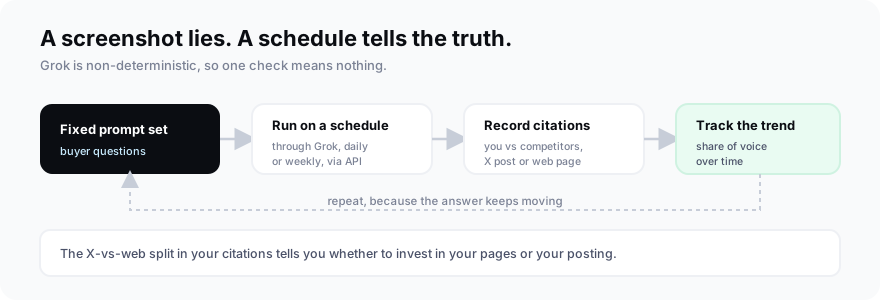
Log the same fields every run so the number is comparable: which brands were named, whether each was cited with a link or only mentioned, and whether the source was an X post or a web page. That last split is unique to Grok, and it tells you whether to invest in your pages or your posting.
Doing this by hand does not scale past a few prompts, and it cannot capture hour-to-hour drift at all. That is why teams query Grok through an API on a schedule and parse the citations automatically, the same way they track their AI share of voice across the other engines. It is also how you catch a competitor climbing before they take the slot for good, which is the point of monitoring competitor AI visibility.
Frequently asked questions
Does Grok cite sources?
How do you get cited by Grok?
Does being active on X help you rank in Grok?
How is getting cited in Grok different from ChatGPT?
Can you block Grok from crawling your site?
How do you measure your Grok visibility?
Win the freshest answer, then measure it
Do this next: pick your ten highest-intent buyer prompts, publish a clear, well-sourced answer to each, and post the same takes from a credible X account. That covers both pools Grok reads at once.
Then measure. Pull your Grok citations with MentionsAPI on a schedule, watch the trend against competitors, and keep your AI visibility fundamentals in order across every engine, not just the one that moves fastest.