Your competitor might be ChatGPT's default pick in your category right now.
Would you even know?
To monitor competitor visibility in AI search, you run the same category prompts across every AI engine, record which brands each answer names and cites, and track it over time as share of voice. This matters because 51% of B2B software buyers now start their research with an AI chatbot, according to G2 research. The brand the model names wins the shortlist before a buyer sees a single site.
Why monitor competitors in AI search?
Monitor competitors because AI now builds the shortlist. G2 found 51% of B2B software buyers start with an AI chatbot in 2026, and a multi-source analysis found 55% use AI to compare vendors head to head. If a rival is the name the model gives and you are not, you lose the deal before it starts.
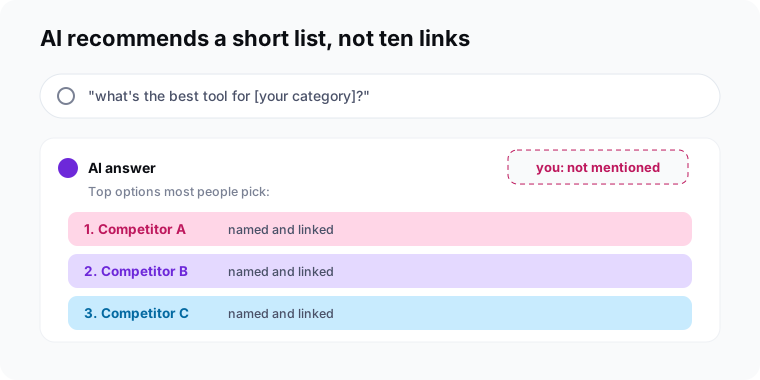
The buyer often never leaves the chat. About 94% of B2B buyers now use LLMs before they contact sales, per TestimonialStar. So the AI answer is the first impression, and sometimes the only one.
What does competitor AI monitoring reveal?
Competitor AI monitoring reveals four things: which competitors each engine recommends, how your share of voice compares, how favorably each brand is described, and how all of it shifts week to week. The average brand mention rate across category prompts is only 17.2%, per Digital Applied, so most brands are barely present and a focused rival stands out fast.
I keep seeing the same thing. A team assumes they are the category default, then the comparative run shows a rival named two or three times as often.
How do you track competitor mentions across every engine?
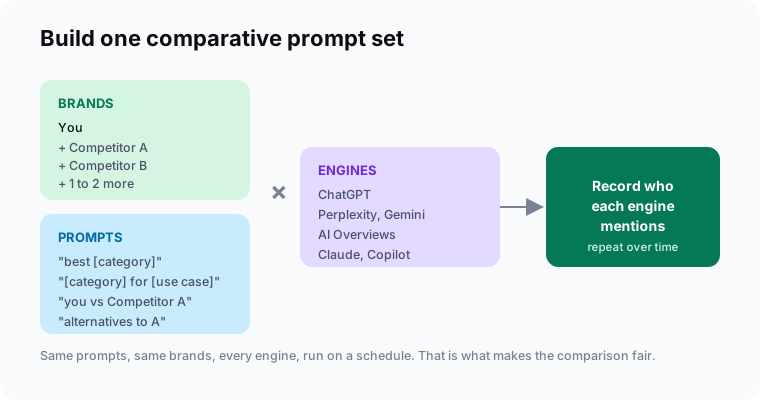
Build one comparative prompt set: your brand plus two to four competitors, your category and best-of prompts, run across every engine. Record who is mentioned, who is cited, and how favorably, then repeat on a schedule. Run every engine, because they barely agree. Averi found only 11% of cited domains overlap between ChatGPT and Perplexity.
The engines disagree more than most people expect. Across an analysis of 680 million citations, Averi and Whitehat SEO found only 11% of cited domains overlap between ChatGPT and Perplexity. ChatGPT leans on sources like Wikipedia (47.9% of citations), while Perplexity leans on Reddit (46.7%).
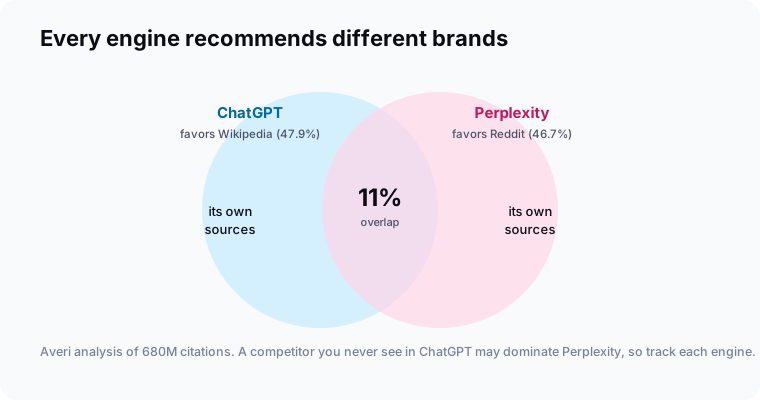
Only 11% of cited domains overlap between ChatGPT and Perplexity. Your competitor scoreboard is different on every engine.Why one engine is not enough
How do you benchmark share of voice?
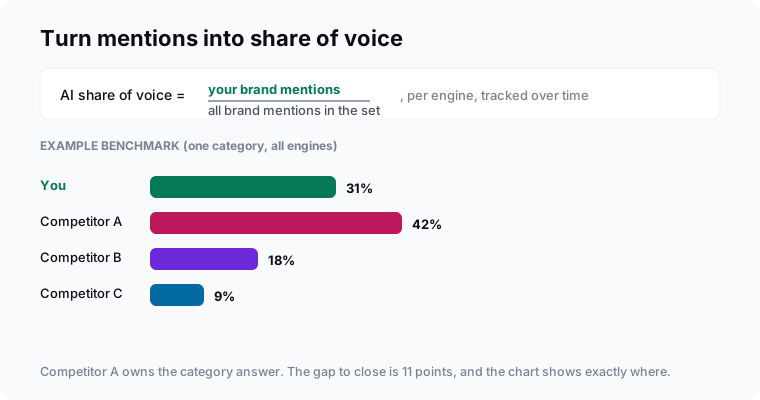
Benchmark share of voice by dividing your brand mentions by all brand mentions across the same prompt set, one engine at a time, tracked over time. A single percentage per engine tells you whether you lead or trail the category, and the trend tells you whether your work is moving it. A rollup across engines hides which model you are losing.
The full method for measuring this sits in our AI visibility guide, and the strategy to move it is in our AI search optimization pillar.
What tools monitor competitor AI visibility?
Two kinds of tool monitor competitor AI visibility. A dashboard, sold as a visibility tracker or AI monitoring tool, gives marketers ready-made competitor reports and alerts. An API, or a rank monitoring tool with programmatic access, lets agencies and builders run the comparison at scale and pipe it into their own reports. Manual checking works only for a one-off look.
| Manual check | Dashboard tracker | API | |
|---|---|---|---|
| Competitors | A couple, by hand | Preset, capped | As many as you want |
| Engines | Whatever you open | Usually the big ones | Every engine, one call |
| Share of voice | You tally it | Charted for you | You compute from raw data |
| Cadence & alerts | None | Scheduled, built in | On your schedule |
| Best for | A one-off look | Marketers | Agencies and builders |
If you only track your own brand, you get half the picture. The point of a competitor-aware tool is the gap: seeing the rival who owns the answer you want.
How often should you monitor competitors in AI search?
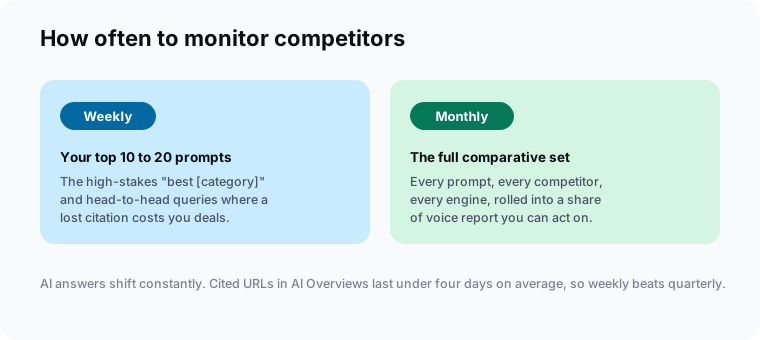
Check your top 10 to 20 category prompts weekly, and run the full comparative set monthly. AI answers move fast, so a quarterly review is stale before you read it. Weekly checks on your highest-stakes prompts, the "best [category]" and head-to-head queries, catch the swings that actually cost deals.
Frequently asked questions
How do I see what ChatGPT recommends in my category?
How do I track my competitors in AI search?
How do I measure share of voice in ChatGPT?
Why does my competitor show up in ChatGPT but I don't?
What tool monitors competitor mentions in AI?
How often should I check competitor AI visibility?
Start with your category's money prompt
Monitoring competitors in AI search is not complicated. Fix a prompt set, run it on every engine, turn the mentions into share of voice, and watch the trend.
Pull your first competitor benchmark with MentionsAPI, find the prompts where a rival is named and you are not, and close that gap before your next quarter starts.