Everyone compares Gemini and ChatGPT on which one writes a better email.
Wrong question. For brand visibility, Gemini and ChatGPT differ in one way that actually matters: what they cite. Yext analyzed 6.8 million citations and found Gemini takes 52.15% of its citations from brand-owned websites, while ChatGPT takes 48.73% from third-party directories. Gemini cites your site. ChatGPT cites the consensus about you. That single split decides where you spend your effort.
Gemini vs ChatGPT: which is actually bigger?
ChatGPT is still the bigger destination, holding 53.9% of worldwide AI web-visit share in May 2026 against Gemini's 27.9%, per Similarweb. But Gemini's real reach is not its app. It powers AI Overviews, which serve about 2 billion users a month, and AI Mode, which passed 1 billion monthly active users at Google I/O 2026. Two different kinds of big.
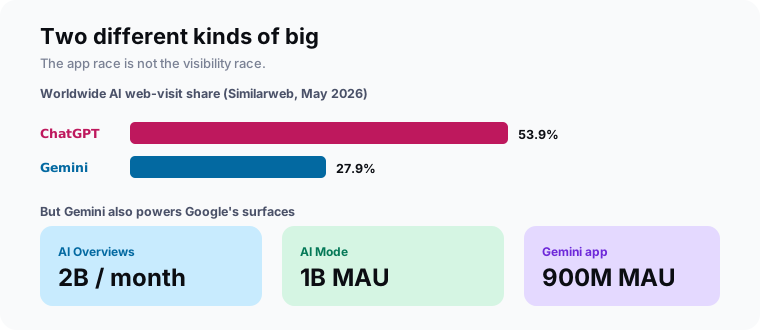
This is why the chatbot horse race misleads marketers. Someone who never opens the Gemini app still reads Gemini output every time an AI Overview loads above their search results.
Gemini also grew fast, from 5.4% web-visit share in January 2025 to roughly 27% by mid-2026. The gap is closing, not widening.
Which one actually cites your brand?
Gemini cites your own website; ChatGPT cites what others say about you. In Yext's analysis of 6.8 million citations across 1.6 million responses, 52.15% of Gemini citations came from brand-owned websites, while 48.73% of ChatGPT citations came from third-party sites like Yelp and TripAdvisor. Same brand, two different sources of truth.
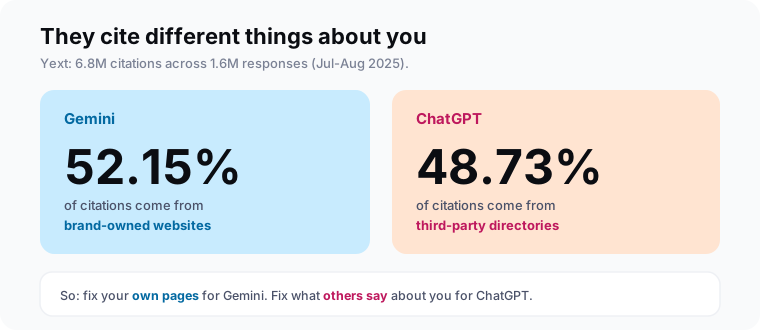
Gemini asks your website who you are. ChatGPT asks the internet who you are. You need good answers to both questions.The whole article in one line
Gemini favors structured, factual content straight from your domain: pages with schema, local landing pages, consistent subdomains. It wants a machine-readable source of record.
ChatGPT behaves more like it is polling the room. If Yelp, a directory, and three roundups agree you are the best option, it repeats that.
Do Gemini and ChatGPT cite the same sources?
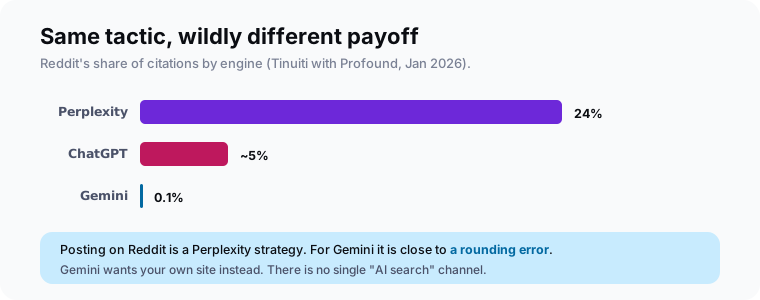
Barely. The clearest example is Reddit: it made up 24% of Perplexity citations in January 2026, above 5% of ChatGPT's, and just 0.1% of Gemini's, per Tinuiti's Q1 2026 AI citation report with Profound. Treating AI search as one channel is the most expensive mistake in the category. A tactic that wins one engine can be a rounding error on another.
So which should you optimize for?
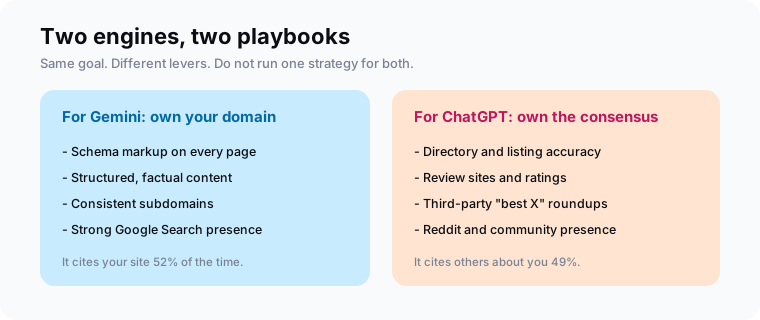
Both, but with different work. Optimize your own domain for Gemini: schema, structured factual pages, consistent subdomains, and Google Search presence. Optimize third-party consensus for ChatGPT: directories, listings, reviews, and roundups. The encouraging part is that 86% of AI citations come from sources brands already control, so most of this is fixable without begging a journalist.
| ChatGPT | Gemini | |
|---|---|---|
| Web-visit share (May 2026) | 53.9% | 27.9% |
| Extra reach | The app itself | AI Overviews, ~2B/month |
| Cites most | Third-party directories | Brand-owned sites |
| Reddit share of citations | ~5% | 0.1% |
| You win by | Owning the consensus | Owning your own pages |
How do you optimize for Gemini?
Optimize for Gemini by making your own site the best source about you. Add schema markup, keep facts structured and current, use consistent subdomains, and stay strong in Google Search, since Gemini powers AI Overviews and AI Mode. Skip the Reddit push here. At 0.1% of Gemini citations, it does close to nothing.
If you already do solid technical SEO, you are most of the way there. Gemini rewards the same discipline: clean structure, accurate facts, machine-readable markup.
How do you optimize for ChatGPT?
Optimize for ChatGPT by fixing what the internet says about you. Nearly half its citations come from third-party directories and listings, so accurate profiles, current reviews, and inclusion in best-of roundups move the needle more than another blog post. Community presence helps here too, since Reddit carries real weight for ChatGPT and almost none for Gemini.
The mechanics of how ChatGPT retrieves and picks sources are in our guide to how ChatGPT search works, and the product-recommendation surface is covered in ChatGPT shopping.
How do you track your brand in both?
Track both by running the same buyer prompts through each engine and recording whether you are mentioned and cited, then watching the two lines separately. A single blended AI visibility number hides the split, because the engines cite different sources. An API that queries Gemini and ChatGPT and parses the citations gives you per-engine share you can act on.
One number tells you nothing here. Two numbers tell you which playbook is working.
Frequently asked questions
What is the difference between Gemini and ChatGPT for brand visibility?
Which is bigger, Gemini or ChatGPT?
Which one is more likely to mention my brand?
Do Gemini and ChatGPT cite the same sources?
Should I optimize for Gemini or ChatGPT?
Does posting on Reddit help with Gemini?
Run two playbooks, then measure two numbers
Do this next: add schema and tighten the facts on your own pages for Gemini, then audit your directory listings and reviews for ChatGPT. Those are different tasks, and doing only one leaves half your visibility on the table.
Then measure them apart. Pull a per-engine baseline with MentionsAPI, keep your Perplexity presence going, and watch which playbook moves which engine.