Ranking number one used to be the finish line.
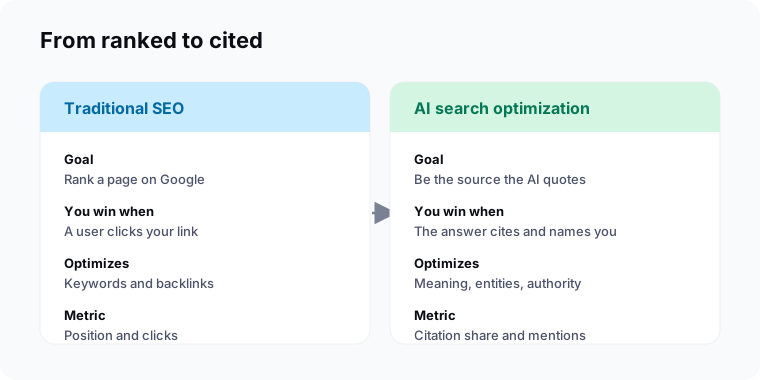
In AI search, the finish line moved. Now it is being the source the AI quotes.
AI search optimization is how you get there. It is the practice of earning citations inside AI answers across every engine, rather than chasing a single blue link. This guide covers what AI search optimization is, how engines decide who to cite, how to build a visibility program, the metrics that matter, and the AI search visibility tools that measure it all.
What is AI search optimization?
AI search optimization is the work of becoming the source an AI engine cites when it answers a question. Engines no longer hand users ten links. They generate a response and name a few sources, so the goal shifts from ranking a page to being quoted inside the answer a user reads before they click anything.
It covers every answer surface at once: Google AI Overviews and AI Mode, ChatGPT search, Perplexity, Gemini, and Bing Copilot. That breadth is the point. A buyer might ask three different engines the same question and see three different sets of sources.
How it relates to SEO, GEO, and AEO
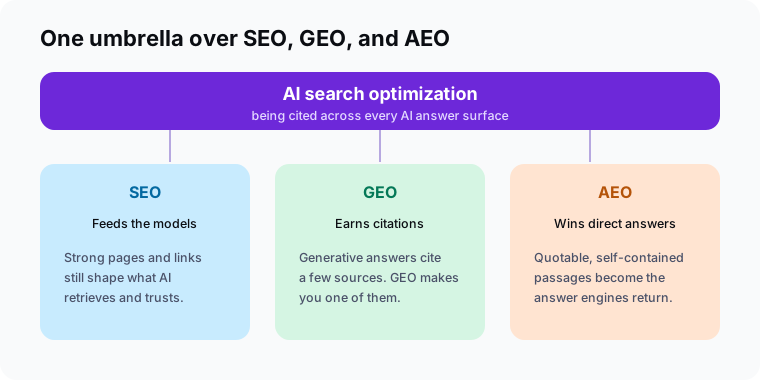
AI search optimization is the umbrella over the terms you already know. SEO feeds the models, since strong pages and links still shape what an engine retrieves and trusts. GEO earns citations inside generative answers. AEO wins the direct, quotable answer. You can read the nuance in our comparison of AEO and GEO, but in practice most teams run them as one program.
SEO earns a ranking. AI search optimization earns a citation inside the answer the user actually reads.The shift in one line
How do AI engines select sources to cite?
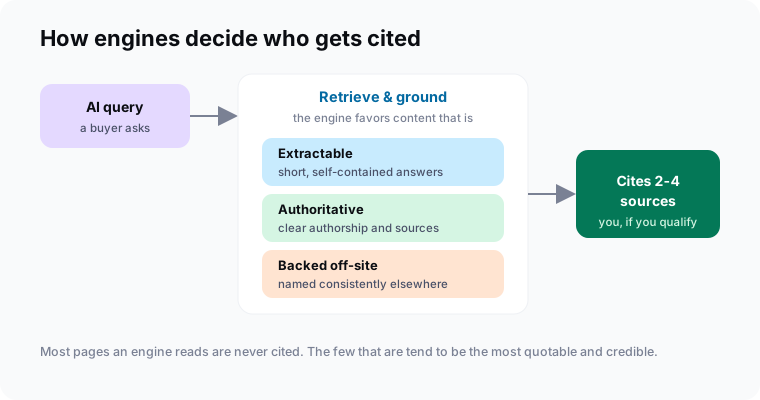
Engines pull from two places: what they learned in training, and what they retrieve live from the web when they ground an answer. In both cases they favor a specific kind of content. Understanding that filter is the whole game.
Three signals decide who gets cited. The content has to be extractable, meaning short and self-contained enough to lift. It has to be authoritative, with clear authorship and credible sources. And it has to be backed off-site, named consistently across the web so the engine trusts the entity behind it.
Why off-site mentions matter
Your own page is only half the story. Engines lean on third-party signals to decide who is credible, so being named consistently in reviews, directories, and respected publications raises your odds of citation. Keep your entity data, the facts about who you are and what you do, consistent everywhere a model might read it.
This is why a citation is harder to fake than a ranking. You cannot keyword-stuff your way into an answer. The mechanics behind the AI surfaces in Google are covered in depth in our AI Overviews playbook.
How do you build an AI search visibility program?
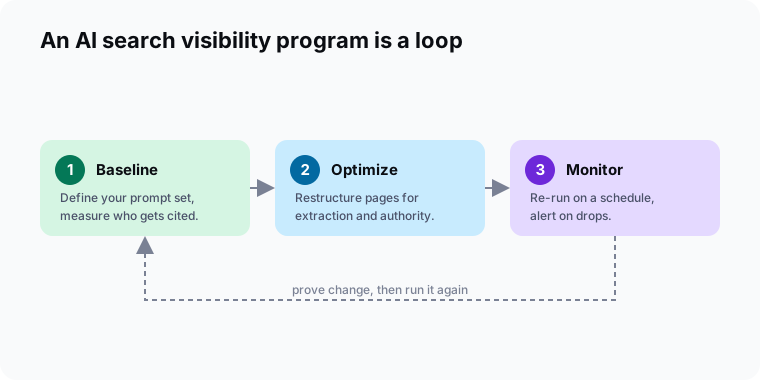
A program beats a one-off check. The reason is simple: AI answers shift by user and over time, so a single screenshot proves nothing. You need a baseline, a habit, and a way to see change.
Step one: baseline
Build a prompt set from the questions buyers actually ask, not a keyword list. Run that set across every engine and record who gets cited today, including your competitors. That snapshot is your starting line.
Step two: optimize
Rewrite your highest-value pages so a model can lift them. Open each section with a short, self-contained answer, strengthen authorship and sources, add structured data, and keep your entity facts consistent. The full method is in our generative engine optimization guide.
Step three: monitor
Re-run the prompt set on a schedule and alert on drops. This is where most teams quit, and it is exactly where the value compounds. You cannot prove the work paid off without measuring the same prompts again.
What metrics matter in AI search optimization?
AI search optimization is measured by whether engines cite and mention you, not by clicks. Four numbers tell you if it is working. Citation share is the headline for this practice, since the whole goal is being the cited source.
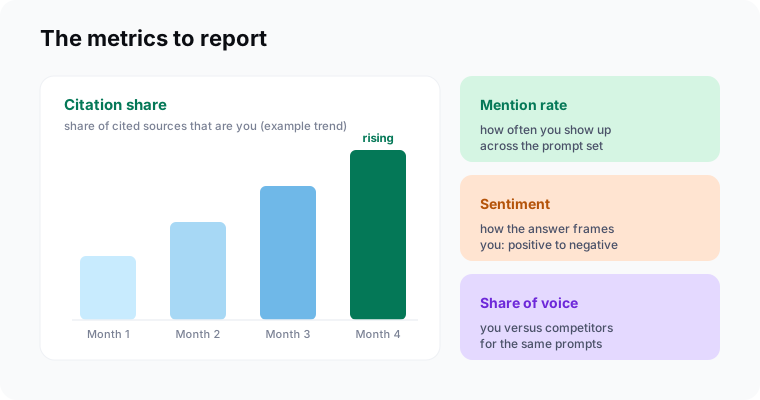
Citation share is how often your URL is the source behind an answer. Mention rate is how often you appear across the prompt set. Sentiment is how the model frames you, and share of voice is how you stack up against competitors. Track all four per engine, the same way our AI visibility guide lays out.
That first number is why coverage matters. Across an analysis of hundreds of millions of citations, only about 11% of cited domains overlapped between ChatGPT and Perplexity. Strong visibility in one engine tells you almost nothing about the others, so a single rollup score hides the truth.
What are the best AI search visibility tools?
An AI search visibility tool runs your prompt set across every engine and reports the four metrics over time. The right one depends on your role. Marketers usually want a dashboard with charts and alerts. Agencies and builders usually want an API that returns normalized mention data they can pipe into their own reports or product.
Whatever you pick, hold it to one bar: it should cover every engine your buyers use and report the metrics you will act on. We compare the named options in our roundup of the best AI visibility tools, and the tool categories in LLM SEO tools.
Frequently asked questions
What is AI search optimization?
Is AI search optimization the same as SEO?
How do AI engines choose which sources to cite?
What is an AI search visibility tool?
What are the best AI search visibility tools?
How do you measure AI search visibility?
Win the citation, not just the ranking
AI search optimization is the discipline of being cited by the engines your buyers now ask first. Make your content extractable and authoritative, back it with consistent off-site mentions, then measure whether the engines actually quote you.
Pull your baseline across every engine with MentionsAPI, fix the pages that should be cited and are not, then measure again in 30 days.