ChatGPT now recommends what to buy. It does not run ads to do it.
That is the part worth sitting with. ChatGPT shopping recommends products by relevance, not paid placement. When you ask what to buy, ChatGPT expands your question into shopping queries, pulls products from Google Shopping's organic index plus reviews and structured data, and returns a ranked carousel with buy links. A 2026 study of 43,000 carousel products found 83% match Google Shopping's top 40 organic listings. Your product feed and page data decide whether you show up.
What is ChatGPT shopping?
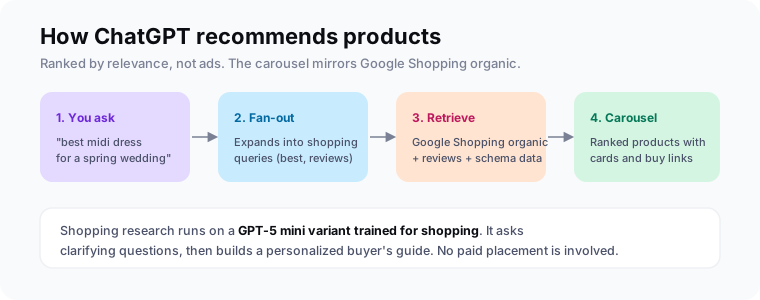
ChatGPT shopping is a product-discovery feature that recommends items inside a chat, with cards showing images, descriptions, summarized reviews, and buy links. OpenAI launched it on April 28, 2025, and later added shopping research, a deeper mode running on a GPT-5 mini variant trained for shopping. It asks clarifying questions, then builds a personalized buyer's guide from live web data.
The shift matters because people are buying this way now. AI-source traffic to US retail sites rose roughly 393% year over year in Q1 2026, per Adobe, and that traffic converts higher than it used to.
How does ChatGPT decide which products to recommend?
ChatGPT ranks products by relevance to your query and context, not by ad spend. It weighs product data quality, Schema.org markup, price and availability, reviews, and authority signals like third-party listicles. Behind the scenes it expands your request into shopping fan-out queries, then pulls candidates from Google Shopping's organic index. A product surfaces when ChatGPT judges it the best match for your intent.
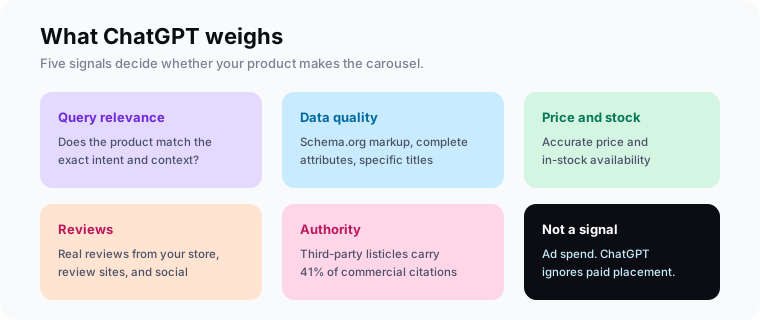
One nuance worth knowing: for the merchants shown, the display order is often set by third-party data providers, and ChatGPT does not re-rank them on price, shipping, or return policy. So getting into the consideration set is the battle, and that is a data problem.
Where does ChatGPT get its product data?
ChatGPT's product carousel is sourced overwhelmingly from Google Shopping's organic results. A 2026 study of 43,000 carousel products found 83% match Google Shopping's top 40 organic listings, and 60% come from the top 10. It also reads structured data on your own pages and feeds submitted through chatgpt.com/merchants, while Shopify and Etsy catalogs are already integrated.
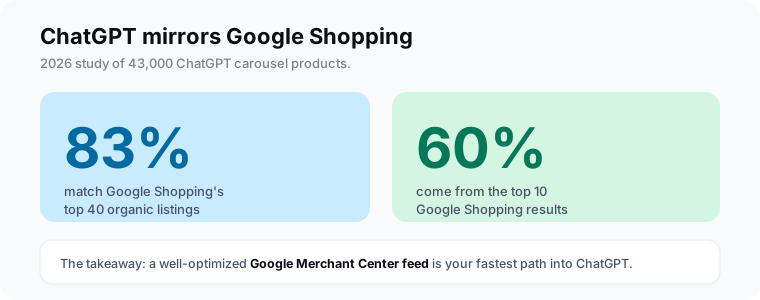
Win Google Shopping organic and you win most of ChatGPT shopping. The same clean feed feeds both surfaces.The one-line strategy
How do you get your products recommended by ChatGPT?
Get recommended by feeding ChatGPT clean product data it can trust. Submit a feed through chatgpt.com/merchants, or rely on Shopify and Etsy auto-integration, add Schema.org product markup for price, availability, and reviews, write specific titles that match how buyers ask, and collect real reviews. Then earn third-party listicle mentions, since roundups carry outsized weight in commercial recommendations.
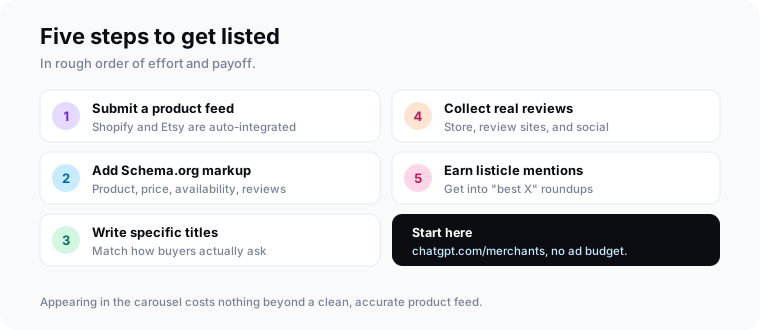
If you only do one thing this week, fix your product feed. Accurate titles, prices, stock status, and images are the price of entry, and most catalogs have gaps.
Does ChatGPT shopping use ads or paid placement?
No. As of 2026, ChatGPT shopping takes no ads and no paid placement. Recommendations are organic, ranked by relevance and data quality. ChatGPT looks at organic Google Shopping results and ignores paid ads entirely, so appearing in the carousel costs nothing beyond a well-optimized product feed. That makes it a rare channel where a small brand can outrank a big ad budget.
Why product data quality decides everything
Product data quality is the single biggest lever for ChatGPT recommendations, because the model matches specific attributes to specific queries. A title like Blue Dress never matches best midi dress for a spring wedding. A title like Sapphire Blue Wrap Midi Dress, soft jersey, machine washable does. Complete attributes, accurate price and stock, and structured reviews are what let ChatGPT recommend you with confidence.
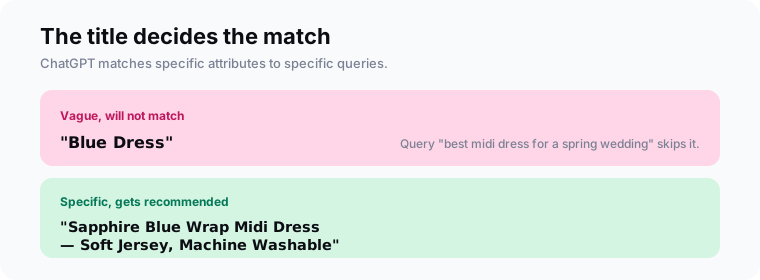
The trick is to match the language ChatGPT uses in its fan-out queries: terms like best, for, and comparison. Describe the use case, not just the object. For the broader method across every engine, see our AI search optimization guide, and the retrieval mechanics in how ChatGPT search works.
How do you measure whether ChatGPT recommends you?
You measure it by running your buyer prompts through ChatGPT and recording whether your products appear in the carousel, then tracking that over time and against competitors. Manual checks miss the personalization and the day-to-day drift. An API that runs shopping prompts and parses which products and brands ChatGPT returns gives you a repeatable visibility baseline, which matters as AI-driven retail traffic climbs.
This is the step that turns the whole guide into a number. Optimize the feed, then watch whether ChatGPT starts naming you.
Frequently asked questions
What is ChatGPT shopping?
How do I get my products recommended by ChatGPT?
Does ChatGPT shopping use ads?
Where does ChatGPT get its product data?
How is ChatGPT shopping different from Google Shopping?
Do I need a Google Merchant Center feed for ChatGPT?
Fix the feed, then track the carousel
Do this next: clean up your product feed, add Schema.org markup, rewrite vague titles, and submit at chatgpt.com/merchants. That is the entry ticket to ChatGPT shopping, and it costs no ad budget.
Then measure it. Pull a baseline of whether ChatGPT recommends your products today with MentionsAPI, keep your Perplexity presence and crawler access clean, and watch your share of the carousel move as you ship the changes.