Two AI engines. Two completely different answers to one question: does it name your brand?
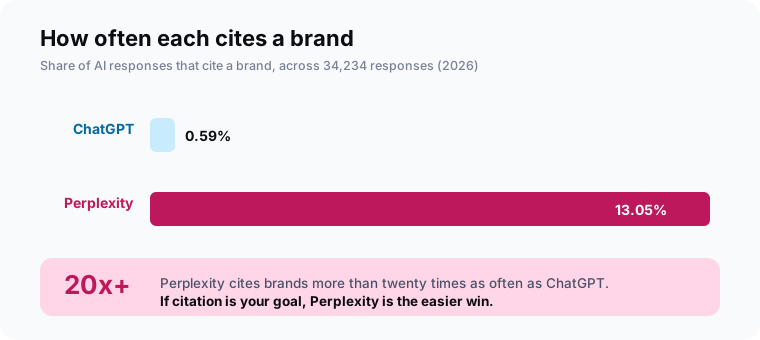
Perplexity cites your brand far more often than ChatGPT. Across 34,234 AI responses, ChatGPT named a brand just 0.59% of the time, while Perplexity did it 13.05% of the time, per Demand Local. That is over twenty times more. But ChatGPT reaches roughly a billion users to Perplexity's thirty million, and only 11% of their cited sources overlap. So the honest answer depends on what you are optimizing for.
Which cites your brand more, Perplexity or ChatGPT?
Perplexity, and it is not close. It cited a brand in 13.05% of responses against ChatGPT's 0.59%, and it cites roughly three times more sources per answer, linking to them openly. ChatGPT cites fewer sources and often answers with no visible link at all, which is why brands surface in it far less often.
Why do they cite so differently?
Because they read different halves of the web. Averi's analysis of 680 million citations found only 11% of cited domains overlap between ChatGPT and Perplexity, a figure Whitehat SEO reproduced across 118,000 responses. ChatGPT leans on Wikipedia (47.9% of its citations), while Perplexity leans on Reddit (46.7%).
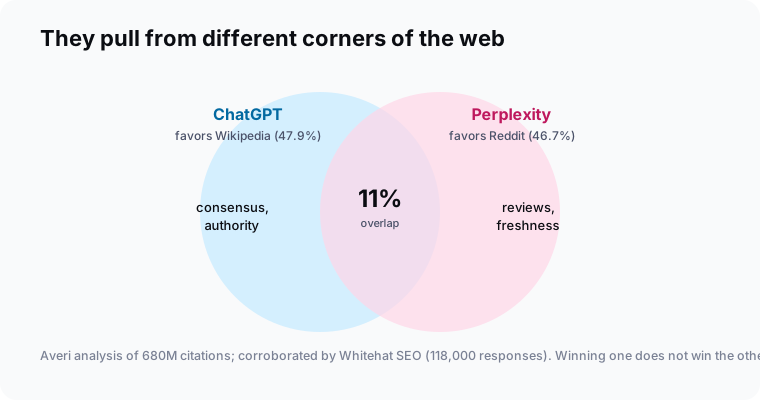
That split is the whole reason a single AI strategy fails. What earns a ChatGPT citation, being the established, consensus answer, is different from what earns a Perplexity one, being freshly discussed and reviewed.
Only 11% of their sources overlap. Optimizing for both with one playbook optimizes for neither.The core split
But which one reaches more people?
ChatGPT, by a wide margin. It has roughly a billion users to Perplexity's thirty million, per Panto. But Perplexity punches far above its weight on traffic: with about 2% of the AI market it sends roughly 15% of AI referral clicks, because it links out so often, per Stackmatix.
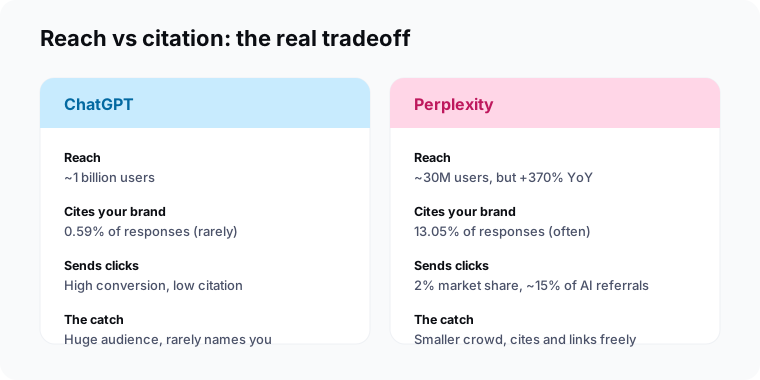
And the gap is closing. Perplexity grew around 370% year over year, while ChatGPT's share of AI referrals slipped from the high 80s to the low 60s. The reach advantage is real, but it is shrinking.
Perplexity vs ChatGPT: head-to-head
Here is the comparison in one view.
| ChatGPT | Perplexity | |
|---|---|---|
| Brand citation rate | 0.59% of responses | 13.05% of responses |
| Sources per answer | Fewer, often none shown | ~3x more, linked openly |
| Users | ~1 billion | ~30 million (+370% YoY) |
| Referral traffic | Large share, high conversion | 2% market share, ~15% of AI referrals |
| Favorite source | Wikipedia (47.9%) | Reddit (46.7%) |
| Best for | Reach | Citations |
How do you get cited by each?
You win them with different moves. ChatGPT rewards consensus and authority, so getting your facts onto Wikipedia and established reference sites, and keeping your entity data consistent, moves the needle. Perplexity rewards recency and discussion, so reviews, Reddit threads, and fresh content matter more.
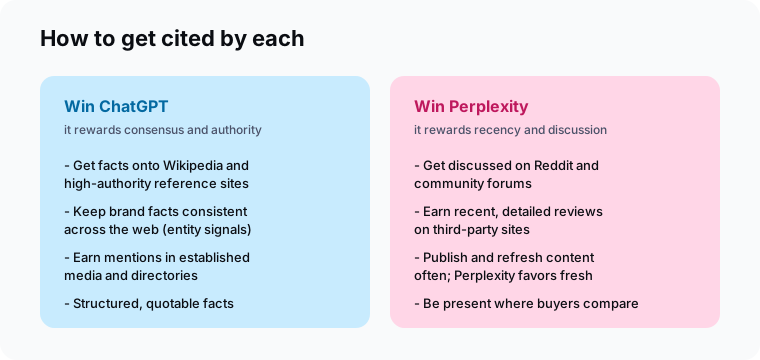
The shared foundation, covered in our AI search optimization pillar, still applies: extractable, well-sourced content wins everywhere. The per-engine tactics are the layer on top.
Which should you optimize for first?
Start with Perplexity if you want citations quickly, since it names brands far more often and links freely. Lead with ChatGPT if reach outweighs citation frequency for you. And if AI search genuinely matters to your pipeline, work both and measure them separately.
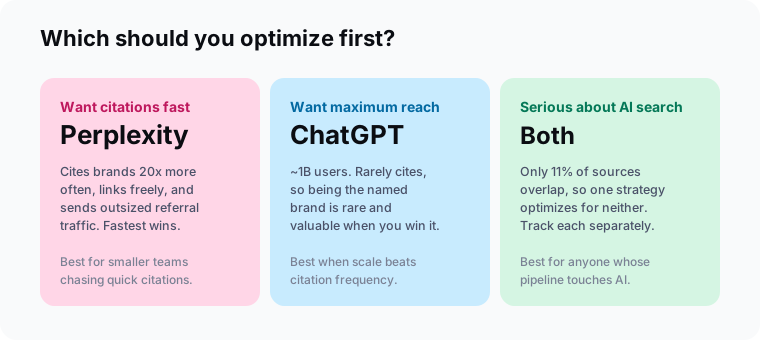
I lean toward both, tracked separately. A rival can own Perplexity in your category while you assume you are fine because ChatGPT looks quiet. You only see that by measuring each engine on its own, the way our competitor monitoring guide lays out.
Frequently asked questions
Which is better for brand visibility, Perplexity or ChatGPT?
Does Perplexity cite more sources than ChatGPT?
Do Perplexity and ChatGPT use the same sources?
Does ChatGPT cite sources at all?
Is Perplexity bigger than ChatGPT?
Should I optimize for Perplexity or ChatGPT first?
Measure both engines, never one
Perplexity cites your brand more; ChatGPT reaches more people; their sources barely overlap. None of that is a reason to pick one and ignore the other.
Pull your citation rate on both engines with MentionsAPI, find the one where a competitor is named and you are not, and close that gap first.