Most Copilot vs ChatGPT comparisons argue about which one writes a better email.
For brand visibility, that misses the point. Copilot and ChatGPT are not the same kind of tool, and they are not the same kind of target. Copilot is grounded on the Bing index, always cites, and lives inside Microsoft 365 where enterprise buyers work. ChatGPT pulls from the broader open web and reaches a huge consumer audience. So getting cited by Copilot is Bing SEO, and getting cited by ChatGPT is open-web work. Different jobs.
Copilot vs ChatGPT: what is the real difference?
The real difference for a brand is where each one gets its facts. Copilot is grounded on the Bing index, always shows citations, and runs inside Microsoft 365. ChatGPT pulls from the wider open web, cites directories and consensus, and runs as a standalone app. One is a work assistant wired into your org; the other is a general assistant wired into the internet.
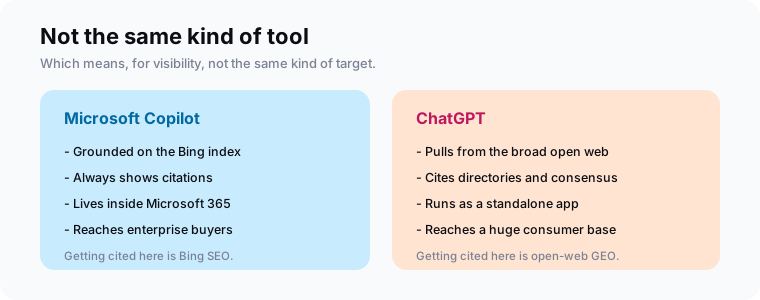
This is why the "which is better" framing breaks down. They are not really competing for the same job. A slightly less capable model wired into your enterprise data often beats a smarter model that knows nothing about your context.
Which one reaches your buyers?
Copilot reaches fewer people, but higher-value ones. It has 20 million paid enterprise seats and is used by more than 90% of the Fortune 500, though only about 36% of those seats are active. ChatGPT holds roughly 61% of AI chatbot traffic with an 83% usage rate. Copilot is narrow and enterprise; ChatGPT is broad and consumer.
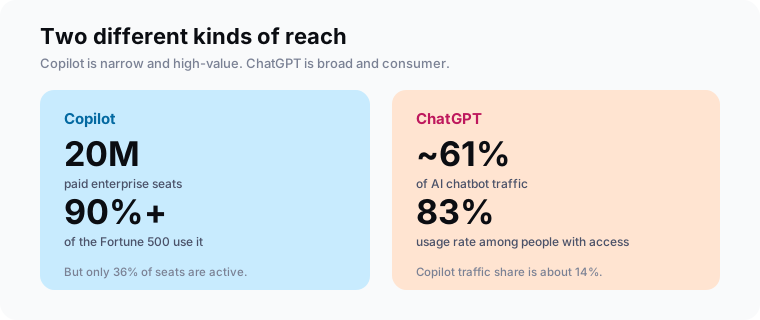
For a B2B brand, that trade can favor Copilot. A single mention inside a Fortune 500 buyer's workflow, at the moment they are researching a purchase, is worth a lot of consumer impressions.
How does Copilot pick what to cite?
Copilot decomposes your question into hundreds of machine-generated grounding queries, searches the Bing index for matching pages, and grounds its answer with citations. One analysis found Microsoft used 400+ grounding queries to source a single topic. The takeaway is blunt: if you rank in Bing, you can be cited in Copilot. If Bing cannot read your page, Copilot looks elsewhere.
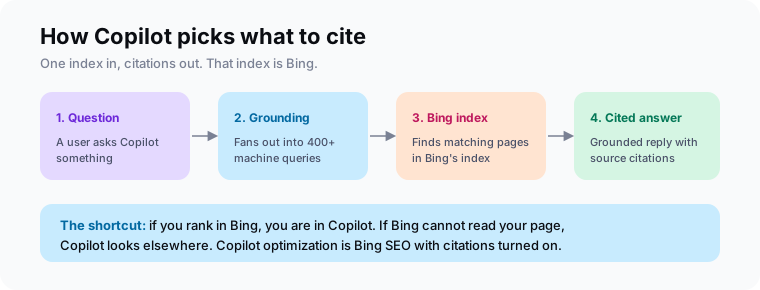
You cannot optimize for Copilot without optimizing for Bing. They are the same index. Most brands ignore Bing, which is exactly why the door is open.The one-line strategy
How do you get cited by Copilot?
Get cited by Copilot by winning Bing. Make your pages crawlable and well-structured in Bing, add schema markup, keep facts current and specific, and earn authority. Then watch the AI Performance report in Bing Webmaster Tools, launched in early 2026, which shows your actual Copilot citations and the grounding queries behind them, for free.
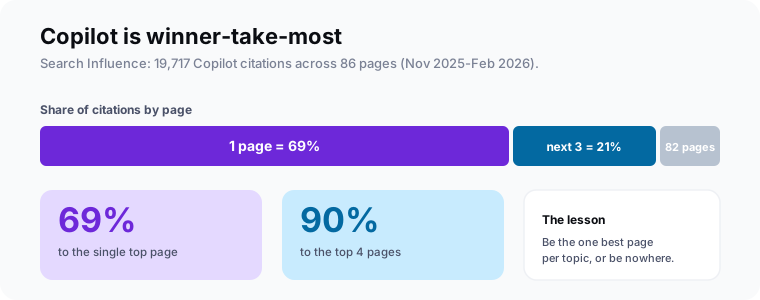
One warning: Copilot citations are winner-take-most. In a study of 19,717 Copilot citations across 86 pages, a single page captured 69% of all citations in its category, and the top four pages captured 90%. Being the second-best page on a topic earns almost nothing.
How is getting cited by ChatGPT different?
Getting cited by ChatGPT is broader and messier. It pulls from the open web, leans on third-party directories and consensus, and shows citations mainly in its search mode. A page can win Copilot through Bing while barely registering in ChatGPT, and the reverse happens too. The overlap between these engines is small, so one strategy cannot serve both.
The deeper mechanics of ChatGPT retrieval are in our guide to how ChatGPT search works, and the open-web citation split shows up again in Gemini vs ChatGPT.
Copilot or ChatGPT: which should a business choose?
For getting work done, most businesses end up using both: Copilot for Microsoft 365 and regulated workflows, ChatGPT for open-ended research. They are not really competitors for the same task. For visibility, the honest answer is the same. Your buyers use both, so you want to be named in both, using the two different playbooks above.
How do you track your brand in both?
Track both by running the same buyer prompts through Copilot and ChatGPT and recording whether you are mentioned and cited, then watching each line on its own. Bing Webmaster Tools now shows your Copilot citations directly, but it does not cover ChatGPT, and it does not track clicks. An API that queries both engines and parses the citations gives you one per-engine baseline across the whole set.
A blended AI visibility score hides the split. Copilot and ChatGPT cite different sources, so you need to see them apart to know which playbook is working.
Frequently asked questions
What is the difference between Copilot and ChatGPT?
Is Copilot or ChatGPT better for business?
How do I get my brand cited by Copilot?
Does Copilot use the same sources as ChatGPT?
How many people use Copilot vs ChatGPT?
Are Copilot citations concentrated?
Win Bing for Copilot, the open web for ChatGPT
Do this next: fix your Bing crawlability and schema so Copilot can ground on your pages, then check the AI Performance report to see your citations. Separately, tighten your directory and review presence for ChatGPT. Two indexes, two tasks.
Then measure them apart. Pull a per-engine baseline with MentionsAPI, keep your Perplexity presence going, and watch which page becomes the one Copilot cannot stop citing.