Guide · July 25, 2026

ClaudeBot: should you allow or block Anthropic's crawler?

Blocking ClaudeBot opts you out of Anthropic's training, not out of Claude. Here is what each of Anthropic's three bots does, and the robots.txt config most brands should run.

TL;DR
ClaudeBot is Anthropic's crawler for training its models. Blocking it opts you out of training only. Claude reads and cites you through two other bots, Claude-User and Claude-SearchBot, which you can still allow. Unusually, all three honor robots.txt, so your rules actually hold. The config most brands want: allow Claude-User and Claude-SearchBot, block ClaudeBot. Verify bots by IP.

Anthropic is the one AI company whose crawlers actually do what your robots.txt says.

That is the surprising part, and it changes how you should think about ClaudeBot. ClaudeBot is Anthropic's training crawler, and blocking it in robots.txt opts your content out of Claude model training and nothing else. It does not remove you from Claude, because Claude reads and cites pages through two other bots. So the real question is not block or allow. It is which of Anthropic's three crawlers to allow, and for what.

What is ClaudeBot?

ClaudeBot is Anthropic's web crawler for collecting public content to train and improve its Claude models. It fetches pages the way a search crawler does, then adds them to the data future Claude versions learn from. Per Anthropic's own documentation, ClaudeBot respects robots.txt, so you can allow or block it. It is one of three separate Anthropic crawlers, each with a different job.

That last part trips people up. When someone says "block the Claude bot," they usually mean ClaudeBot. But ClaudeBot is only the training bot.
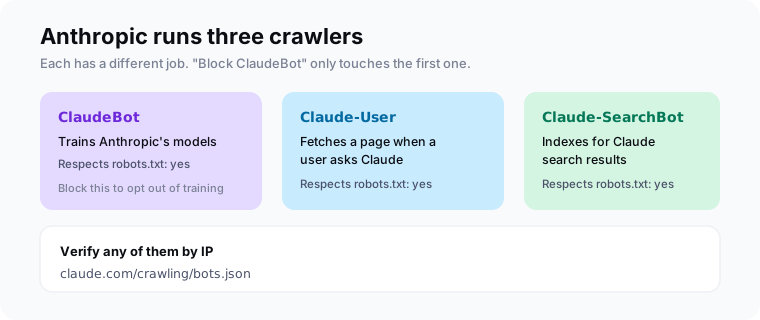
Anthropic runs three crawlers: ClaudeBot for model training, Claude-User for fetching pages when a user asks Claude, and Claude-SearchBot for search indexing. All three respect robots.txt.
One name gets the attention. There are three bots, and only one trains models.

What are Anthropic's three crawlers?

ClaudeBot trains models. Claude-User fetches a page when a person asks Claude to look something up. Claude-SearchBot indexes content for Claude's search results. Each has its own user-agent, so you can allow the ones that make you visible and block the one that trains, all in the same robots.txt file.

ClaudeBotClaude-UserClaude-SearchBot
JobTrains modelsFetches for a userIndexes for search
Respects robots.txtYesYesYes
Block toOpt out of trainingStop user fetchesLeave Claude search
Affects visibilityNoYesYes

Does ClaudeBot respect robots.txt?

Yes, and this is where Anthropic stands apart. It says all three of its bots, including the user-directed Claude-User, honor robots.txt. OpenAI and Perplexity draw a sharper line: ChatGPT-User and Perplexity-User generally do not apply robots.txt to user-initiated fetches. With Claude, your rules actually hold across the board, which makes control predictable.
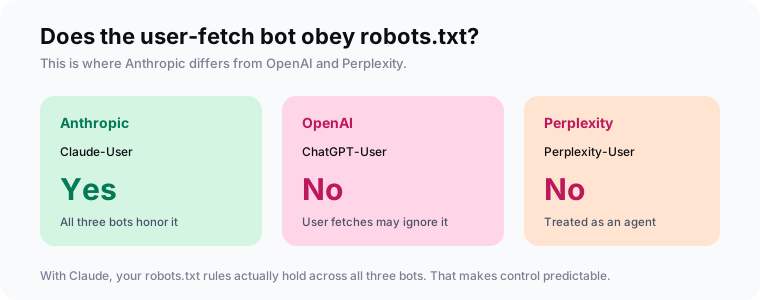
All three of Anthropic's Claude bots honor robots.txt, including Claude-User, while OpenAI's ChatGPT-User and Perplexity's Perplexity-User generally do not apply robots.txt to user-initiated fetches.
The user-fetch bot is where crawlers differ. Anthropic's obeys; the others may not.
With most AI crawlers, a user-triggered fetch slips past your robots.txt. With Claude, the rules hold across all three bots. That is rare, and worth knowing.The Claude difference

Should you allow or block ClaudeBot?

Block ClaudeBot if you would rather your content stay out of Anthropic model training. Allow it if you want to contribute to training. For most brands the better move is to block ClaudeBot but allow Claude-User and Claude-SearchBot, so you keep Claude visibility while opting out of the training set. The choice comes down to what you are trying to protect.
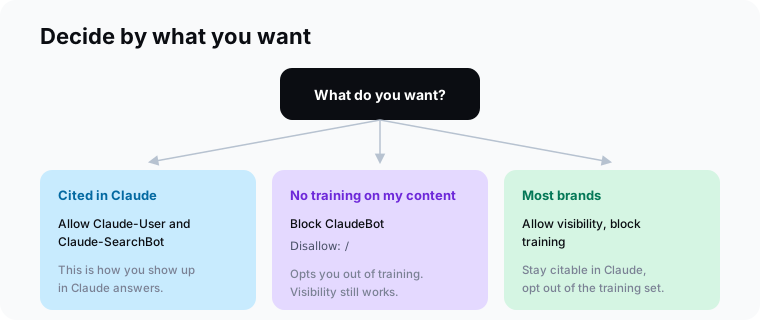
Decide by goal: to be cited in Claude allow Claude-User and Claude-SearchBot; to keep content out of training block ClaudeBot; most brands should allow visibility and block training.
Pick by what you want, not by fear of the word "AI."

Claude matters more for B2B than its market share suggests, because of heavy enterprise adoption. Business buyers research vendors inside Claude, so being readable by Claude-User and Claude-SearchBot shapes what they hear about your category. We compare that enterprise angle in Copilot vs ChatGPT.

Does blocking ClaudeBot hurt your Claude visibility?

No. Blocking ClaudeBot opts you out of training only. Claude reads and cites your pages through Claude-User and Claude-SearchBot, which are separate bots you can still allow. You can disallow ClaudeBot and stay fully visible in Claude answers. The bots share a name but not a job.
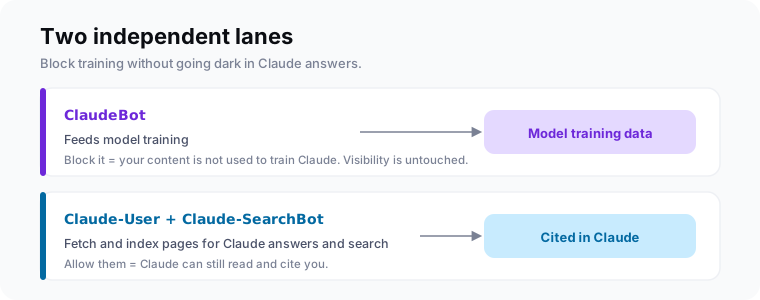
Blocking ClaudeBot removes you from model training only, while allowing Claude-User and Claude-SearchBot keeps you readable and citable in Claude answers and search.
Two lanes. Blocking the training bot does nothing to the visibility bots.
3 botsClaudeBot, Claude-User, Claude-SearchBot
All 3honor robots.txt (rare among AI crawlers)
bots.jsonIP list at claude.com/crawling/bots.json

How do you block, allow, and verify ClaudeBot?

Add a block at yourdomain.com/robots.txt that names each Claude user-agent. To keep Claude visibility while opting out of training, allow Claude-User and Claude-SearchBot and disallow ClaudeBot. Then verify bots by matching their IP against Anthropic's published list at claude.com/crawling/bots.json, rather than trusting the user-agent string, which scrapers fake.

# Stay citable in Claude
User-agent: Claude-User
Allow: /

User-agent: Claude-SearchBot
Allow: /

# Opt out of model training
User-agent: ClaudeBot
Disallow: /
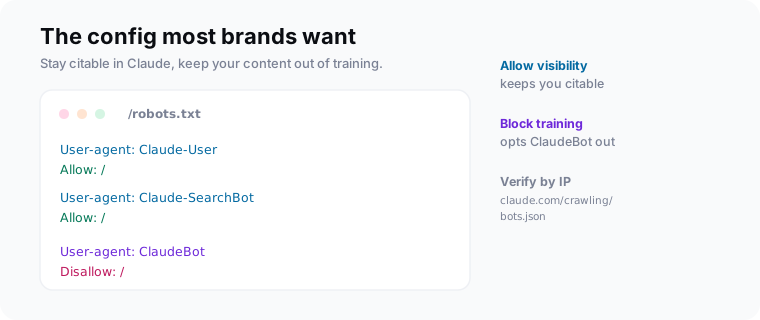
A recommended robots.txt: allow Claude-User and Claude-SearchBot to stay visible in Claude, disallow ClaudeBot to opt out of training, and verify bots by IP at claude.com/crawling/bots.json.
Allow the visibility bots, block the training bot, verify by IP.
The same "block training, keep visibility" logic applies to OpenAI's GPTBot, covered in our GPTBot guide. The difference is that Claude's user-fetch bot obeys robots.txt and OpenAI's does not, so the Claude config behaves exactly as written.
See whether Claude actually cites you
robots.txt decides whether Claude can reach you. MentionsAPI tells you the result: check whether Claude, ChatGPT, Gemini, and Perplexity mention and cite your brand, in one call. Pay-as-you-go, $1 free signup credit.

Frequently asked questions

What is ClaudeBot?
ClaudeBot is Anthropic's web crawler that collects publicly available content to train and improve its Claude models. It fetches pages like a search crawler, then adds them to the data future Claude versions learn from. ClaudeBot respects robots.txt, so you can allow or block it. It is one of three Anthropic crawlers.
What are Anthropic's three crawlers?
ClaudeBot collects content for model training. Claude-User fetches a page when a user asks Claude about it. Claude-SearchBot indexes content for Claude's search results. Each has its own user-agent string, and Anthropic says all three honor robots.txt, so you can control them separately.
Does ClaudeBot respect robots.txt?
Yes. Anthropic states that all three of its bots, including the user-directed Claude-User, honor robots.txt directives. That is more consistent than OpenAI and Perplexity, whose user-initiated fetchers (ChatGPT-User and Perplexity-User) generally do not apply robots.txt rules. With Claude, your robots.txt actually holds.
Does blocking ClaudeBot remove me from Claude?
No. Blocking ClaudeBot only opts you out of model training. Claude's ability to read and cite your pages runs through Claude-User and Claude-SearchBot, which you can still allow. You can disallow ClaudeBot and stay visible in Claude answers at the same time.
How do I block or allow ClaudeBot in robots.txt?
Add a block at yourdomain.com/robots.txt with User-agent: ClaudeBot and Disallow: / to opt out of training. To stay visible, add allow rules for Claude-User and Claude-SearchBot. Anthropic also supports Crawl-delay. Save the file at your domain root and verify bots by IP.
How do I verify a request is really ClaudeBot?
Match the request IP against the list Anthropic publishes at claude.com/crawling/bots.json, rather than trusting the user-agent string, which anyone can fake. If a request claims to be ClaudeBot but its IP is not on that list, treat it as a spoof and block it at the firewall.

Set the config, then measure the result

Do this today: allow Claude-User and Claude-SearchBot, block ClaudeBot if you want out of training, and verify bots by IP. Because Claude honors robots.txt across all three, the config does exactly what it says, which is a nice change.

Then check the part that matters: whether Claude actually cites you. Pull that baseline with MentionsAPI, keep your crawler access clean across engines, and watch whether allowing the visibility bots turns into real mentions in Claude.

Nikhil Kumar
Founder, MentionsAPI

Growth marketer at the intersection of marketing, product, and technology. 8+ years across startups and scale-ups in India, Switzerland, and the Netherlands. Founder of Landkit (landkit.pro).

Stop guessing whether AI can see you.

Check whether ChatGPT, Claude, Gemini, and Perplexity mention and cite your brand in one API call. $1 free signup credit, pay-as-you-go.