People assume ChatGPT knows things. It does not, exactly. It has sources.
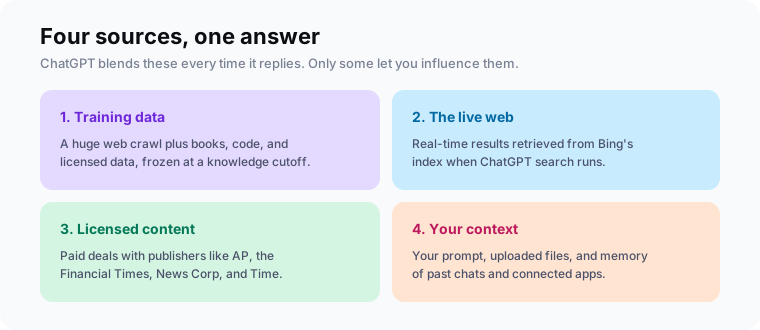
ChatGPT draws on four of them: the training data baked into the model and frozen at a knowledge cutoff, the live web it retrieves through Bing when it runs a search, licensed content from publishers OpenAI pays, and the context you provide through your prompt, uploads, and memory. Most answers blend several at once. Knowing which source is speaking tells you whether the answer is current, whether it can cite you, and whether you can do anything about it.
What is ChatGPT trained on?
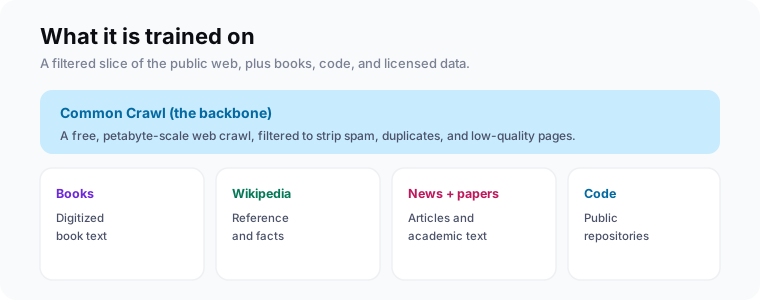
ChatGPT is trained on a large text corpus built on Common Crawl, a filtered petabyte-scale web crawl, plus digitized books, Wikipedia, news and academic articles, public code, and licensed datasets. Per published breakdowns of its data, OpenAI filters that crawl to strip spam, duplicates, and low-quality pages first. Not everything on the web makes it in.
OpenAI also pays for content. It has signed licensing deals with publishers including the Associated Press, Axel Springer, the Financial Times, News Corp, and Time. That content is a trusted, legally clean source the model leans on.
What is the knowledge cutoff, and why does it matter?
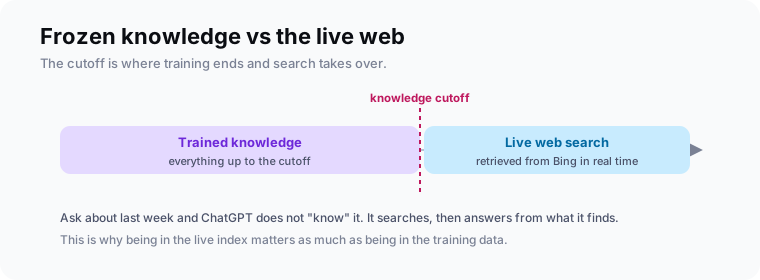
A knowledge cutoff is the date the model stops learning from new data. Anything published after that date is invisible to the base model unless it runs a live search. GPT-4o, for example, has a cutoff around October 2023. The cutoff is why an offline model can confidently get recent facts wrong: it fills gaps with patterns, which is where hallucinations about recent events come from.
The full history of cutoff dates by model, and what each means, is in our ChatGPT knowledge cutoff guide.
How does ChatGPT get current information?
ChatGPT gets current information by searching the live web. When search is active, it retrieves real-time results from Bing's index before writing its answer, which is on by default for paid users and available to free users. Ask about something from this week and it typically triggers a search rather than guessing from training.
There is a catch worth knowing. Browsed content and trained knowledge behave differently. Retrieved answers tend to be more literal and tied to whatever pages the search surfaced, while trained knowledge is smoother but frozen. Neither is automatically more trustworthy.
The base model is a very well-read person with no phone. ChatGPT search is that person finally checking the internet before they answer.The distinction that matters
How that retrieval and citation step works in detail is covered in how ChatGPT search works.
Does ChatGPT use your data and memory?
Yes, if memory is on. ChatGPT keeps summaries of useful context from your chats, files, and connected apps like Gmail, and uses them to personalize answers. It does not search this with a retrieval system. Per OpenAI's memory FAQ, it injects pre-computed summaries into the prompt, so you get continuity without a search step. You can inspect what it remembers or turn memory off.
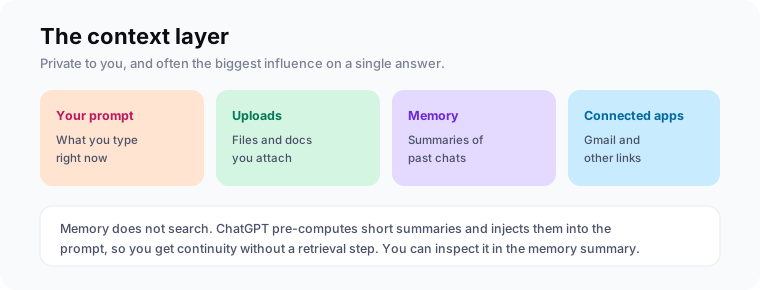
This is also why two people get different answers to the same question. Their context differs, even when the model does not.
Training data vs live search: which one cites your brand?
Live search is the one that cites your brand by name with a link. Training knowledge can mention you, but it rarely attributes a specific source, and it is frozen at the cutoff. The search layer pulls current pages from Bing and shows them as citations, so if you want to be named and linked in a ChatGPT answer, that is the layer to win.
How do you get ChatGPT to know and cite your brand?
Target the live web layer, because it is the only source you can move quickly. Training data is frozen and updates only when the next model trains. Licensed deals are closed to almost every brand that is not a major news outlet. But the Bing-powered search layer is open to anyone with a page, so that is where the work pays off.
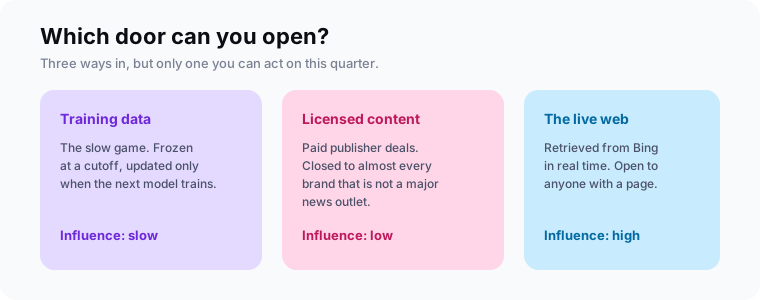
In practice that means the same work as getting cited in ChatGPT search: be crawlable and well-structured in Bing, keep your facts current and specific, and earn authority. The full method is in our AI search optimization guide, and the crawler side is in GPTBot: allow or block?.
Frequently asked questions
Where Does ChatGPT Get Its Information?
What is ChatGPT trained on?
Does ChatGPT use real-time data?
What is a knowledge cutoff?
Does ChatGPT remember my data?
How do I get ChatGPT to know my brand?
Win the layer you can actually move
Do this next: assume anything current in a ChatGPT answer came from live search, then make sure your pages are crawlable in Bing, structured, and current. That is how you get into the one source you can influence.
Then measure it. Pull a baseline of what ChatGPT says and cites about you with MentionsAPI, keep your Perplexity presence going, and watch whether the search layer starts naming you.