Your best product photo does nothing for an AI shopping agent. It cannot see it.
An AI shopping agent researches and compares products for a user, then often buys. It does not browse your store the way a person does. It parses structured product data, scores each option on price, availability, reviews, and policies against the request, cross-references third-party sources, and picks the one it can recommend with confidence. Thin or buried data drops you from the running in milliseconds. So the job is not to look good; it is to be legible.
What is an AI shopping agent?
An AI shopping agent is software that researches, compares, and often completes a purchase for a user based on the goals and constraints they set. It is more autonomous than a recommender that just suggests options. It reads product data across sources, scores them against the request, and can check out through an agentic commerce protocol. This is the buyer-facing half of agentic commerce.
The shift is already funded and moving. Per industry surveys, most retailers are aiming to support AI-driven buying by the end of 2026, and NRF 2026 named product-data quality and catalog visibility a defining competitive advantage for the year.
How does an AI shopping agent actually choose a product?
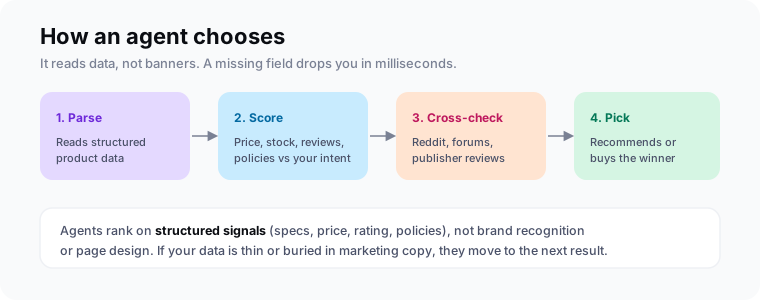
It runs four steps in a fraction of a second. First it parses your structured product data. Then it scores each candidate on price, availability, review signals, and policies against the user request. Next it cross-references third-party sources, because agents check onsite claims against Reddit, forums, and publisher reviews. Finally it picks the option it can justify. A missing field or a stale price knocks you out before the comparison even finishes.
One nuance worth knowing: research on agent purchasing shows selection is measurably biased by things like list position and which model is driving, per a 2025 arXiv study on agent buying behavior. You cannot control the model, but you can control whether your data gives it a reason to pick you.
What signals do shopping agents rank on?
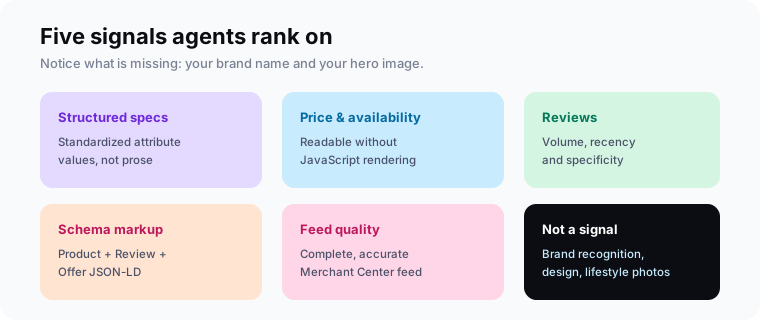
Agents rank on five structured signals: standardized specifications, price and availability readable without JavaScript, review signals (volume, recency, specificity), Product and Review schema markup, and Merchant Center feed quality. What they do not rank on is brand recognition, font choices, or lifestyle photography. Machine-readability, not visual design, decides whether you surface.
Stop optimizing the page a human sees. Start optimizing the data a machine reads. They are two different products now.The mindset shift
Why product data quality can beat a lower price
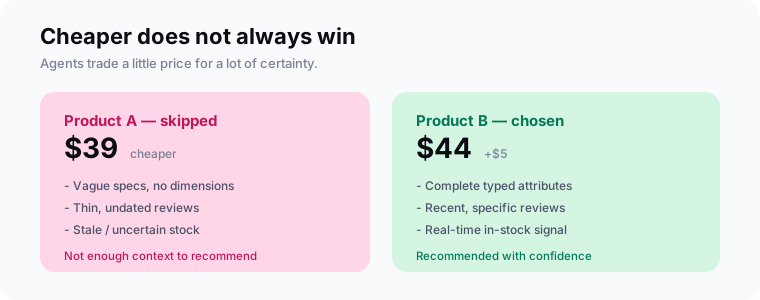
A cheaper product does not automatically win. If it has vague specs, thin reviews, or uncertain stock, an agent may choose a slightly more expensive option it can recommend with confidence. Early analysis of AI-assisted buying suggests agents favor stable pricing and reliable data over the lowest price with poor data, because the agent is accountable for a good outcome, not just a cheap one.
What makes a product catalog agent-ready?
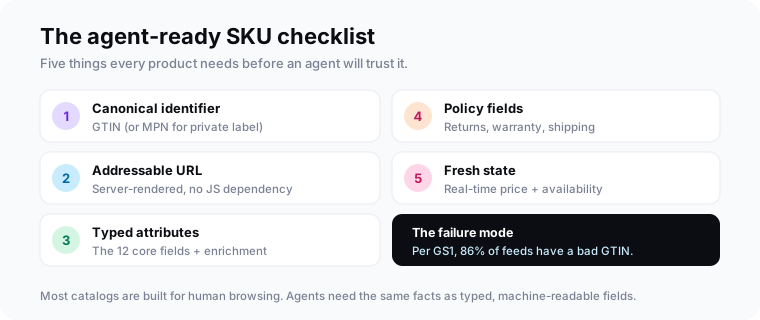
A SKU is agent-ready when it has a canonical identifier (a GTIN, or an MPN for private-label items), an addressable server-rendered URL with no JavaScript dependency, typed attributes covering the category, explicit policy fields for returns and warranty, and a fresh price and availability state. Most catalogs are built for human browsing, with the facts trapped in marketing prose. Agents need those same facts as clean, typed fields.
Write descriptions the way a spec sheet would. A title like "40L waterproof hiking backpack with laptop compartment" gives an agent something to match; "adventure-ready essential" gives it nothing. Trade the adjectives for attributes.
Which feeds do AI shopping agents read?
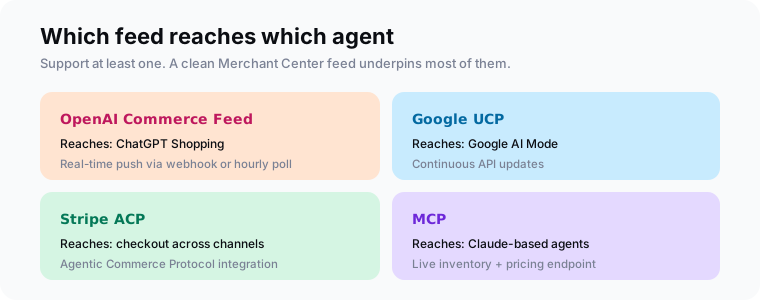
Publish a feed in at least one agentic format, matched to the agents you care about. OpenAI Commerce Feed reaches ChatGPT Shopping, Google UCP reaches Google AI Mode, Stripe ACP handles checkout across channels, and MCP serves Claude-based agents. A clean, complete Google Merchant Center feed underpins most of these, so that is the best place to start.
How do you know if agents are choosing you?
You measure it by running the buying prompts your customers use through the assistants that matter, and recording whether your products are named and cited in the answers. Agent transactions leave thin analytics and almost no referral data, so waiting for it in your dashboard means flying blind. Prompt-level testing is the only baseline available today.
Fix the data first, then watch the answers. The brands that can already see whether an agent picks them are the ones who will be able to fix it when the volume arrives.
Frequently asked questions
What is an AI shopping agent?
How do AI shopping agents choose products?
What signals do shopping agents rank on?
Does the cheapest product always win?
How do I make my product catalog agent-ready?
Which feed formats do AI shopping agents read?
Make your data legible, then measure the pick
Do this next: audit your product feed for valid GTINs, complete typed attributes, and real-time stock, rewrite titles as specs, and publish in at least one agentic feed format. That is what an agent actually reads.
Then measure the result. Pull a baseline of whether AI names your products with MentionsAPI, keep your AI search optimization work going, and watch whether the agents start choosing you.