Search optimization always assumed a human would click. That assumption is now optional.
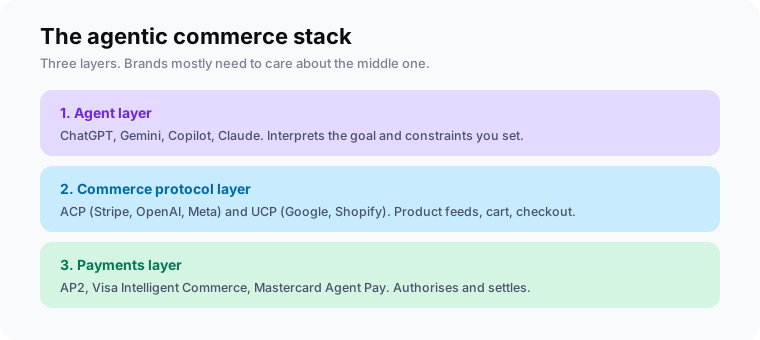
Agentic commerce is online shopping where an AI agent researches, compares, and completes a purchase on your behalf. You set the goal and the constraints; the agent does discovery, decision-making, and checkout. It works because of new open protocols that let agents talk to merchant catalogs and checkout systems directly, plus payment rails that can prove a human authorized the spend. If an agent picks the vendor, being the brand it picks is the whole game.
What is agentic commerce?
Agentic commerce is a purchase carried out by an AI agent acting for a person. The user sets intent and limits, such as a budget, a delivery date, or a brand preference, and the agent handles the rest without a traditional shopping interface. It is different from a chatbot suggesting products, because the agent is authorized to actually transact.
That authorization is the hard part, and it is why this needed new infrastructure rather than just better models.
How does an AI agent actually complete a purchase?
The agent reads merchant product feeds, compares options against your constraints, opens a checkout session through a commerce protocol, and pays using a delegated token so your card details are never exposed to the agent. The merchant then fulfills the order. Crucially, discovery happens in the chat while the transaction lands on the merchant, so brands keep the customer relationship, login, and loyalty data.
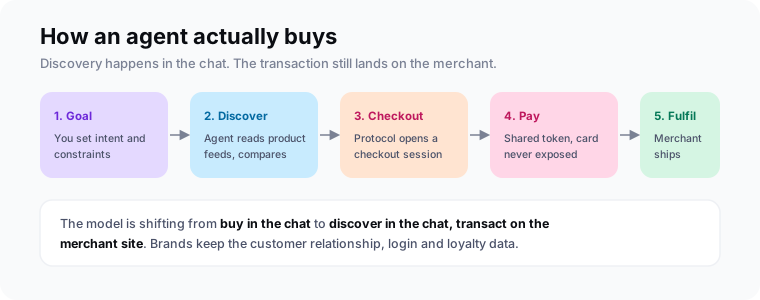
I keep coming back to that last point. The early fear was that agents would disintermediate brands entirely. The protocols as designed do the opposite: they hand the order to the merchant and leave the relationship intact.
What are the agentic commerce protocols?
Two open standards are competing to be the layer agents use. ACP, the Agentic Commerce Protocol, is maintained by Stripe, OpenAI, and Meta and powers Instant Checkout in ChatGPT. UCP, the Universal Commerce Protocol, is Google's, announced at NRF on January 11, 2026. Most brands will end up supporting both.
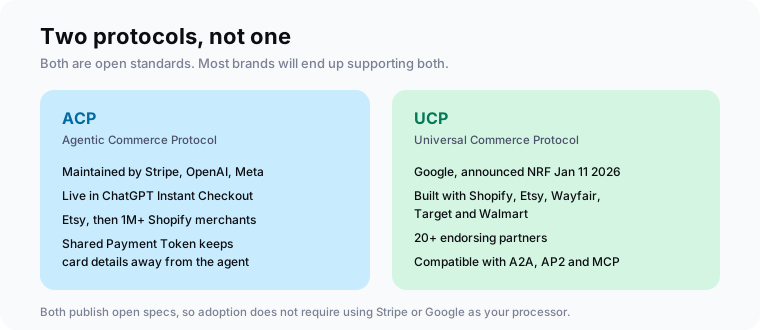
ACP defines five building blocks: agentic checkout, cart and product feed, delegated payment, delegated authentication over OAuth 2.0, and order webhooks. Its Shared Payment Token lets an app like ChatGPT start a payment without ever seeing the buyer's card.
UCP was built with Shopify, Etsy, Wayfair, Target, and Walmart, and is endorsed by more than twenty partners. It is deliberately compatible with A2A, AP2, and MCP, which is Google's pitch: play nicely with everything.
Who is building the payment rails?
Every major network is building agent-aware payments, because existing rails cannot express that a human authorized an agent to spend. Mastercard announced Agent Pay with Agentic Tokens in April 2025. Visa shipped Visa Intelligent Commerce to authenticate, authorize, and tokenise agent-initiated payments. PayPal, American Express, and Coinbase joined Google's AP2 coalition to keep the rails open rather than locked to one platform.
For most merchants this is good news, because you will inherit support through your existing processor rather than integrating a network directly.
How big is agentic commerce going to be?
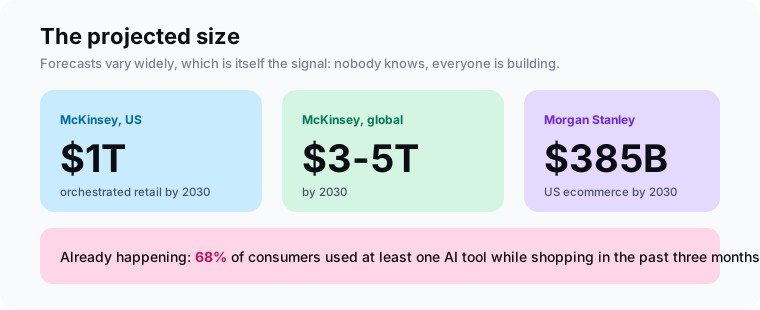
McKinsey projects up to $1 trillion in orchestrated US retail revenue by 2030 and $3 to $5 trillion globally. Morgan Stanley is more conservative at $385 billion of US ecommerce by 2030. That spread is enormous, and the honest read is that nobody knows. What is measurable today is behavior: 68% of consumers used at least one AI tool while shopping in the past three months.
SEO asked how to make a human click. Agentic commerce asks how to make a machine choose. The second question has a very different answer.The shift in one line
How do you get an agent to pick your product?
Publish complete structured product data, keep price and stock accurate in real time, make returns and shipping policies machine-readable, and support a commerce protocol through your platform. Agents cannot be persuaded by copy or brand affinity. They filter on attributes, so a missing size field or a stale price quietly removes you from consideration.
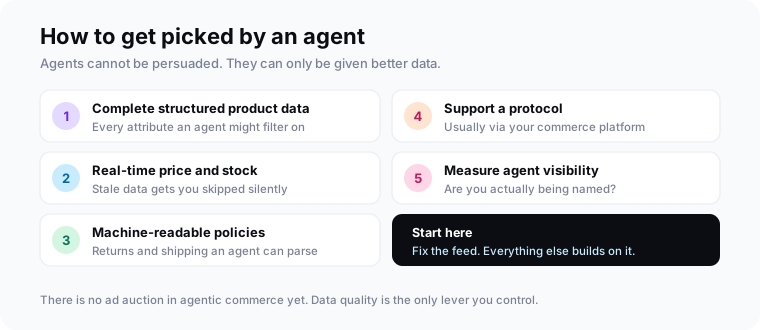
Notice what is absent from that list: ad spend. There is no auction in agentic commerce yet, which makes this a rare window where a smaller brand with excellent data can beat a larger one with a bigger budget.
If you sell through ChatGPT's surface specifically, the mechanics of product selection are covered in ChatGPT shopping: how products get recommended.
How do you measure agent-driven visibility?
You measure it by running the buying prompts your customers use through the assistants that matter, then recording whether your brand and products are named and cited. Agent transactions leave thin analytics, and referral data barely exists, so waiting for it in your dashboard means flying blind. Prompt-level testing is the only baseline available today.
Start before the volume arrives. The brands that can already answer whether an agent picks them will be the ones who can fix it when it counts.
Frequently asked questions
What is agentic commerce?
How is agentic commerce different from AI shopping?
What is the Agentic Commerce Protocol (ACP)?
What is Google UCP?
How big will agentic commerce get?
How do I get my products picked by an AI agent?
Fix the feed, then measure the pick
Do this next: audit your product feed for completeness and accuracy, confirm whether your commerce platform supports ACP or UCP, and make your returns and shipping policies machine-readable. That is the entry ticket, and none of it needs an ad budget.
Then measure the part that decides revenue. Pull a baseline of whether AI actually names your products with MentionsAPI, keep your AI search optimization work going, and watch whether agents start choosing you.