Rank tracking for ten blue links is a solved problem.
Rank tracking across a dozen AI engines is not. Yet.
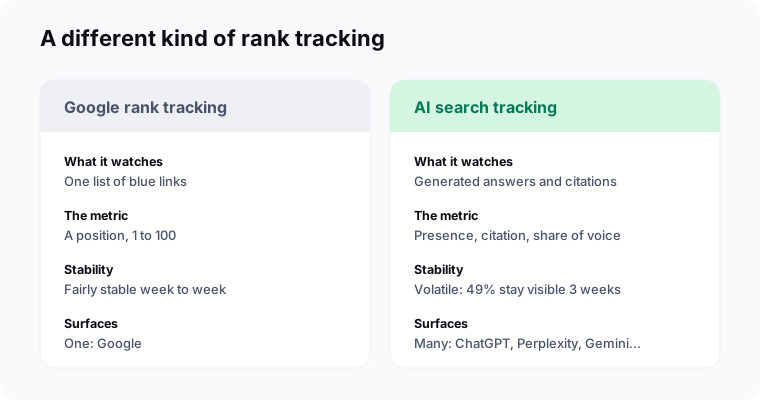
AI search tracking is how you monitor whether AI engines mention, cite, and rank your brand across ChatGPT, Perplexity, Gemini, and Google AI Overviews. A Google rank tracker watches one list of blue links. An AI search tracker watches many engines that each answer differently and change often. It matters because AI referral traffic grew 340% year over year, per Conductor's 2026 benchmark.
What does AI search tracking measure?
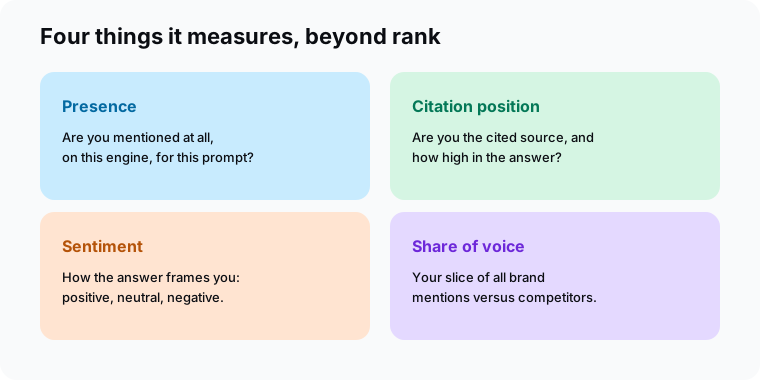
AI search tracking measures four things beyond a blue-link rank: presence, whether you are mentioned at all; citation position, whether you are the linked source and how high; sentiment, how you are described; and share of voice, your slice of all brand mentions. It runs per engine, because a brand can lead on one and be absent on another.
AI presence is not the same as a Google ranking. Advanced Web Ranking found 58% of brands on Google's first page also appeared in AI answers, but 13.5% of brands cited in AI did not rank on page one at all. Your rank tracker cannot see that second group.
How is AI search tracking different from Google rank tracking?
AI search tracking differs from Google rank tracking in three ways. It watches many engines instead of one, it measures presence and citation instead of a single position, and it deals with far more movement. Advanced Web Ranking found only 49% of brands stayed visible in AI answers across three weeks, against the relative calm of Google rankings.
How do you track AI search across every engine?
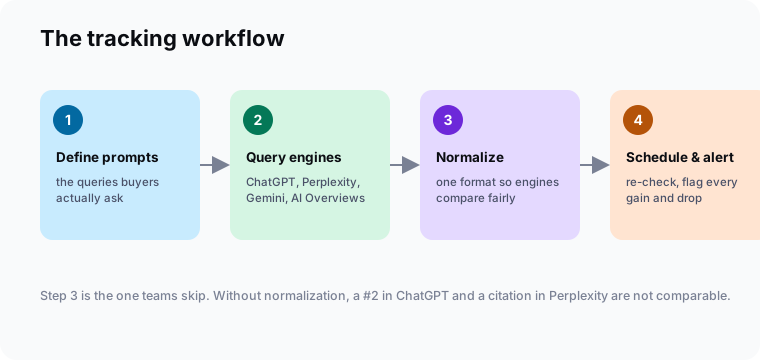
Track AI search with a four-step loop: define your prompt set, query every engine, normalize the results into one format, then schedule re-checks and alert on changes. Run every engine, because they barely agree. Averi found only 11% of cited domains overlap between ChatGPT and Perplexity, so one engine is never the whole picture.
Why does normalization matter?
Normalization matters because a number-two mention in ChatGPT and a cited link in Perplexity are not the same thing, and you cannot compare or report them until they share one format. Turning presence, position, and sentiment into a single schema is what makes AI search tracking reproducible, so this week's number means the same as last month's.
This is also where doing it by hand falls apart.
Copy-pasting from four chat windows into a spreadsheet is fine once. It is not a system. A real tracker normalizes automatically, which is the only way the trend line stays honest.
Why track every engine instead of only ChatGPT?
Track every engine because they cite and recommend differently. Citation rates alone range from about 0.7% on ChatGPT to 9.5% on Google AI Mode and 13.8% on Perplexity, per SearchSignal. The audience is spreading too: ChatGPT's share of AI referrals fell from 89% in 2025 to about 63% in 2026 as Claude, Gemini, and Perplexity grew.
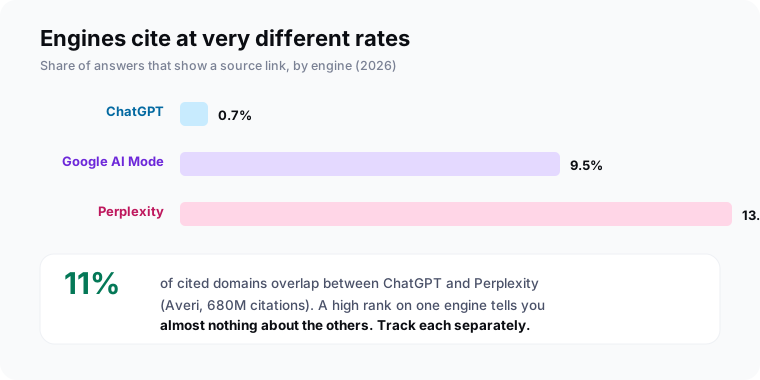
Citation rates run from 0.7% on ChatGPT to 13.8% on Perplexity, and only 11% of cited domains overlap. Track them separately or you are guessing.Why one engine is not enough
What AI search tracking tools and APIs should you use?
You have three ways to do AI search tracking: check by hand, buy a dashboard, or call an API. Manual works for a one-off look. A dashboard suits marketers who want charts and alerts across the top AI search engines. An API suits agencies and builders who need to run tracking at scale and normalize it into their own reports.
| Manual check | Dashboard | API | |
|---|---|---|---|
| Engines | Whatever you open | The major ones | Every engine, one call |
| Metrics | You eyeball them | Presence, citation, SoV | Normalized, raw |
| Normalization | By hand, error-prone | Done for you | Done, and exportable |
| Cadence & alerts | None | Scheduled, built in | On your schedule |
| Best for | A one-off look | Marketers | Agencies and builders |
The full tool market is covered in our roundup of the best AI visibility tools, and the surface-level trackers in AI Overview tracking tools.
How often should you run AI search tracking?
Run AI search tracking continuously, not once. Because roughly half of brands lose AI visibility within three weeks, a quarterly snapshot is close to useless. Check your highest-value prompts weekly and the full set monthly, so you catch a dropped citation while you can still fix it.
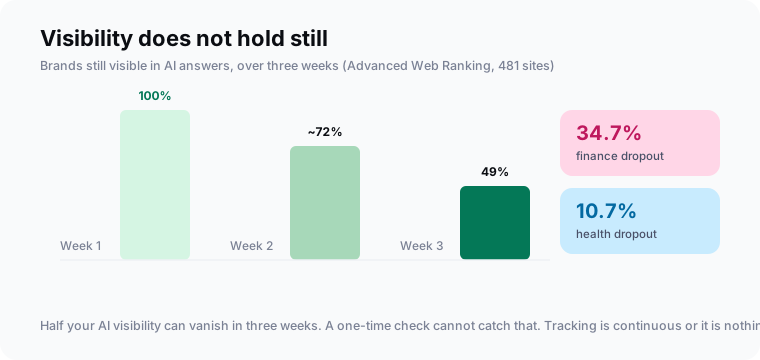
I have watched a brand go from cited to invisible in a fortnight and only notice weeks later, once the pipeline dipped. Weekly tracking is how you find out on day one, not day thirty.
Frequently asked questions
How do I track my brand's ranking in AI search?
What is the best AI search tracker?
How is AI rank tracking different from Google rank tracking?
Can I track all AI engines at once?
How often do AI search rankings change?
Does AI search traffic actually convert?
Put one honest number on your AI visibility
AI search tracking is rank tracking rebuilt for a world of many engines, generated answers, and constant change. Fix a prompt set, query every engine, normalize the results, and watch the trend.
Pull your first AI search tracking baseline with MentionsAPI, find the engines where you are slipping, and re-check next week so the number stays honest.