AI Overviews change daily, and they sit above your blue links.
If you are not tracking them, you are optimizing blind.
An AI Overview tracker is a tool that monitors whether Google AI Overviews cite your brand. It detects which of your queries trigger an Overview, records whether you are cited and where, then alerts you when that changes. This matters because AI Overviews now appear on close to half of US Google searches, and the URLs they cite rotate every few days.
Why does AI Overview tracking matter now?
AI Overview tracking matters because the Overview now decides who gets seen. AI Overviews appear on roughly 48 to 50% of US searches as of early 2026, per BrightEdge tracking, and zero-click searches have climbed to about 68%, according to a 2026 Search Engine Land study. If you are not in the Overview, you are mostly invisible on those queries.
The click math is brutal. Ahrefs found that the presence of an AI Overview cut click-through to the top organic result by about 58% in late 2025.
But being cited flips part of that loss back. Seer Interactive measured roughly 35% more organic clicks for brands cited inside the Overview versus brands left out, reported via Search Engine Land. So the citation is the prize, and a tracker tells you whether you are winning it.
What does an AI Overview tracker do?
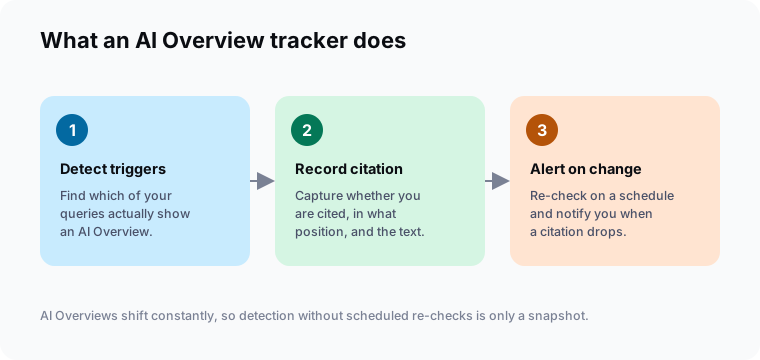
An AI Overview tracker does three jobs. It detects which of your tracked queries return an AI Overview, records whether your brand is cited and in what position, then re-checks on a schedule and alerts you when a citation appears or drops. The better tools also store the cited text, so you can see exactly why a competitor was chosen over you.
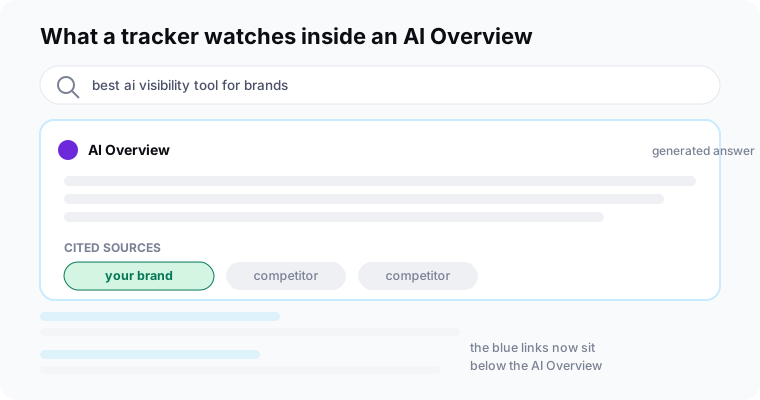
What it watches is the AI Overview itself: the generated answer box that now sits above the regular results, with a row of cited sources. A tracker records whether your brand is one of those sources and where you land. For a primer on the surface, see our guide to what Google AI Overviews are.
Why do AI Overview citations change so often?
AI Overview citations change because the feature is far more volatile than organic search. Semrush found Google keeps the same URL in an Overview for an average of just 3.87 days on desktop, and 91% of the URLs it studied were dropped at some point. A study by Authoritas measured AI Overview volatility at 0.68 against 0.49 for organic rankings, reported by BluShark Digital.
That volatility is the whole reason a one-time check is misleading.
A screenshot from Tuesday can be wrong by Friday. Scheduled tracking is what turns a moving target into a trend you can act on.
Google keeps the same URL in an AI Overview for under four days on average. A weekly check misses most of the movement.The reason snapshots fail
Do AI Overviews cite the same pages that rank?
No, and the gap is widening fast. BrightEdge reported in February 2026 that only about 17% of AI Overview citations came from the top-10 organic results, and Ahrefs data put the top-10 share near 38%, down from roughly 75% a year earlier.
Google builds Overviews with query fan-out, splitting your search into many sub-queries and pulling sources across all of them. So ranking number one no longer means you are cited.
I see this split constantly. Your rank tracker says you are fine, and the Overview says a competitor got the citation. Both are true at the same time, which is why our AI search optimization guide treats citation share as its own scoreboard, separate from rank.
What are the best AI Overview tracking tools?
The best AI Overview tracking tools fall into two groups: dashboards and APIs. Dashboards give marketers turnkey monitoring with charts and alerts. APIs give agencies and builders programmatic AI Overview checks they can run at scale and pipe into their own reports. The right pick depends on whether you want a finished view or the raw data behind it.
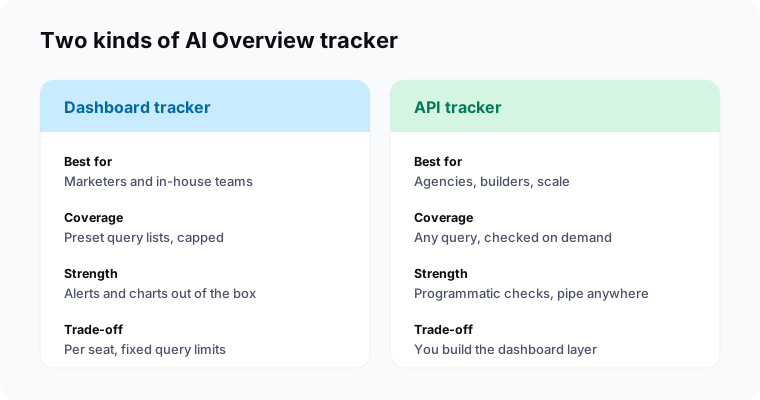
Here is how the three ways to track AI Overviews compare.
| Manual check | Dashboard tracker | API tracker | |
|---|---|---|---|
| Query coverage | A handful | Preset lists, capped | Any query, on demand |
| Refresh | When you remember | Daily to weekly | On your schedule |
| Alerts | None | Built in | You wire them |
| Best for | A one-off spot check | Marketers | Agencies and builders |
| Pricing | Free, your time | Per seat, ~$29 to $499/mo | Pay per call |
How do you choose an AI Overview tool?
Choose an AI Overview tool on five things: query coverage, refresh frequency, accuracy, alerts, and API access. Because AI Overviews shift every few days, daily or on-demand checks beat weekly snapshots, and an alert the day a citation drops beats a monthly report. If you cannot export the data through an API, you do not really own it.
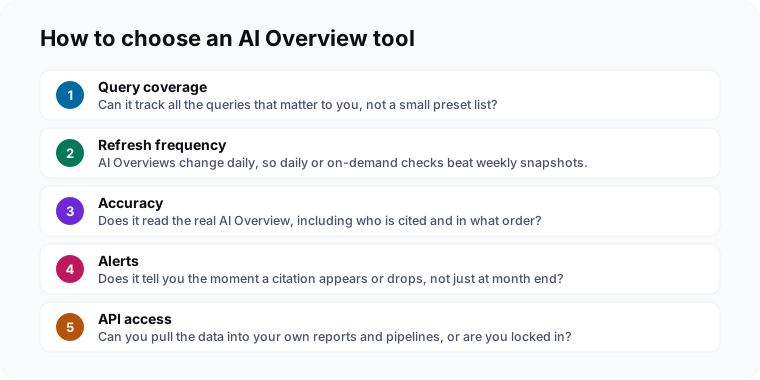
Weigh refresh frequency hardest. Given the 3.87-day average lifespan Semrush measured, a tool that checks weekly will report a citation that already vanished, and miss three that came and went.
How do you set up AI Overview monitoring?
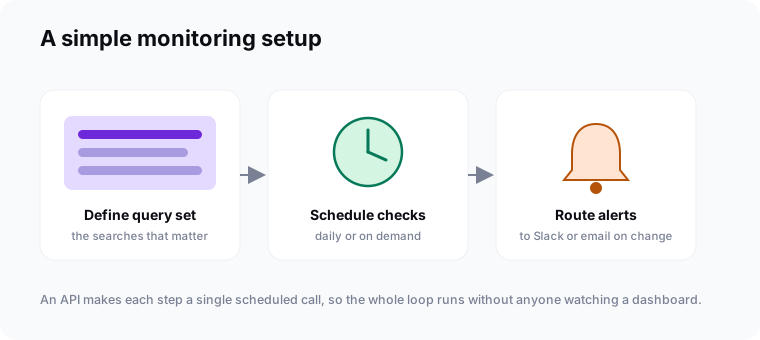
To set up AI Overview monitoring, define a query set, schedule recurring checks, and route alerts to your team. Start with 25 queries your buyers actually run, check whether each shows an Overview and whether you are cited, and save that as your baseline. With an API, each step becomes one scheduled call, so the loop runs without anyone watching a screen.
Frequently asked questions
How do I track if my brand is in Google's AI Overviews?
What is the best AI Overview tracker?
Can you track Google AI Overviews with an API?
Why do my AI Overview citations keep changing?
Does being cited in an AI Overview get more clicks?
Do AI Overviews use the same sources as organic search?
Set your baseline this week
AI Overviews move too fast to check by hand, and the citation is now worth more than the rank. An AI Overview tracker gives you a baseline, a schedule, and an alert the moment a citation changes.
Pull your AI Overview baseline with MentionsAPI, fix the queries where a competitor is cited and you are not, then watch the change land over the next month.