Guide · July 8, 2026

What is llms.txt? How to create one for AI crawlers

Everyone is adding llms.txt. Almost nobody agrees on whether it does anything. Here is what it is, how to make one, and the honest verdict.

TL;DR
llms.txt is a proposed standard: a Markdown file at yourdomain.com/llms.txt that tells AI models which of your pages matter and what each covers. It is not a ranking hack. No major AI engine has confirmed using it, and Google has declined to. But it takes minutes to add, AI coding tools already read it, so it is low-risk insurance for AI crawlability.

By Nikhil Kumar, founder of MentionsAPI. Last updated July 8, 2026.

Everyone is adding llms.txt. Almost nobody agrees on whether it does anything.

So here is the honest version. llms.txt is a proposed standard: a Markdown file at yourdomain.com/llms.txt that tells AI models which of your pages matter and summarizes what each one covers. Jeremy Howard proposed it in September 2024, per Search Engine Land. It will not lift your rankings, and Google has said it will not use it. But it costs almost nothing, and the tools that do read it are growing.

What is llms.txt?

llms.txt is a single Markdown file that points AI models to the content on your site worth reading. Instead of leaving a model to crawl everything and guess, you hand it a curated map: a summary of who you are and a short list of your key pages. Think of it as a business-to-agent file, the machine-readable version of a site menu built for AI.

It lives at the root of your domain, the same place as robots.txt. That is the whole idea: one predictable location an AI can check to understand your site fast.

What does an llms.txt file look like?

An llms.txt file is plain Markdown with a set structure: an H1 with your site name, a one-line summary in a blockquote, then sections of links, each with a short note on what it covers. An optional llms-full.txt holds your full content inlined for models that want everything.
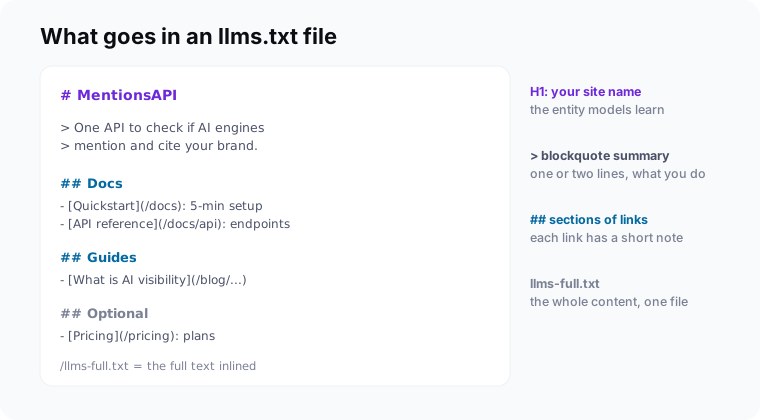
An llms.txt file is Markdown: an H1 site name, a blockquote one-line summary, then sections of links with short descriptions, plus an optional llms-full.txt.

Here is a minimal example:

# MentionsAPI

> One API to check if AI engines mention and cite your brand.

## Docs
- [Quickstart](https://mentionsapi.com/docs): set up in 5 minutes
- [API reference](https://mentionsapi.com/docs/api): every endpoint

## Guides
- [What is AI visibility](https://mentionsapi.com/blog/what-is-ai-visibility): measure it across LLMs

llms.txt vs robots.txt: what is the difference?

They do different jobs. robots.txt controls access, telling crawlers what they may fetch, and every major AI crawler respects it. llms.txt controls comprehension, suggesting which content is worth reading. One gates, the other guides.
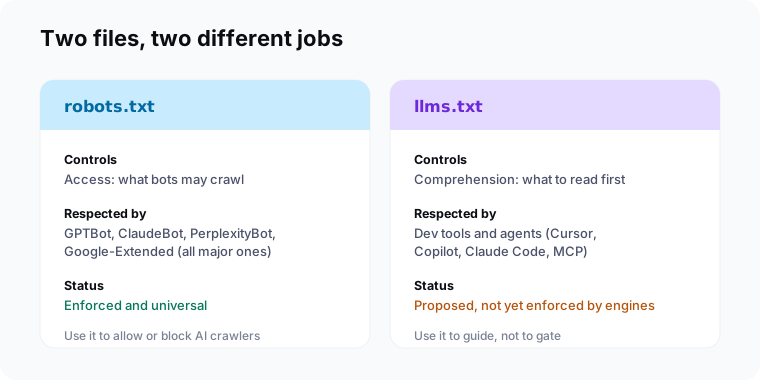
robots.txt controls access and is respected by all major AI crawlers; llms.txt suggests which content to read and is not yet enforced by answer engines.
robots.txt gates access. llms.txt guides comprehension. You want both.
robots.txtllms.txt
JobControl accessGuide comprehension
Respected byAll major AI crawlersDev tools and agents
Enforced?Yes, universallyNo, proposed only
Use it toAllow or block crawlersPoint AI at your best pages

How do you create an llms.txt file?

Creating one takes about fifteen minutes. List your most important pages, write the Markdown, place the file at your domain root, and validate it. A generator can draft it, but hand-pick the links, since a curated file beats a dump of every URL.
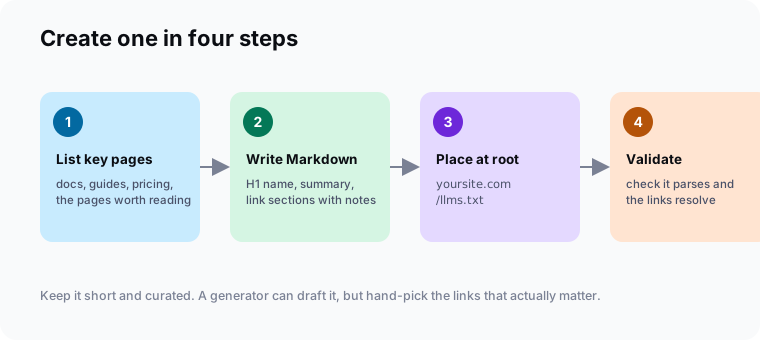
Four steps to create an llms.txt file: list your key pages, write the Markdown with a summary and link sections, place it at your domain root, then validate it.
List, write, place at the root, validate. Keep it short and curated.

Does llms.txt actually work in 2026?

Honestly, mostly not yet, and it depends what you mean by work. About 10% of sites have adopted it, per a SE Ranking study of 300,000 domains, and adopters include Anthropic, Stripe, Cloudflare, and Vercel. But answer engines barely touch it: Otterly found only about 0.1% of AI bot requests target llms.txt.
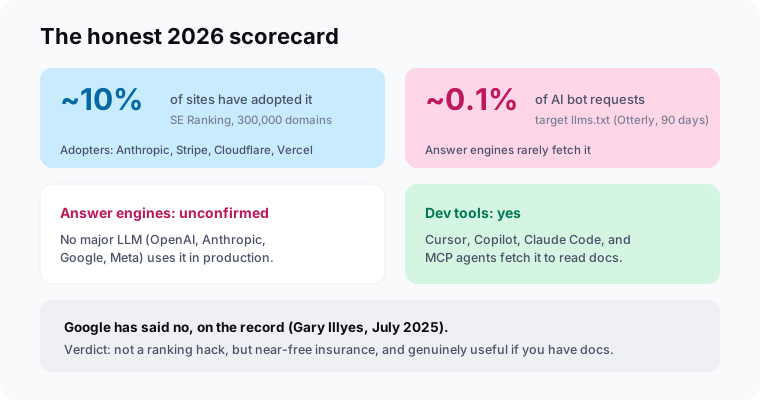
About 10 percent of sites adopted llms.txt, but only around 0.1 percent of AI bot requests target it; Google declined to support it, while developer tools and agents do read it.
High interest, low pickup. The answer engines have not committed; the dev tools have.
~10%of sites have adopted llms.txt (SE Ranking)
~0.1%of AI bot requests target it (Otterly)
Google: nodeclined to support it (Illyes, 2025)

Where it clearly does work is developer tooling. AI coding assistants like Cursor, GitHub Copilot, and Claude Code, plus MCP agents, fetch llms.txt to read your docs with less wasted context. If you publish documentation, that alone can justify it.

llms.txt is not a ranking hack. It is a cheap, sensible bet that the standard sticks, and free help for the AI tools that already read it.The honest verdict

Should you add an llms.txt file?

For most sites, yes, but as insurance, not a growth lever. It costs about fifteen minutes and carries no risk, and it genuinely helps if you have docs that agents and IDE tools read. What it will not do is lift your Google rankings or make ChatGPT cite you.
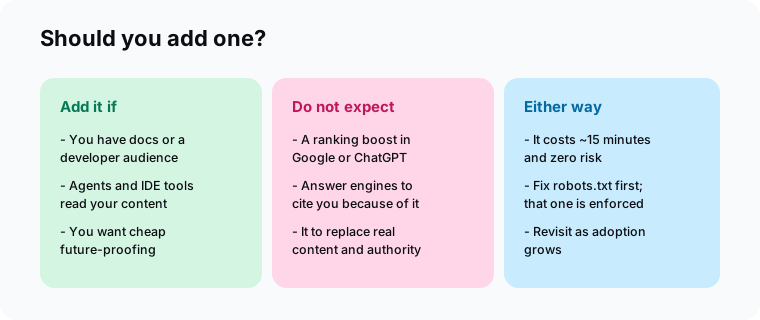
Add llms.txt if you have docs or a developer audience or want low-cost insurance; do not expect ranking boosts; it costs about fifteen minutes either way.
Add it as cheap insurance. Fix robots.txt first, since that one is actually enforced.

One priority note: if you care about AI crawlers, sort out robots.txt before llms.txt. That is the file every AI bot actually obeys, and it decides whether they can reach you at all. The real work still lives in our AI search optimization guide.

I added an llms.txt to mentionsapi.com in about fifteen minutes. My honest read: no measurable change in AI citations yet, but our docs render cleanly in Cursor and Claude Code now, and it is one less thing to retrofit when the standard matures.
Measure whether AI actually cites you
llms.txt is a guess about visibility. MentionsAPI is the measurement: check whether ChatGPT, Claude, Gemini, and Perplexity mention and cite your brand, in one call. Pay-as-you-go, $1 free signup credit.

Frequently asked questions

What is llms.txt used for?
llms.txt is used to tell AI models which pages on your site matter and what each one covers. It is a Markdown file at yourdomain.com/llms.txt with a summary and a curated list of links. The goal is comprehension: helping an AI find and read your best content efficiently, rather than crawling everything.
Is llms.txt the same as robots.txt?
No. robots.txt controls access, telling crawlers what they may or may not fetch, and every major AI crawler respects it. llms.txt controls comprehension, suggesting which content is worth reading. robots.txt is enforced and universal; llms.txt is a proposal that answer engines do not yet act on.
Do ChatGPT and Perplexity read llms.txt?
There is no confirmation that they use it to source answers. In a 90-day study by Otterly, only about 0.1% of AI bot requests targeted llms.txt. GPTBot occasionally fetches the file, but no major provider has said it influences how ChatGPT or Perplexity rank or cite content. Developer tools like Cursor and Claude Code do read it.
Does Google support llms.txt?
No. In July 2025 Google's Gary Illyes confirmed Google does not support llms.txt and has no plans to, and John Mueller compared it to the discredited keywords meta tag. If your goal is Google ranking or AI Overviews, llms.txt will not move it.
How do I create an llms.txt file?
List your most important pages, write a Markdown file with an H1 site name, a one-line summary in a blockquote, and sections of links with short descriptions, then save it at yourdomain.com/llms.txt. Keep it short and curated. Optionally add llms-full.txt with the full text inlined, and validate that the links resolve.
Is llms.txt worth it in 2026?
For most sites, yes, as low-cost insurance rather than a growth lever. It takes about fifteen minutes, carries no risk, and is genuinely useful if you have documentation that AI coding tools and agents read. Just do not expect it to lift your rankings or citations on its own.

Add it, then measure what matters

llms.txt is a fifteen-minute file that might matter more later than it does today. Add it for the dev tools that read it now, keep your robots.txt clean, and do not expect it to move rankings.

Then measure the thing that actually counts: whether AI engines cite you. Pull that baseline with MentionsAPI and track it as the standard, and your visibility, evolve.

Nikhil Kumar
Founder, MentionsAPI

Growth marketer at the intersection of marketing, product, and technology. 8+ years across startups and scale-ups in India, Switzerland, and the Netherlands. Founder of Landkit (landkit.pro).

Stop guessing whether AI can see you.

Check whether ChatGPT, Claude, Gemini, and Perplexity mention and cite your brand in one API call. $1 free signup credit, pay-as-you-go.