Semrush did not build an AI visibility tool. It added an AI visibility feature to a tool that already does nine other things, and priced it like a product.
That distinction runs through this whole review. If you already pay for Semrush and want to see whether ChatGPT names your brand without adding a vendor, the AI Visibility Toolkit is a reasonable, low-effort choice. But it is a bolt-on, and it shows in the coverage, the pricing, and what it will not do for you.
I use Semrush for classic SEO and I have run its AI toolkit. So this is the honest version: what it tracks, what it costs, where it falls short, and what to use instead if AI visibility is the priority rather than a side quest.
What is the Semrush AI Visibility Toolkit?
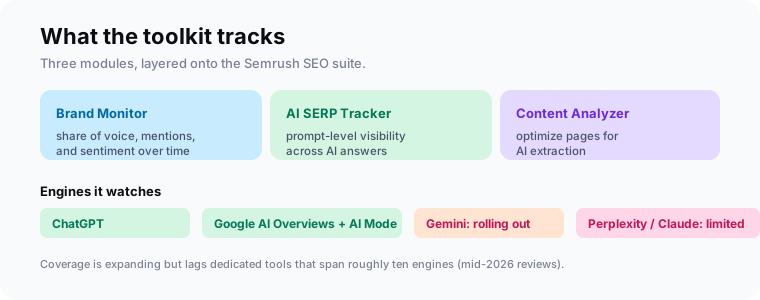
The Semrush AI Visibility Toolkit is an add-on that measures how often your brand shows up inside AI answers. It bundles three modules: Brand Monitor for share of voice, an AI SERP Tracker for prompt-level visibility, and a Content Analyzer to optimize pages for AI. Its headline number is an AI Visibility Score, which measures how often AI names you against the median for your top competitors, all inside the Semrush interface you already know.
The convenience is real. If Semrush is already your home for keyword research and rank tracking, seeing AI mentions in the same login saves you from onboarding another tool. That is the whole pitch, and for some teams it is enough.
How much does the Semrush AI Visibility Toolkit cost?
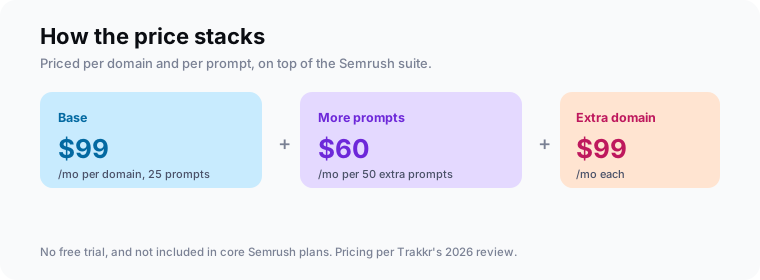
More than the headline number, because it is priced per domain and per prompt. Per Trakkr's 2026 review, the toolkit is $99/month per domain for 25 tracked prompts, plus $60/month per 50 extra prompts and $99/month per extra domain. There is no free trial, and it is not part of core Semrush plans. Track two brands with a real prompt list and the bill climbs fast.
The pricing also sits on top of a suite that got more expensive. Semrush users on Reddit report the entry tier rising from $139 to $199/month in 2026, so the AI toolkit is an add-on to an already-climbing base. Budget for the total, not the $99.
What does Semrush AI visibility track well?
It tracks the two engines most brands care about first, inside a workflow you already use. Semrush covers ChatGPT and Google AI Overviews and AI Mode closely, and reports share of voice, sentiment, and which prompts trigger mentions. For an SEO team that wants a first read on AI visibility without leaving its main tool, that coverage plus the Semrush data you already trust is a genuine strength.
The Google coverage matters more than it sounds. Because Semrush watches both AI Overviews and AI Mode, you see your brand across Google's AI surfaces in the same place you track classic rankings. For Google-heavy strategies, that overlap is convenient.
Semrush is not trying to be the deepest AI visibility tool. It is trying to be the one you do not have to buy separately. For a Semrush shop, that is a real value.The fair read
Where does Semrush AI visibility fall short?
In three ways that matter if AI visibility is your priority. Coverage lags: per mid-2026 reviews, Perplexity and Claude are limited or absent while dedicated tools span roughly ten engines. It tracks but does not optimize, with no real infrastructure to help you fix the gaps it finds. And it is one of nine Semrush product areas, so it moves slower than pure-play tools.
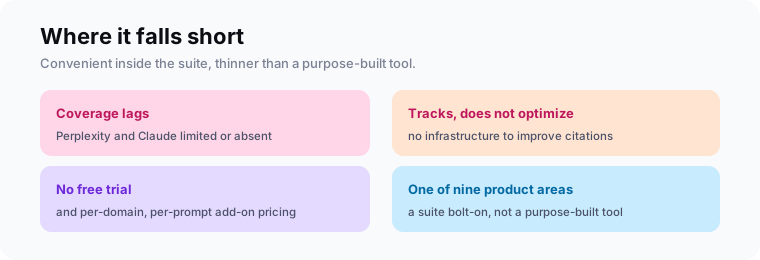
The focus gap is the one to sit with. As Profound frames it in its own comparison, Semrush is a 3,000-plus person company where AI visibility is one of nine product lines, while purpose-built rivals put their whole company on the problem. Profound, for one, raised a $96M Series C at a $1 billion valuation in February 2026 to do only this.
A quieter concern: accuracy. The toolkit tracks simulated prompts on a schedule, not your real customer conversations, and it skews US-English. Semrush users on Reddit have also long noted its competitor-traffic estimates can run far off real analytics, so treat any single AI visibility snapshot as a trend signal, not gospel. We get into why one reading lies in how to check if ChatGPT mentions your brand.
The best Semrush AI visibility alternatives
If AI visibility is the priority, cheaper and more focused tools do the job better. Otterly starts around $29/month for simple dedicated tracking, and Peec around $95 for agencies. Frase adds a fix step at about $39/month. Profound is the enterprise, purpose-built option. And MentionsAPI is the API for developers who want the data in their own systems, at about $0.52 per check across all four engines.
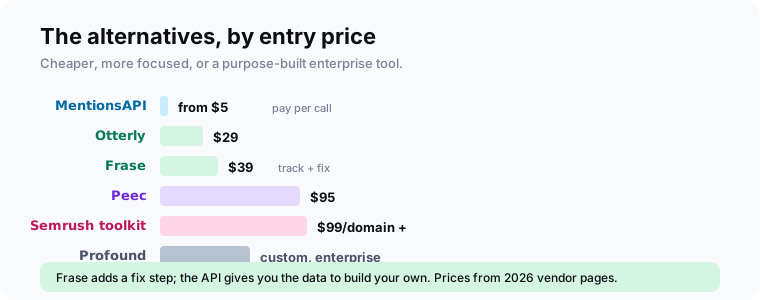
| Tool | Entry price | Best for |
|---|---|---|
| MentionsAPI | ~$0.52/check | Developers who want the data in their own tools |
| Otterly.AI | ~$29/mo | Cheapest simple dedicated tracking |
| Frase | ~$39/mo | Track plus a content fix step |
| Peec AI | ~$95/mo | Agencies, many brands |
| Semrush AI Toolkit | ~$99/mo per domain | Teams already living in Semrush |
| Profound | Custom | Enterprise, purpose-built depth |
Two of these sit next to Semrush in the same suite-add-on bucket, and we break the closest one down in the Ahrefs Brand Radar review. For the enterprise end, Profound alternatives covers the field.
Semrush AI toolkit, or a dedicated tool?
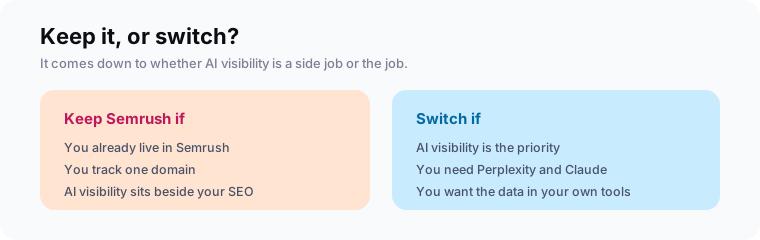
Keep the Semrush toolkit if you already live in Semrush, track a single domain, and want AI visibility next to your SEO work. Switch to a dedicated tool or an API if AI visibility is the priority, you need Perplexity and Claude coverage, or you want the raw data in your own systems. The deciding question is whether AI visibility is a side job or the main one.
Frequently asked questions
What does the Semrush AI Visibility Toolkit track?
How much does the Semrush AI Visibility Toolkit cost?
Is the Semrush AI Visibility Toolkit included in my Semrush plan?
Does Semrush AI visibility track Perplexity and Claude?
What are the best Semrush AI visibility alternatives?
Is the Semrush AI Visibility Toolkit worth it?
Decide on Semrush loyalty, then coverage
The honest verdict: the Semrush AI Visibility Toolkit is a fine add-on for a Semrush shop that tracks one domain and treats AI visibility as one more report. If that is you, keep it and skip the vendor hunt. If AI visibility is the priority, its coverage gaps and per-domain pricing push you toward a dedicated tool or an API.
Either way, pull a real baseline on your own brand across all four engines first, then choose the tool that matches how much AI visibility actually matters to you, and re-check it monthly as Semrush closes its coverage gaps.