Guide · August 21, 2026

Google-Extended: should you allow or block it?

Google-Extended sounds like a crawler you should fear. It is not a crawler at all. Here is what it actually controls, and why blocking it costs you almost nothing.

TL;DR
Google-Extended is a robots.txt token, not a crawler. It does not fetch pages; Googlebot does. It only controls whether your crawled content trains Gemini and grounds Gemini and Vertex AI. Blocking it opts you out of that training, and does nothing to Google Search or AI Overviews, which run on Googlebot. So blocking is low-cost: add one rule to opt out of AI training while keeping every bit of your search visibility.

Google-Extended is not a crawler, and that one fact settles most of the debate.

People treat Google-Extended like a bot creeping around their site. It is a robots.txt token that fetches nothing. Googlebot already crawls your pages for Search; Google-Extended only decides whether that crawled content can be used to train future Gemini models. Blocking it opts you out of AI training and grounding, and leaves your Google Search visibility exactly where it was. The real question is not whether it is safe to block. It is whether you want to be in the training set at all.

What is Google-Extended?

Google-Extended is a standalone robots.txt product token that controls whether content Google crawls from your site may be used to train future Gemini models and to ground answers in Gemini and Vertex AI. Google introduced it in September 2023 as a publisher control. Per Google's own documentation, it does not crawl pages itself; Googlebot does the fetching, and the token only governs downstream use.
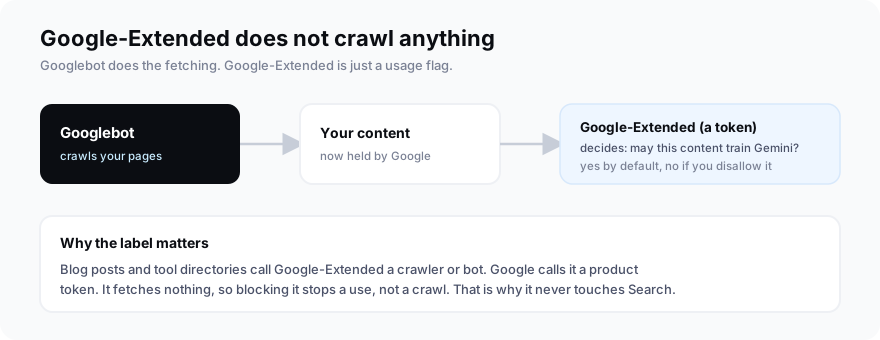
Google-Extended is not a crawler. Googlebot crawls your pages for Google Search; Google-Extended is a robots.txt token that only decides whether that crawled content is used to train Gemini models and for grounding.
Googlebot does the crawling. Google-Extended only flags what that content may be used for.

This is the single most-mislabeled thing in the whole topic. Directories and blog posts call it a crawler or a bot. Google calls it a product token. Getting that right changes how you reason about blocking it.

Google crawler family: where Google-Extended fits

Google runs several crawlers and tokens, and only one of them is about Search. Googlebot fetches your pages for Google Search. Google-Extended is a usage token for AI training. GoogleOther runs internal research crawls. Google-CloudVertexBot crawls on a site owner request when building a Vertex AI agent. The Gemini and agent fetchers act only when a user asks for a specific page.

TokenWhat it doesFetches pages?
GooglebotCrawls for Google Search + AI OverviewsYes
Google-ExtendedControls Gemini/Vertex AI training useNo, it is a token
GoogleOtherInternal research and dev crawlsYes
Google-CloudVertexBotCrawls on your request for Vertex agentsYes
Google-Agent, GeminiNotebookUser-triggered page fetchesYes, per user

One catch worth knowing: the user-triggered fetchers, like the Gemini Notebook and agent fetchers, generally ignore robots.txt, because a person explicitly asked for that page. So no robots.txt rule, Google-Extended included, stops a user from pulling your page into Gemini by hand.

Does blocking Google-Extended hurt your Search or AI Overviews visibility?

No, on both counts, and this is the part most guides get wrong. Google states that Google-Extended does not affect your inclusion in Google Search and is not a ranking signal. AI Overviews and AI Mode are part of Search and run on Googlebot, so Google-Extended does not touch them either. Blocking it removes you from Gemini training, not from anything you can see in Search.
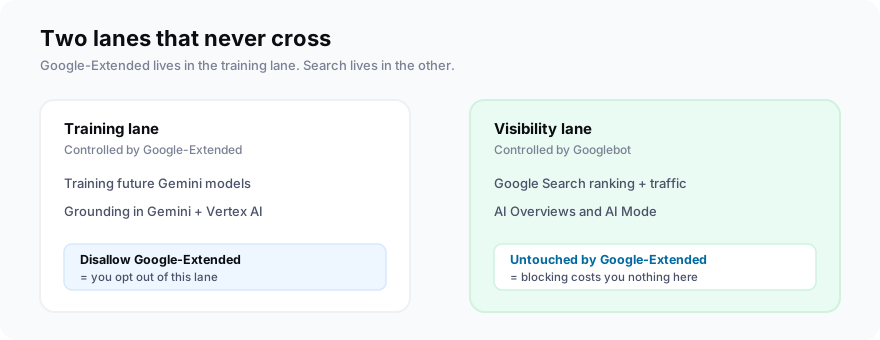
Blocking Google-Extended opts you out of Gemini and Vertex AI training and grounding only. Google Search, AI Overviews, and AI Mode run on Googlebot and are unaffected.
Two lanes. Google-Extended sits in the training lane, and never crosses into Search.
~10%of top-1,000 sites disallow Google-Extended
24% vs 48%news sites blocking it vs GPTBot (Reuters)
Zeroimpact on Google Search ranking (Google)
If your actual goal is to stay out of AI Overviews and AI Mode, Google-Extended is the wrong lever. In 2026 Google added a separate Search Console setting to opt out of AI Overviews, AI Mode, and AI in Discover while keeping your normal Search listing. That toggle, not Google-Extended, is the AI Overviews control. For the visibility side, see our AI Overviews playbook.

Should you allow or block Google-Extended?

Block Google-Extended if you would rather your content not train Gemini or ground its answers. Allow it, which is the default, if you are fine contributing to that, or you actively want your brand represented in how Gemini learns about your category. Because blocking costs you nothing in Search, the decision is purely about training, not about traffic or visibility.

Decide by goal: to keep content out of Gemini training, block Google-Extended; to contribute to training, allow it; either way, Google Search and AI Overviews visibility is unaffected.
This choice is about training only. Search sits it out either way.
Blocking Google-Extended is one of the few AI controls with no downside to your search traffic. You give up a spot in Gemini training data, and keep everything you can actually see.The whole decision, in one line

How do you block, allow, and verify Google-Extended?

To block it, add a Google-Extended rule to the robots.txt at your domain root. To allow it, do nothing, since content is eligible by default. Then verify by loading your robots.txt in a browser and confirming the rule is there. The config is short, and because Googlebot is left alone, your Search presence is untouched.

# Opt out of Gemini / Vertex AI training
User-agent: Google-Extended
Disallow: /

# Googlebot is untouched, so Search and
# AI Overviews visibility stay exactly the same.
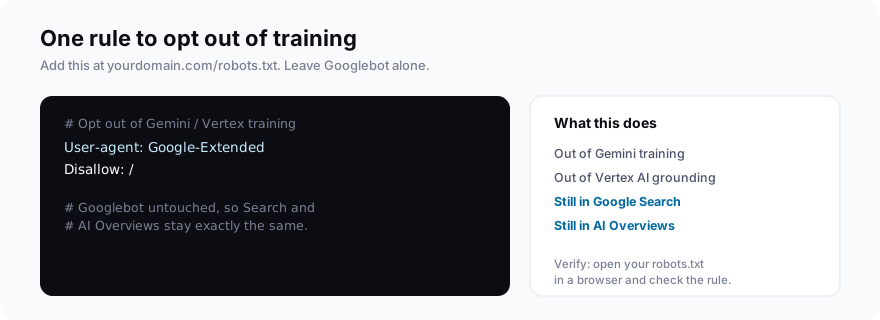
A recommended robots.txt: disallow Google-Extended to opt out of Gemini training, while leaving Googlebot allowed so Google Search and AI Overviews visibility is unchanged.
One rule opts you out of training. Leave Googlebot alone and Search never notices.

How Google-Extended compares to GPTBot and ClaudeBot

All three let you opt out of a vendor AI training, but they are not the same kind of thing. GPTBot and ClaudeBot are real crawlers that fetch your pages; blocking them stops the fetch. Google-Extended fetches nothing, because Googlebot already has your content, so the token just flags whether that content may be used. The shared lesson across all three: opting out of training does not remove you from that engine's answers.
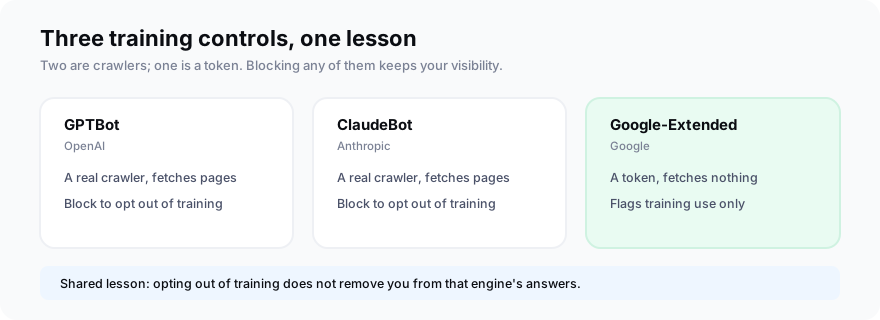
GPTBot and ClaudeBot are real crawlers that fetch pages, so blocking them stops the fetch; Google-Extended is a token that fetches nothing and only flags training use. For all three, opting out of training does not remove you from that engine's answers.
Two crawlers and a token. Same move, same result: your visibility survives.
The same "block training, keep visibility" logic runs across the AI crawlers. The OpenAI side is in our GPTBot guide and the Anthropic side in our ClaudeBot guide. Google is the odd one out only because its control is a token, not a bot.
See whether Google actually cites you
robots.txt decides what trains on you. MentionsAPI tells you what cites you: check whether Gemini, Google AI Overviews, ChatGPT, and Perplexity mention and cite your brand, in one call. Pay-as-you-go, $1 free signup credit.

Frequently asked questions

What is Google-Extended?
Google-Extended is a robots.txt product token, not a crawler. It does not fetch pages. Googlebot crawls your site, and Google-Extended only controls whether that already-crawled content may be used to train future Gemini models and for grounding in Gemini and Vertex AI. Google launched it in September 2023 as a publisher control.
Does blocking Google-Extended affect my Google rankings?
No. Google states plainly that Google-Extended does not impact whether a site is included in Google Search and is not a ranking signal. Search crawling, indexing, and ranking run entirely through Googlebot, a separate token. You can disallow Google-Extended and keep exactly the Google rankings and traffic you have today.
Will blocking Google-Extended remove me from AI Overviews or AI Mode?
No, and this is the most common misconception. AI Overviews and AI Mode are part of Google Search and are governed by Googlebot, not Google-Extended. To limit how your content appears there you use Search-side controls like nosnippet or noindex. Blocking Google-Extended only affects Gemini and Vertex AI training and grounding.
What is the difference between Googlebot and Google-Extended?
Googlebot is the crawler that fetches your pages for Google Search, including AI Overviews and AI Mode. Google-Extended is not a crawler at all; it is a robots.txt token that decides whether Googlebot-crawled content can train Gemini models. One controls Search visibility; the other controls AI-training use. Blocking Google-Extended leaves Googlebot untouched.
How do I block Google-Extended in robots.txt?
Add a block at yourdomain.com/robots.txt with User-agent: Google-Extended and Disallow: /, then save the file at your domain root. That opts your content out of Gemini and Vertex AI training and grounding while leaving Googlebot, and therefore Google Search and AI Overviews, fully allowed. Doing nothing leaves your content eligible for training.
Is Google-Extended the same as GPTBot?
They serve a similar purpose, opting your content out of a vendor AI training, but they work differently. GPTBot is OpenAI actual crawler that fetches pages. Google-Extended is a token that does not fetch anything; Googlebot already did the crawling. Both are safe to block if you want out of AI training without losing search visibility.

Set the rule, keep your search traffic

Do this today: decide whether you want to be in Gemini training data. If not, add the Google-Extended disallow to your robots.txt and verify it. Googlebot stays allowed, so your Google Search and AI Overviews visibility does not move.

Then measure the part that pays the bills: whether AI actually cites you. Pull that baseline with MentionsAPI, keep your crawler rules clean across every engine, and watch whether your Gemini and AI Overviews mentions hold up.

Nikhil Kumar
Founder, MentionsAPI

Growth marketer at the intersection of marketing, product, and technology. 8+ years across startups and scale-ups in India, Switzerland, and the Netherlands. Founder of Landkit (landkit.pro).

Stop guessing whether AI can see you.

Check whether Gemini, Google AI Overviews, ChatGPT, and Perplexity mention and cite your brand in one API call. $1 free signup credit, pay-as-you-go.