Every SEO agency now offers GEO. That is exactly why you need to know what a real one does.
Generative engine optimization services are the fastest-growing corner of the search industry, and also the muddiest. The category is barely two years old, the label is unregulated, and the work ranges from serious information-retrieval engineering to a slide deck that renamed SEO. This guide sorts the real from the rebranded.
We will cover what a GEO service actually includes, the agencies worth knowing in 2026, what it costs, the honest build-versus-buy decision, and the one thing every engagement lives or dies on: whether AI answers start citing you, which you must measure yourself.
What is a GEO service, and what do GEO agencies do?
A GEO service gets your brand cited inside AI-generated answers, the way an SEO service once chased Google rankings. Instead of optimizing for a ranked list of links, it optimizes for the answer itself, so that ChatGPT, Perplexity, Gemini, and Claude name and link you when a buyer asks. The deliverable is a citation, where SEO earned a ranked position.
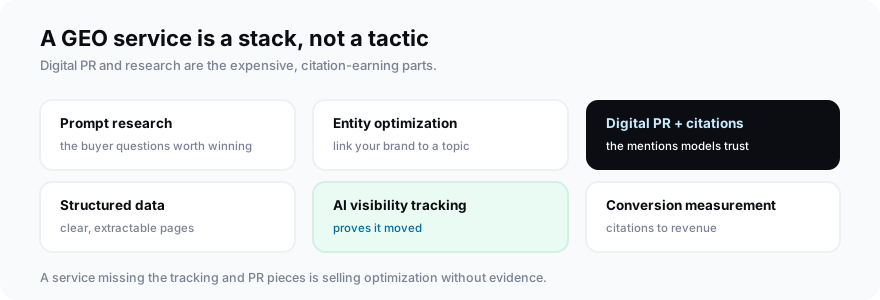
The actual work, per the agencies that publish their methods, is a stack: prompt research, entity optimization, structured data, digital PR, citation building, and AI visibility tracking. The tactics overlap with modern SEO, but the target is different, and the citation-earning parts, original research and digital PR, are where the money goes.
The reason this exists is a real shift in behavior. Pew Research Center found that 18% of Google searches produced an AI summary in March 2025, and when one appeared, users clicked a result just 8% of the time versus 15% without one. When the answer replaces the click, being inside the answer is the only visibility left.
The channel is growing to match. Semrush measured AI referral traffic rising 66% in 2025, from 462 million to 767 million monthly visits. That is the demand a GEO service is selling into, and why every SEO shop suddenly has a GEO page.
It helps to name the parts. Prompt research finds the buyer questions worth winning; entity optimization makes a model confidently associate your brand with a topic; citation building and digital PR earn the third-party mentions models trust; and AI visibility tracking proves any of it moved. A service missing the last two is selling optimization without evidence.
Who actually buys this? Mostly B2B and SaaS brands whose buyers now ask AI assistants for shortlists, plus consumer brands in categories where a single recommendation decides the sale. If your customers are asking ChatGPT for the best tool in your space, a GEO service exists to make you the name it gives back.
How is a GEO agency different from an SEO agency?
An SEO agency optimizes for ranked links; a GEO agency optimizes to be cited inside AI answers. The SEO goal is a position on a results page, earned largely through backlinks and keyword coverage. The GEO goal is a citation inside a generated answer, earned through authority, clear structure, and third-party mentions the model trusts.
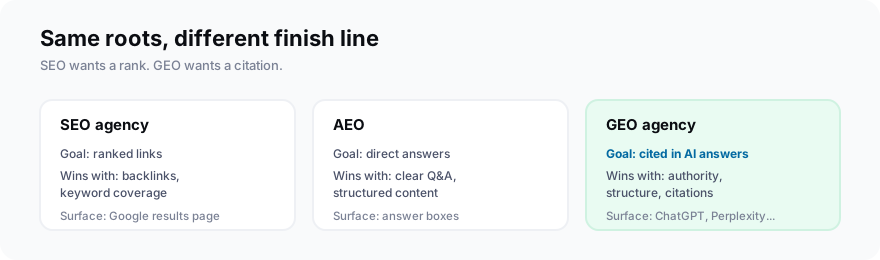
There is a middle sibling worth knowing: answer engine optimization, or AEO, which targets direct answers to question-style searches. GEO is the broader term for being cited across generative answers, and in practice most agencies use the labels interchangeably. We draw the line precisely in our AEO vs GEO explainer.
The overlap is why so many SEO agencies now sell GEO, and why some of it is genuine. The best GEO work builds on real technical and content SEO, while the weakest simply relabels a keyword report. That difference is what you are paying to tell apart, and we break down the underlying discipline in our generative engine optimization guide.
The notable GEO agencies in 2026
No single agency is best; each leans on a different strength, so the right pick depends on your gap. Some are information-retrieval specialists, some are content-and-PR shops, and some fold GEO into broader growth marketing. The short list below reflects the agencies most often named in the category, with what each is known for.
| Agency | Known for | Best fit |
|---|---|---|
| iPullRank | Information retrieval, embeddings, passage relevance | Technical, enterprise GEO |
| Go Fish Digital | Technical SEO + content + digital PR + tooling | Full-service enterprise |
| Siege Media | Original research and content for citations | Content-led brands |
| Omniscient Digital | B2B content strategy and topical authority | B2B SaaS |
| Relevance | AI authority engineering, third-party citations | Authority and PR gaps |
| Single Grain | GEO inside broader growth marketing | Founders wanting one shop |
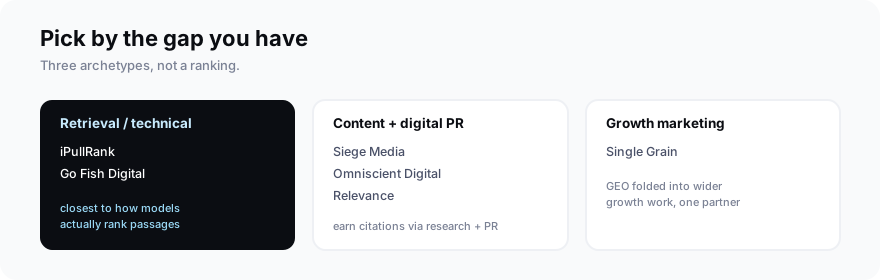
Read the list as archetypes, not a ranking. iPullRank and Go Fish Digital sit on the technical, information-retrieval end, closest to how the models actually rank passages. Siege Media, Omniscient Digital, and Relevance are content-and-authority shops that earn citations through research and PR. Single Grain folds GEO into wider growth work for teams that want one partner.
Before you sign with any of them, verify three things: that the agency tracks the specific engines your buyers actually use, that it can show its own brand cited in AI answers, and that you keep access to the raw citation data. An agency that will not show its own AI visibility is a strange one to hire for yours.
Directories add breadth if the short list does not fit. Clutch ranks GEO firms by verified reviews, and Fiverr lists individual GEO freelancers for smaller budgets. Treat any ranking as a starting point, not a verdict, because the category is too new for the rankings to be settled.
How much do GEO services cost?
Most GEO services run between $3,000 and $25,000 a month, with the full market spanning roughly $1,500 to $30,000 or more. Price tracks scope: your content-library size, how competitive your category is, and whether the work includes original research and digital PR. Those last two earn the citations, and they are what you are really paying for.
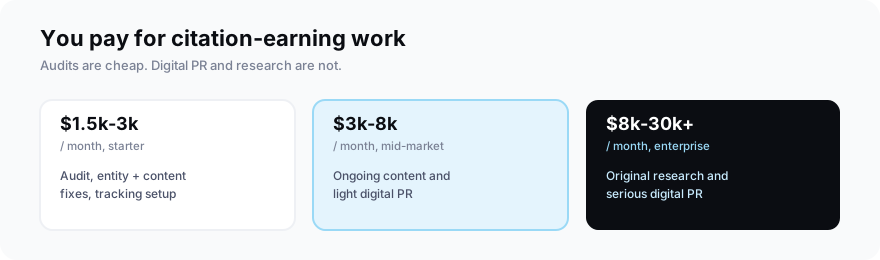
Each tier buys different things. A starter engagement gets you an audit, entity and content fixes, and tracking setup; a mid-market program adds ongoing content and light PR. The top tier is where original research and serious digital PR live, the work that earns citations at scale rather than just tidying your pages.
A useful gut check on any quote: ask what earns the citation. If the plan is mostly on-page tweaks and a dashboard, it is priced like GEO but delivered like a light SEO retainer. The real citation-building work, research, PR, and authority, is what justifies the higher tiers, and published pricing guides put the same ranges on it.
GEO agency vs GEO tools vs doing it yourself
You have three routes, and they are not exclusive: hire an agency for done-for-you work, buy tools and run it in-house, or blend the two. An agency buys speed, PR relationships, and focus. A tools-plus-team approach costs less and keeps the knowledge inside your company. Most mature teams end up blending, using an agency for PR and their own stack for tracking.
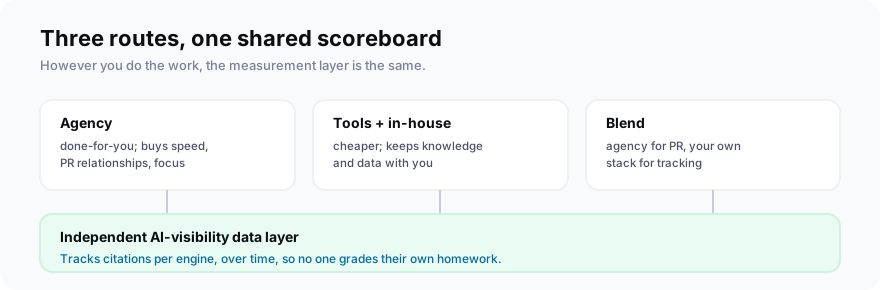
In-house makes sense for more teams than you would expect. If you already publish strong content and have technical SEO handled, the added GEO tactics are learnable, and doing it in-house keeps the knowledge and the data with you. The case for an agency is strongest when you need digital PR relationships you do not have or results faster than you can staff for.
The common thread is the data. Whichever route you pick, someone has to check whether AI answers actually cite you, and that is a job for an API, not a slide. Our GEO tools guide covers the software side, and the measurement layer is the same regardless of who does the work.
Hire an agency for the work if you want to. But never let the agency be the only one measuring the work. That scoreboard has to be yours.The one-line rule
How do you choose a GEO service, and spot rebranded SEO?
Choose on evidence of real citation work, not on the word GEO in the pitch. Ask a candidate agency to show brands they have gotten cited in ChatGPT or Perplexity, how they earn those citations, and how they will measure your share over time. Vague answers about content and authority, with no citation examples, are the tell of relabeled SEO.
There is research to anchor the conversation. The Princeton team behind the original Generative Engine Optimization study (KDD 2024) found the biggest visibility gains, around 30 to 40%, came from adding statistics, quotations, and cited sources. A good agency talks in those specifics; a weak one talks in adjectives.
A few red flags recur. Be wary of guaranteed citations, since no agency controls a model's output; of reporting that shows only traffic and never citations; and of any refusal to name the engines they track. Real GEO is probabilistic and measurable, and honest agencies say both parts out loud.
Set the timeline honestly, too. Citations follow authority and fresh, well-sourced content, so meaningful movement takes months rather than weeks. Any agency promising AI-answer citations inside the first thirty days is selling a schedule the mechanism does not support.
How do you measure whether GEO is working?
You measure it by tracking whether AI answers name and cite you, per engine, over time, against your competitors. Run a fixed set of buyer prompts through ChatGPT, Perplexity, Gemini, and Claude on a schedule, and record your share of the citations each run. That trend is the real outcome a GEO program is buying.
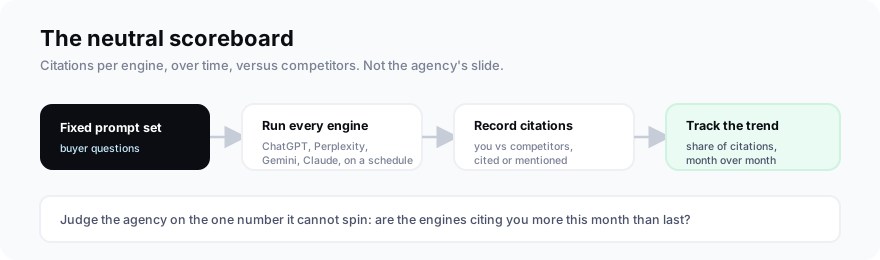
Log the same fields every run so the trend is comparable: which brands were named, whether each was cited with a link or only mentioned, and which engine it came from. Those columns turn a pile of AI answers into a share-of-citations number you can chart, which is the only view that shows whether the work is landing.
The catch is independence. An agency reporting on its own AI-visibility dashboard has every reason to frame the numbers kindly, which is why the measurement should sit with you. Tracking it yourself is the same discipline we describe for AI share of voice and competitor visibility.
Doing that by hand across engines and prompts does not scale, so teams query each engine through an API on a schedule and parse the citations automatically. That is exactly what MentionsAPI is for, and it is the layer that lets you hold any agency, or yourself, honestly to account.
Frequently asked questions
What is a GEO service?
Who are the best GEO agencies in 2026?
How much do GEO services cost?
Do you need a GEO agency, or can you do it yourself?
How is a GEO agency different from an SEO agency?
How do you measure whether GEO is working?
Hire the work, but own the scoreboard
Do this next: shortlist two or three agencies whose strength matches your gap, ask each for a named citation they have earned and how they will measure yours, and rule out anyone who answers in adjectives. That single question separates real GEO from rebranded SEO.
Then set up your own measurement before the engagement starts, so you have a baseline. Track your AI citations with MentionsAPI from day one, keep your AI visibility fundamentals in view, and judge the agency on the one number it cannot spin: whether the engines cite you more this month than last.