Brand monitoring used to mean Google Alerts.
In 2026 it means watching what every AI engine says about you.
The best AI monitoring tool tracks whether ChatGPT, Perplexity, Gemini, and Google AI Overviews mention, cite, and rank your brand, then tells you when that changes. On a budget, Otterly.AI starts at $29 a month. For mid-market speed, Peec AI starts near 89 euros. For enterprises, Profound leads. For developers who want raw data, an API like MentionsAPI fits. Here is how they compare.
Why do you need an AI monitoring tool now?
You need an AI monitoring tool because buyers now ask AI before they ask Google. G2 found 51% of B2B software buyers start research with an AI chatbot, and AI referral traffic grew 340% year over year, per Conductor. If an engine recommends a rival and never names you, a monitoring tool is how you find out in time to act.
One more reason: the engines disagree. Averi found only 11% of cited domains overlap between ChatGPT and Perplexity, so a tool that watches one engine gives you a false sense of safety.
What should an AI monitoring tool do?
A capable AI monitoring tool does five things: it tracks mentions and citations across every engine, records sentiment and rank, benchmarks share of voice against competitors, schedules checks with alerts, and exports the data through an API. A tool that watches only ChatGPT, or reports a single rollup score, is a demo rather than a monitoring tool.
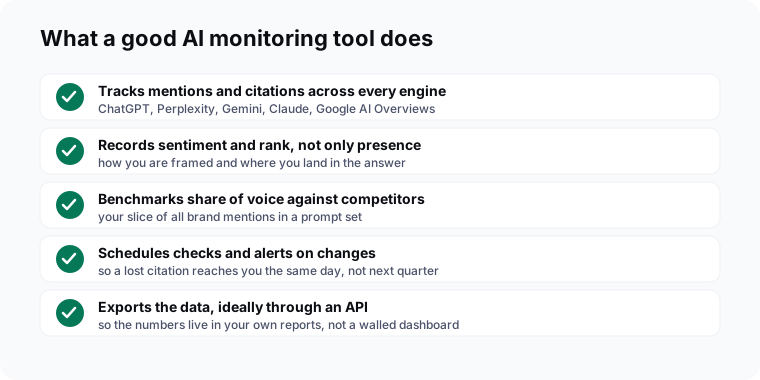
Hold every tool below against that list. The details in our AI search tracking guide explain why each capability matters.
Best AI monitoring tools for brands
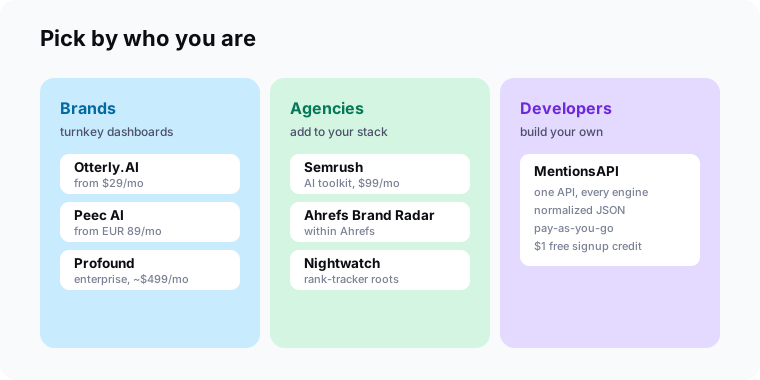
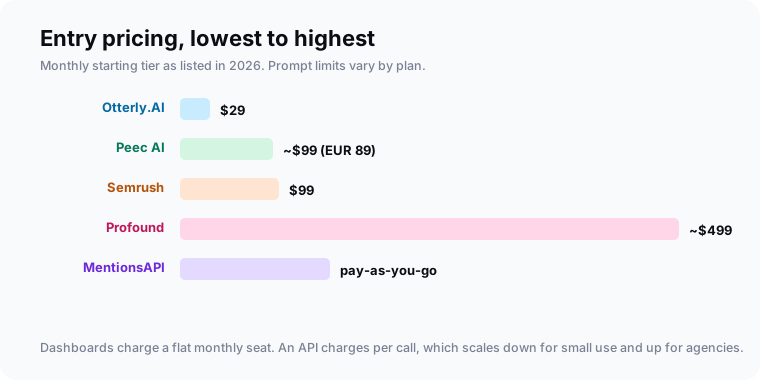
For brands that want a turnkey dashboard, three tools lead in 2026. Otterly.AI is the accessible entry at $29 a month. Peec AI is the mid-market pick from around 89 euros, built specifically for AI search. Profound is the enterprise option near $499 a month, and it raised a $96M Series C in 2026. The right one comes down to budget and prompt volume.
Otterly.AI, the budget pick
Otterly.AI is the most affordable dedicated visibility tracker. Its Lite plan is $29 a month for 15 prompts, with Standard at $189 for 100 prompts. It is the easiest way to start watching a handful of high-value queries without a big commitment.
Peec AI, the mid-market pick
Peec AI targets the middle, where speed and usability matter more than exhaustive features. Plans run from about 89 euros a month for 25 prompts up to enterprise tiers, and it covers ChatGPT, Google AI Overviews and AI Mode, Copilot, Perplexity, Gemini, and Grok on every paid plan.
Profound, the enterprise pick
Profound is the enterprise player, with deeper analytics and a price to match near $499 a month. Its $96M Series C in 2026 signals where the category money is going. For large teams that need conversation-level analysis, it is the heavyweight.
| Tool | Entry price | Entry prompts | Best for |
|---|---|---|---|
| Otterly.AI | $29/mo | 15 | Solo brands, tight budgets |
| Peec AI | ~89 euros/mo | 25 | Mid-market, fast setup |
| Profound | ~$499/mo | Custom | Enterprise, deep analytics |
Best AI monitoring tools for agencies and SEO teams
Agencies usually want a rank monitoring tool that bolts onto the SEO stack they already run. Semrush added an AI Visibility Toolkit at about $99 a month, Ahrefs added Brand Radar inside its suite, and rank-tracking veterans like Nightwatch now cover AI engines. These fit teams that report AI visibility next to keyword rankings for many clients at once.
The pull toward tools you already pay for is real. If your team lives in Semrush or Ahrefs, an AI add-on beats a second login, at least until you need the depth a dedicated tool or API gives you.
Best AI monitoring for developers: the API option
Developers and data teams usually skip the dashboard and call an API. Instead of a fixed interface, you get normalized mention, citation, sentiment, and rank data you can pipe into your own product or client reports. This is where MentionsAPI fits: one call covers every engine, billed pay-as-you-go with a $1 free signup credit. It is the visibility tracker you build yourself.
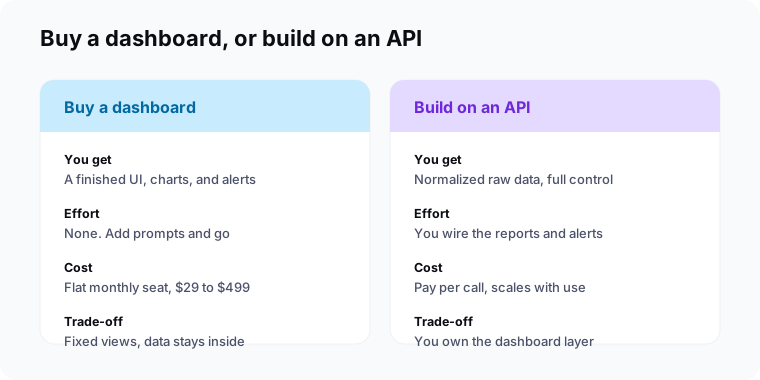
I built MentionsAPI because I wanted the numbers without a dashboard I would forget to open. If you already have a reporting stack, the raw feed drops straight into it.
Buy a dashboard when you want answers today. Reach for an API when you want to own the data and the interface.The build-or-buy line
How do you choose an AI monitoring tool?
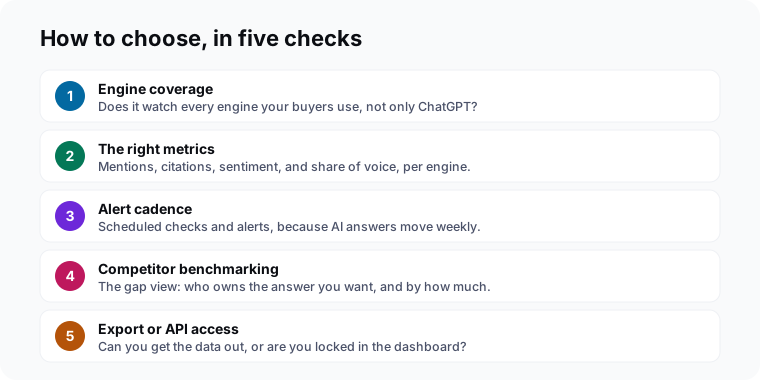
Choose an AI monitoring tool on five checks: engine coverage, the right metrics, alert cadence, competitor benchmarking, and export or API access. Match those to your budget and who will use it. A marketer wants a dashboard, an agency wants multi-client reporting, and a developer wants raw data. The wrong fit is the tool nobody opens after week two.
Frequently asked questions
What is the best AI monitoring tool?
How much does an AI monitoring tool cost?
What is the cheapest AI visibility tracker?
Do I need an AI monitoring tool, or can I use Google Alerts?
Which AI monitoring tool is best for agencies?
Is there an API for AI brand monitoring?
Pick one and set your baseline this week
The best AI monitoring tool is the one your team will actually run. Brands on a budget should start with Otterly.AI, mid-market teams with Peec AI, enterprises with Profound, agencies with whatever sits in their current stack, and developers with an API.
Whichever you choose, set a baseline this week. Pull your first read with MentionsAPI or a free trial, find the engines where a competitor is winning, and re-check next week so the number stays honest.