Most people add Applebot-Extended to robots.txt thinking they are blocking a crawler. They are not.
Applebot-Extended does not crawl anything. It is a control token Apple introduced in 2024 so publishers can decide whether the pages Applebot already fetched may be used to train Apple's foundation models, the ones behind Apple Intelligence and Siri. Blocking it is an AI-training opt-out, and that is all it is.
This guide covers what Applebot-Extended actually is, how it differs from Applebot, whether blocking it touches your Apple search visibility, whether you should block it, and exactly how, including a second lever most guides miss. The short answer: for most sites, allow it.
What is Applebot-Extended?
Applebot-Extended is a robots.txt control token, not a crawler that fetches pages. Apple introduced it in 2024 to give publishers a way to opt their content out of training Apple's general-purpose foundation models, which power Apple Intelligence, Siri, and Apple's developer tools. Disallowing it tells Apple not to train on you.
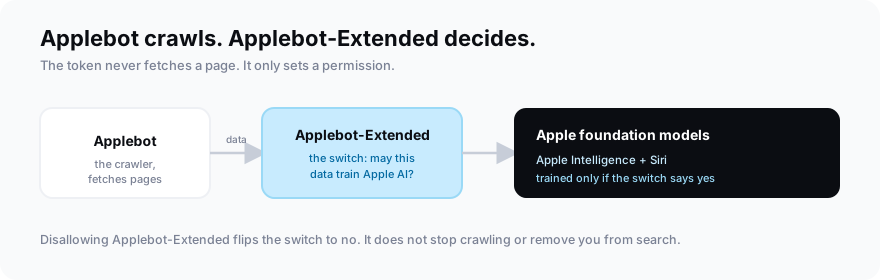
The distinction matters because it changes what blocking does. Since Applebot-Extended never requests a page, disallowing it does not stop any crawling or remove you from search. It only flips the training permission from yes to no.
For context, Applebot itself is not new. Apple has run it since around 2015 to power Siri suggestions and Spotlight, quietly indexing the web for a decade. Applebot-Extended is the recent addition, a 2024 bolt-on that separates that long-standing search crawling from the newer question of AI training.
Apple added the token under pressure. When the AI-scraping debate erupted in 2024 and publishers realized their content was training models without consent, the major AI companies each shipped an opt-out. Applebot-Extended was Apple's answer, arriving alongside Google-Extended and GPTBot's controls.
In June 2026, Apple made the stakes explicit. It rewrote its Applebot documentation to state that the crawler now serves Apple Intelligence, Services, and Developer Tools, not just search. Applebot-Extended is the lever that lets you opt out of that AI use while staying in search.
Applebot vs Applebot-Extended: what is the difference?
Applebot is the crawler that indexes your pages for Spotlight, Siri, and Safari search; Applebot-Extended is a token that governs whether that crawled data trains Apple's AI. One fetches and indexes, the other only sets a permission. Confusing them is the single most common Applebot-Extended mistake.
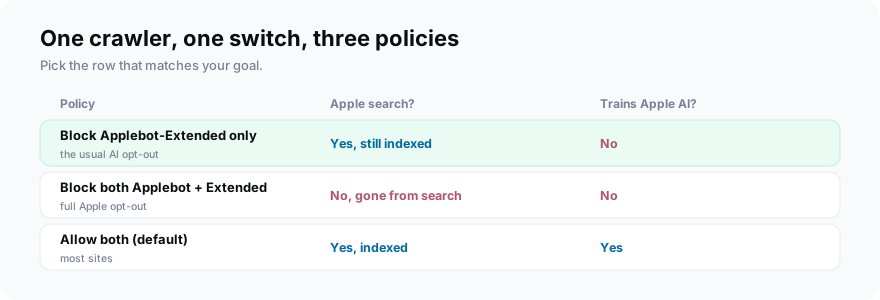
That gives you three real choices. Block Applebot-Extended only, and you stay searchable but out of AI training; block both Applebot and Applebot-Extended, and you disappear from Apple search entirely; allow both, and you feed search and AI alike.
Map that to who you are: a SaaS or local business almost always wants choice three, allow both, to stay findable and trainable. A subscription publisher often wants choice one, in search but out of training. Almost nobody wants choice two, leaving Apple search, unless they are deindexing on purpose.
This is the same design Google uses with Google-Extended, a training-only token separate from Googlebot. If you have set a policy for Google-Extended, apply the same thinking here, as we cover in our Google-Extended guide.
Does blocking Applebot-Extended affect your Apple search visibility?
No. Blocking Applebot-Extended opts you out of AI training only, and Apple states that pages disallowing it can still appear in Spotlight, Siri, and Safari search results. Search indexing is governed by Applebot, a separate token, so the two decisions do not touch each other. You lose nothing in Apple search by opting out of training.
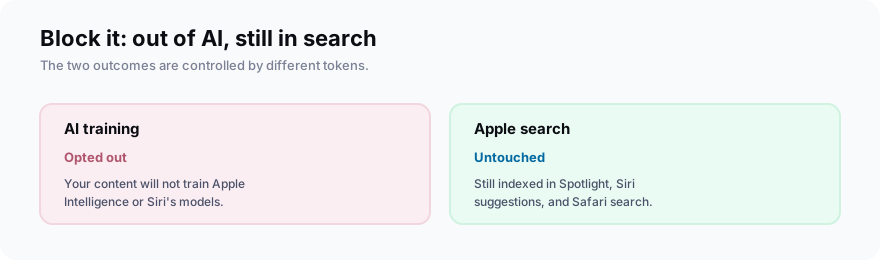
This is what makes Applebot-Extended low-risk to block, and also low-reward. You are not trading away search traffic. You are only choosing whether Apple's models get to learn from your content, which is a rights decision more than a visibility one.
So there is no SEO penalty to weigh. Blocking Applebot-Extended will not drop you in Siri suggestions, Spotlight, or Safari, because none of those read the training token. Anyone who tells you opting out of Apple's AI hurts your Apple search ranking is conflating the two tokens.
Should you allow or block Applebot-Extended?
For most brands, allow it. Apple respects the token, so the choice is genuinely yours, and its AI now reaches an enormous audience, so being in the training data has real upside. Blocking gains you nothing concrete today, while quietly opting you out of a fast-growing answer surface. Block only if you have a deliberate reason not to feed Apple's models.
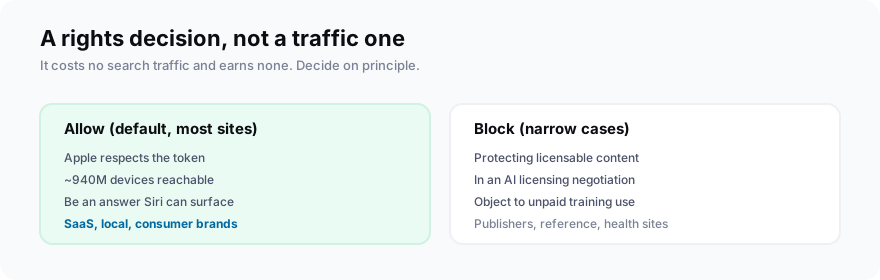
The scale is the argument. Apple Intelligence is enabled on roughly 940 million active devices as of early 2026, with about 410 million daily users, and Siri handles around 1.2 billion queries a day. Being part of what that system knows is worth more than a symbolic opt-out for most commercial sites.
This matters most for consumer and local brands. If your customers ask Siri for a recommendation or a fact in your category, being in Apple's training data is how you become a possible answer. For a business whose buyers live on iPhones, that is a channel worth feeding, not fencing off.
There is upside on the allow side too, not just an absence of downside. Apple relaunched Siri as an AI assistant in June 2026, and the models Applebot-Extended feeds are what answer those queries. Being in that training data is how your brand becomes something Siri can surface, on a surface that barely existed a year ago.
The honest case for blocking is real but narrow. If you are a publisher protecting licensable content, or you are in or near an AI licensing negotiation, or you simply object to your work training a model you will not be paid for, opting out is a legitimate stance. That is exactly why news sites block it more than anyone else.
The publisher pushback is not abstract. Outlets that have signed or are chasing AI licensing deals treat unpaid training as money left on the table, so they disallow the training tokens to keep their leverage. If there is any chance you will license your content later, opting out now preserves that option rather than giving the work away first.
It is worth being clear-eyed about how weak this control really is, though. It depends on each company choosing to honor a voluntary token, and it only governs future crawls, not the copies already sitting in a training set. Regulators are starting to circle that gap, but today a robots.txt line is the main lever a publisher actually holds.
Blocking Applebot-Extended is a rights decision, not a visibility one. It costs you no search traffic, and it earns you no search traffic. Decide it on principle, not performance.The one-line rule
How do you block Applebot-Extended (and the nosnippet nuance)?
You block it with two lines in robots.txt, and that covers training. But training is only one of two levers Apple gives you, and most guides stop at the first. The second, the nosnippet meta tag, controls live AI retrieval, and the two operate independently.
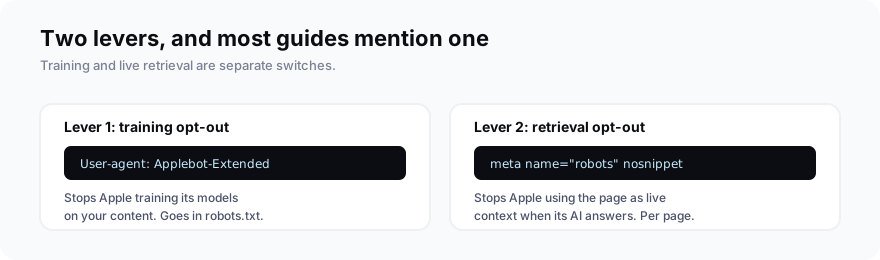
For the training opt-out, add a rule to robots.txt with the user-agent line for Applebot-Extended followed by Disallow and a single slash. Because the token is a directive Apple honors, this is a reliable off switch, not a hopeful request. It takes effect the next time Apple reads your file.
For the retrieval opt-out, use the nosnippet meta tag on the pages you want held back. Apple has said it will not use content tagged nosnippet as additional context when its AI generates output. If your goal is to stay out of Apple's live answers specifically, that tag, not the robots rule, is the one you want.
One practical note on timing. A robots.txt change only takes effect the next time Apple fetches the file, and it governs future use, not data already collected. So set your policy once, deliberately, rather than flipping it back and forth, because each change only shapes what happens from that point on.
How is Applebot-Extended different from GPTBot and Bytespider?
Applebot-Extended is a training switch that Apple honors, GPTBot is a real crawler that respects robots.txt, and Bytespider is a crawler that largely ignores it. So the three demand different handling: Applebot-Extended and GPTBot obey a clean opt-out, while Bytespider needs a firewall rule to actually stop.
| Token / bot | What it is | Honors robots.txt? | Blocking removes search? |
|---|---|---|---|
| Applebot-Extended | AI-training switch | Yes | No |
| Google-Extended | AI-training switch | Yes | No |
| GPTBot | Training crawler | Yes | No search to remove |
| Bytespider | Training crawler | No | No search to remove |
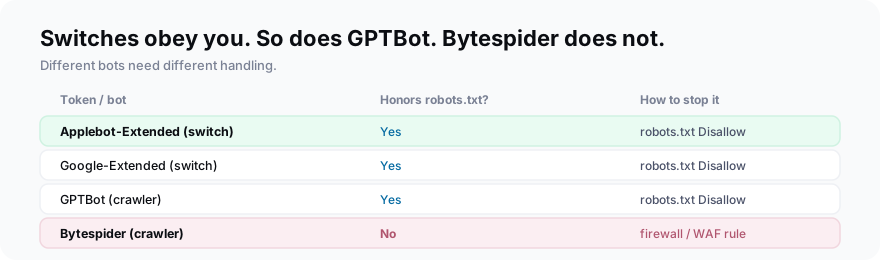
The practical upshot: with Applebot-Extended, the robots rule is enough, and you never need a firewall. We cover the crawler that does need one in our Bytespider guide, and the friendlier OpenAI equivalent in our GPTBot guide.
How many sites actually block it?
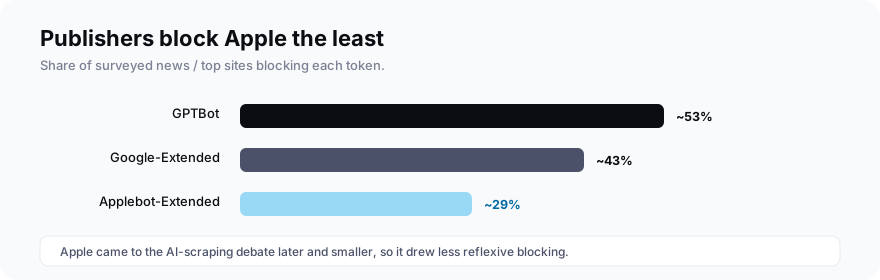
Fewer than block the other AI bots, which tells you the market treats Apple as lower-stakes. In a June 2026 audit of 107 prominent sites, about 29% blocked Applebot-Extended, with news sites leading at 12 of the 31. Broader news-industry surveys put it well behind GPTBot and Google-Extended.
The blockers cluster where content is worth the most to a model. The same audit noted that sites heavy with high-utility material, health explainers, reference entries, and definitional pages, are among the most likely to opt out, because that is exactly the content a model most wants to absorb. If that describes you, blocking is a more defensible call.
The gap is instructive. Data journalist Ben Welsh, surveying more than 1,100 news sites, found far fewer blocking Applebot-Extended than the roughly 53% blocking GPTBot and 43% blocking Google-Extended. Apple came to the AI-scraping debate later and with a smaller footprint, so it drew less of the reflexive blocking the earlier bots did.
Either way, you are in respectable company. Allowing it puts you with the majority; blocking it puts you with a serious minority of rights-conscious publishers. Neither choice is fringe, which is why it is worth deciding deliberately rather than copying someone else's robots.txt.
Frequently asked questions
What is Applebot-Extended?
What is the difference between Applebot and Applebot-Extended?
Does blocking Applebot-Extended hurt my Apple search visibility?
Should you allow or block Applebot-Extended?
Does Applebot-Extended respect robots.txt?
What is the nosnippet tag for?
Decide it on principle, then move on
Do this next: decide whether you want Apple's models trained on your content. If yes, do nothing, since allowing is the default. If no, add the Applebot-Extended Disallow rule to robots.txt, and add nosnippet on any page you also want kept out of live AI answers.
When you are genuinely unsure, allow it. The default is reversible and cheap: you can add the Disallow line any day if your licensing strategy changes, but you cannot retroactively pull value from a model that never learned your brand existed. Opting in and revisiting beats opting out and missing the window.
Then stop worrying about the crawler and start watching the outcome. Whether or not you let Apple train on you, track where you actually get named across the AI engines, with your AI visibility fundamentals in hand and your competitors in view.