Everyone reads the zero-click numbers as bad news. They are only bad news if the click was the only thing you were ever selling.
Zero-click search is any search that ends without the user clicking through to a website, because the answer is right there on the results page.
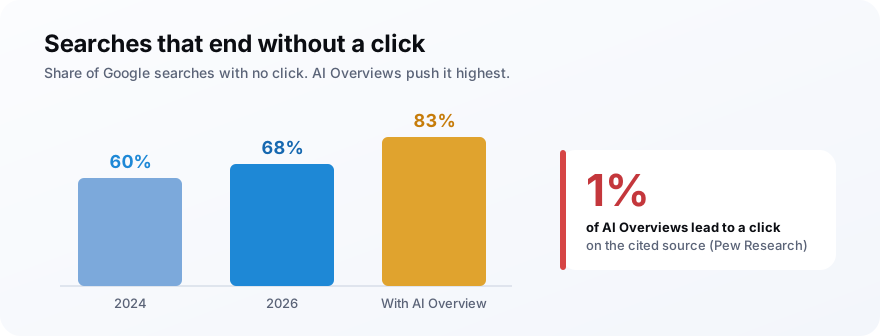
In 2026, 68% of Google searches end this way, and 83% when an AI Overview shows up. It sounds like a death sentence for traffic.
It is really a shift. The answer became the destination, so being the cited source is the new win. Here is what zero-click search is, why AI made it the default, and what to measure instead of clicks.
What is zero-click search?
Zero-click search is a search that ends on the results page, with no click to any website. The user gets what they need from a featured snippet, a knowledge panel, an AI Overview, or a direct answer, and moves on. It is not new, but it went from a side effect of a few snippets to the majority of all searches once AI answers arrived.
The term has been around since 2019, when Rand Fishkin first showed most Google searches ended without a click.
Back then it meant Google answering a factual question, the time, a score, a definition, without sending you anywhere. The complaint was that Google kept users on Google. That version of zero-click was annoying but narrow.
AI made it the whole game.
Now the results page or the chat window writes a full, synthesized answer to almost any question, not just simple facts. The user reads it and stops. Our explainer on how Google AI Overviews work covers the feature driving most of this.
Zero-click does not mean zero-value. It means the value moved from the click to the citation.The one line to remember
How common is zero-click search in 2026?
Very. In an analysis of Similarweb browser data from early 2026, SparkToro found that 68% of Google searches ended without a click, up from about 60% in 2024. When an AI Overview appears, that figure rises to 83%. Zero-click is now the default behavior on Google, not the exception, and the share of searches that send a click has fallen roughly 23% in two years.
The rate depends heavily on where and what people search.
| Context | Zero-click rate |
|---|---|
| All Google searches (2026) | 68% |
| When an AI Overview appears | 83% |
| Mobile searches | 77% |
| Desktop searches | 46.5% |
| Informational queries | 74% |
| Transactional queries | 31% |
Zoom out and the trajectory is steep. Similarweb data shows zero-click on Google climbed from 56% in May 2024 to 69% a year later, and the SparkToro read has it at 68% in early 2026. The line has bent upward every time AI features expanded.
The device split matters more than it looks.
Mobile runs about 77% zero-click against desktop's 46%, and buyers increasingly research on their phones. The surface where you are least likely to earn a click is the one growing fastest.
The intent split is the part that should shape your strategy.
Informational queries are roughly 74% zero-click while transactional ones sit near 31%. Your how-to and definition pages lose the most traffic, while your product and pricing pages keep more of theirs, so the pain lands hardest on top-of-funnel content.
What causes zero-click search?
Anything that answers the query before the blue links do. Featured snippets, knowledge panels, and local packs have done it for years. AI Overviews and AI chatbots now do it at scale, because they synthesize a full answer at the top of the page or in a chat window. The more complete the on-page answer, the fewer clicks the results below it get.
The usual suspects, roughly in order of impact today:
- AI Overviews: a written answer above the results, now the single biggest driver of zero-click at 83%.
- AI chatbots: ChatGPT, Perplexity, and Gemini answer in a window that often has no links at all.
- Featured snippets: the classic pulled-quote box that answers without a click.
- Knowledge panels: facts about people, places, and companies shown directly on the page.
- Direct answers and local packs: weather, conversions, hours, and map results that resolve on the spot.
Notice that the top two are both AI, and both are newer than the rest.
That is the story of the last two years in one line: the mechanisms that always caused some zero-click got a far more powerful sibling, and it works on complex questions the old snippets never touched.
How has AI made zero-click search bigger?
AI turned the answer itself into the product. A traditional snippet quoted one source; an AI Overview writes a paragraph and rarely sends you onward. Pew Research found users click a result 8% of the time when an AI summary is present, versus 15% without it, and that only 1% of AI Overviews lead to a click on a cited source. In a chatbot like ChatGPT, there is often no link to click at all.
The difference from old zero-click is coverage.
Snippets answered simple, factual queries. AI answers handle comparisons, recommendations, and how-to questions, the exact middle-of-funnel searches that used to send buyers to your site. Our guide on how ChatGPT search works shows how those answers get assembled and cited.
And the chatbots do not even pretend to be a search page.
When someone asks ChatGPT to recommend a tool, the reply is a short list of names, sometimes with citations, sometimes without. There is no page of ten links to rank on. There is one answer, and either you are in it or you are not.
The scale behind this is not niche.
ChatGPT reached 900 million weekly users by early 2026, and Google's AI Overviews reach 2 billion people a month. The answer-first surfaces now sit in front of essentially everyone, which is why zero-click stopped being a Google quirk and became how most people get information.
Is zero-click search bad for your business?
It is bad if clicks are the only thing you count. Organic traffic to a lot of informational pages is falling, and that is real. But the answer users see is still built from sources, and being named in it puts your brand in front of the buyer at the moment of decision. The exposure did not vanish. It stopped showing up in your click reports.
Think about what a citation actually does.
When ChatGPT answers "what is the best tool for X" and names you, the user forms an impression, remembers the name, and often searches for you directly later. That is brand lift and influence, the same thing a top-of-page mention in a trusted article always did. It just does not leave a footprint in your analytics.
This hits B2B especially hard.
A buyer researching software asks ChatGPT for options, gets three names, and shortlists them before ever visiting a website. If you are not in that answer, you never entered the consideration set, and no traffic report will tell you why the pipeline quietly thinned.
The real risk is not lost clicks. It is flying blind.
If you only watch traffic, a zero-click world looks like slow decline with no explanation. You cannot see that a competitor is now the default recommendation in AI answers while you are absent, because none of it moves the numbers you are looking at. What you cannot measure, you cannot fix.
What does zero-click search mean for your content KPIs?
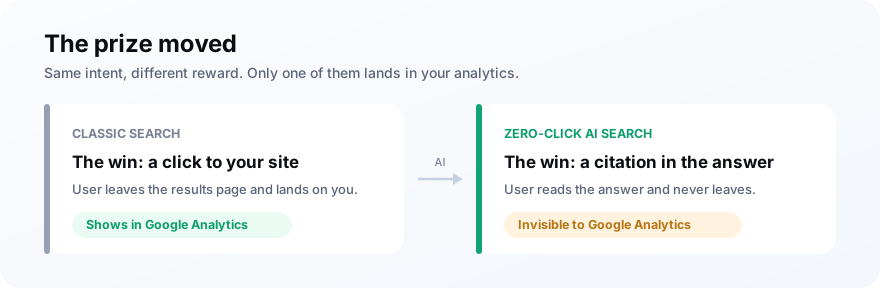
It means your old dashboards measure the wrong thing. Sessions, clicks, and organic traffic still matter for transactional pages, but for informational content they now undercount your real reach, because the impressions happen inside answers you get no click from. The fix is to put a citation metric next to your traffic metric, and judge top-of-funnel content on whether AI answers cite it.
Split your pages by what they are for.
Protect the transactional ones, product, pricing, and comparison pages, where clicks still convert and zero-click is lowest at around 31%. For the informational ones, stop expecting the traffic they used to pull and start asking a different question: is this page the source an AI answer quotes?
Then report both numbers together.
A monthly view that shows organic traffic alongside how often AI engines cite you tells the true story. An analyst with only a traffic chart sees a decline they cannot explain, while the citation line shows where the reach actually went.
None of this means abandon SEO. It means widen it.
The same content work that earns a featured snippet earns an AI citation, so you are not starting over. You are measuring a second outcome the click era never had a number for.
How do you win in a zero-click world?
Aim to be the source the answer is built from, then measure that instead of only clicks. Write clear, sourced, answer-first content that AI engines and snippets can lift. Make sure the crawlers that feed AI search can reach you. Then track whether AI answers actually name and cite you, because that visibility never appears in Google Analytics.
Start by writing for extraction, not just ranking.
Lead each page with a direct, self-contained answer to a real question, backed by a specific fact or number. That is the shape AI engines and featured snippets lift most easily. Our guide on answer engine optimization covers the structure in depth.
Do not skip the plumbing, either.
If the crawlers that build AI answers cannot reach your pages, none of the writing matters, so confirm you are not blocking the search bots that feed ChatGPT and Google. Being eligible to be cited comes before being cited, and it is a robots.txt setting most sites never check.
Then change the scoreboard.
Track whether AI answers cite you, using an AI visibility score or the raw mentions behind it, and treat that as the metric that replaced rank. In a world where two-thirds of searches never produce a click, a citation is the conversion you can still see.
Frequently asked questions
What is zero-click search?
What percentage of searches are zero-click?
What causes zero-click searches?
Is zero-click search bad for SEO?
Do AI Overviews cause zero-click searches?
How do you measure success in zero-click search?
Stop counting only clicks
Do this next: pick five questions your buyers ask an AI, run them, and note whether the answer names you. That is your real visibility in a zero-click world, and it is nowhere in your traffic reports.
Then track it properly. Use MentionsAPI to watch whether ChatGPT, Claude, Gemini, and Perplexity cite your brand over time, and optimize for the answer instead of the vanishing click. The click was never the only prize. It was just the only one you could measure.