Your buyers now ask an AI before they ask Google.
So the question is no longer only where you rank. It is whether ChatGPT, Gemini, Claude, and Perplexity name you when someone asks for a recommendation.
LLM SEO tools are how you find out. They measure whether large language models mention and cite your brand, and they help you change the answer when they do not. In this guide we cover the three types of LLM SEO tools, what to look for, the dashboard versus API decision, and a simple way to start tracking your brand across every engine.
What are LLM SEO tools?
An LLM SEO tool measures and improves how language models talk about your brand. Instead of tracking a position in Google, it tracks whether you appear inside the generated answer, how you are framed, and which source the model cites. The work behind the term is the same one we cover in our guide to what LLM SEO is.
These tools exist because manual checking breaks down fast. Answers shift by user and over time, so a single prompt in one chat window proves nothing. A tool runs many prompts across every model on a schedule, which is the only way to see a real trend.
The three types of LLM SEO tools
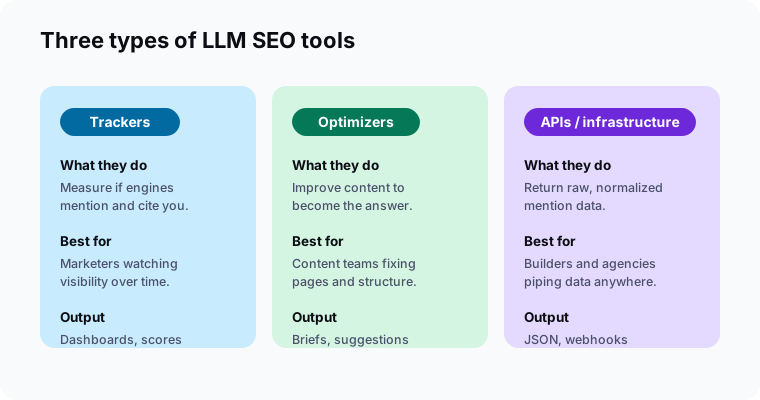
Most LLM SEO tools do one of three jobs. Some measure, some improve, and some hand you the raw data to build with. Knowing which job you need is the fastest way to choose.
Trackers
A tracker, sometimes called an LLM visibility tool, measures whether engines mention and cite you. It runs a prompt set, records the results, and shows them as scores and trends. This is what most marketers reach for first, and it is the category our roundup of AI visibility tools compares in detail.
Optimizers
An optimizer turns findings into edits. It looks at the pages you want cited and suggests structure, entities, and answers that models can lift more easily. Optimizers fit content teams who already know where they are weak and need a path to fix it.
APIs and infrastructure
An API returns the raw, normalized mention data behind both of the above. You send one request and get back mentions, cited sources, sentiment, and rank, ready to pipe into a warehouse, a client report, or your own product. This is the layer agencies and builders want, because it does not lock them into a single vendor dashboard.
What to look for in an LLM SEO tool
The label on a tool matters less than what it actually measures. Six things separate a tool you will trust from one you will quietly stop opening.
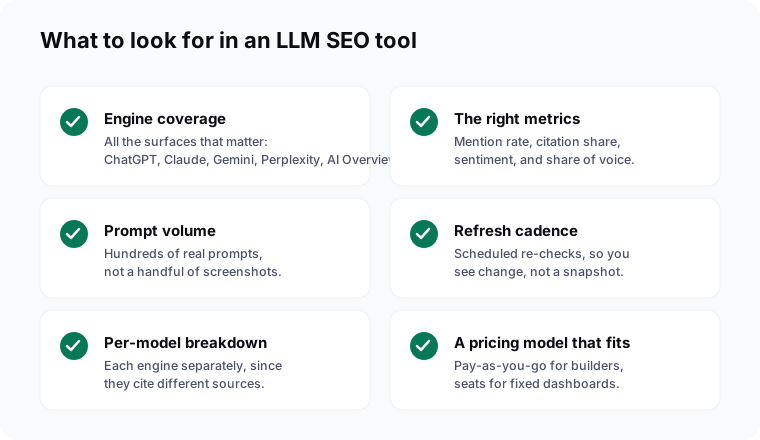
Start with engine coverage and metrics. A tool that only checks ChatGPT, or that hands you one rollup score, hides more than it shows. Then look at scale and cadence: it should run hundreds of real prompts and re-check them on a schedule, not store a one-time snapshot. Finally, confirm it breaks results out per model and that its pricing matches how you plan to use it.
Dashboard or API: which one fits you?
Once you know the type and the criteria, one practical fork remains. Do you want a finished dashboard, or the data to build your own view? The answer usually comes down to who you are.
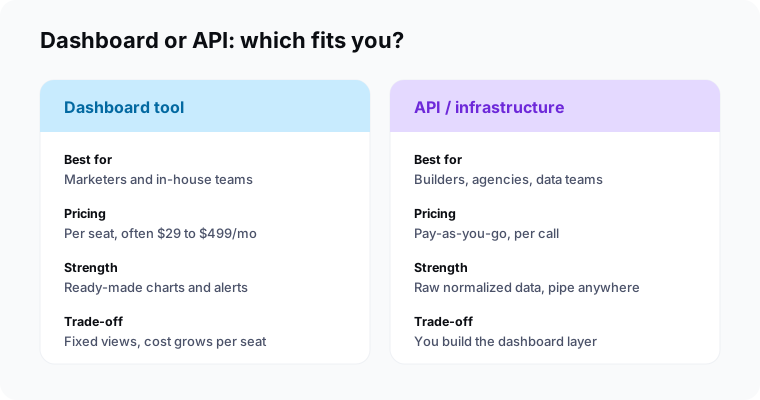
A dashboard is the faster start for an in-house marketer who wants charts and alerts today. An API wins when you run high or variable volume, serve multiple clients, or want the mention data inside a system you already own. Many teams use both: a dashboard to watch, an API to build reporting that scales.
Buy a dashboard when you want answers today. Buy an API when you want to own the data.The decision in one line
Why coverage across every engine matters
The biggest mistake is treating one model as the whole picture. Models cite different sources, so being strong in one tells you almost nothing about the others. Across an analysis of hundreds of millions of citations, only about 11% of cited domains overlapped between ChatGPT and Perplexity.
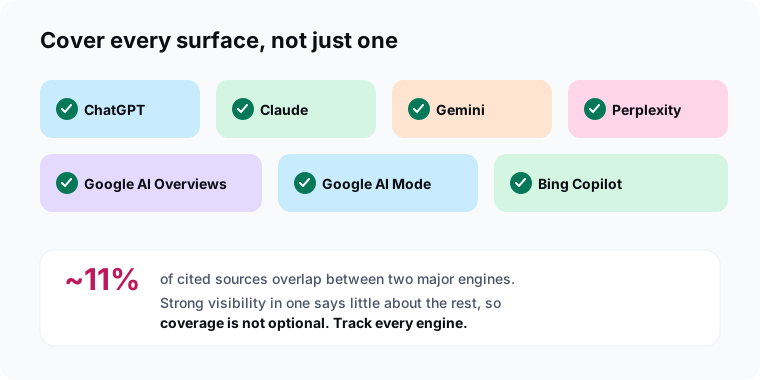
That gap is why a serious tool covers ChatGPT, Claude, Gemini, and Perplexity, plus the AI answers inside Google and Bing. If a tool skips engines your buyers use, the score it gives you is incomplete by design.
The metrics a good LLM SEO tool reports
Coverage gets you the data. Metrics make it useful. Four numbers tell you whether your LLM SEO is working, and a tool that does not report all four is leaving you guessing.
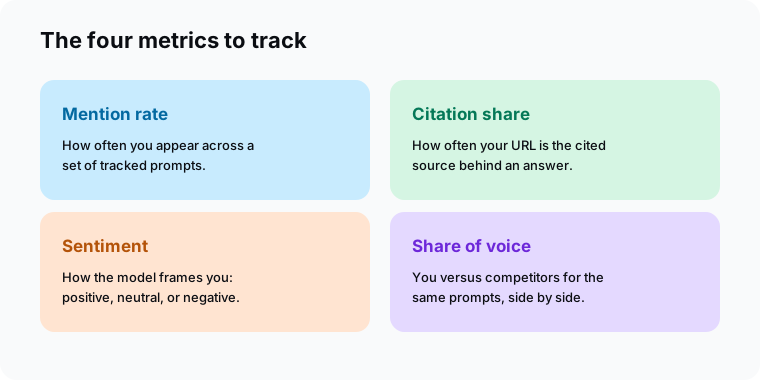
Mention rate tells you how often you show up. Citation share tells you how often you are the source the model links. Sentiment tells you how you are framed, and share of voice tells you how you stack up against competitors. Track all four per model and over time, the same way our AI visibility guide lays out.
How to track your brand in AI answers
You do not need every feature to start. You need a baseline and a habit. Here is the short version of the loop the better tools automate for you.
First, build a prompt set from the questions buyers actually ask, not a keyword list. Second, run that set across every engine and record mention rate, citation share, sentiment, and share of voice. Third, fix the highest-value pages that should be cited and are not. Then re-run the set on a schedule so you can prove the change. The full method sits in our generative engine optimization guide.
Frequently asked questions
What are LLM SEO tools?
What is the best LLM SEO tool?
Do I need an LLM SEO tool, or can I just check manually?
How much do LLM SEO tools cost?
What is an LLM visibility tool?
Start measuring before you optimize
The right LLM SEO tool is the one that covers every engine, reports the four metrics you act on, and fits how you work. Trackers tell you where you stand, optimizers help you improve, and an API lets you build the whole thing into systems you already run.
Pull your baseline across every model with MentionsAPI, fix the pages that should be cited and are not, then measure again in 30 days.