Search did not disappear. It moved inside language models.
LLM SEO is how you stay findable once it does.
LLM SEO, also called LLMO (large language model optimization), is the practice of structuring your content so large language models like ChatGPT, Gemini, and Claude understand, trust, and reuse it when they generate answers. The goal is not a ranking. It is to be the source the model cites and mentions inside the answer a user reads before they ever click.
What is LLM SEO?
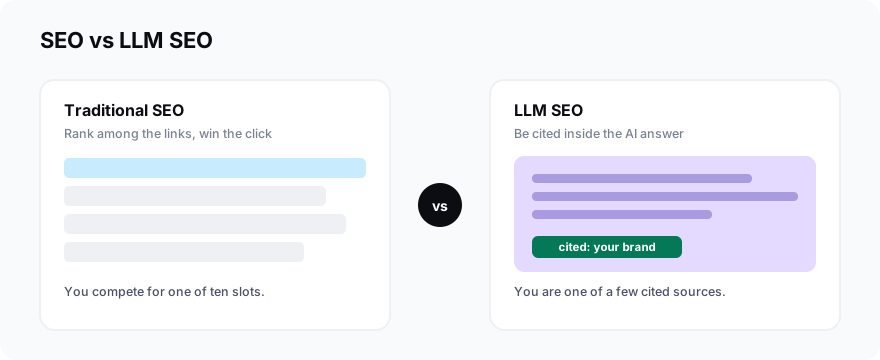
LLM SEO is the work of making your content the kind of source a language model can confidently pull into an answer. Models do not hand users a list of links. They generate a response and cite a few sources, so the goal shifts from ranking a page to being understood, trusted, and quoted. The surfaces are ChatGPT, Gemini, Claude, Perplexity, and the AI answers inside Google.
The name varies. Some call it LLMO, others LLM SEO, AI SEO, GEO, or AEO. The work underneath is the same, which we unpack in our comparison of AEO and GEO.
How is LLM SEO different from traditional SEO?
SEO optimizes a page to rank; LLM SEO optimizes content to be cited. SEO leans on keywords, backlinks, and rankings. LLM SEO leans on meaning, entity relationships, topical authority, and structure, so a model can extract and attribute your content. They are complementary, not competing: strong SEO feeds the models, and LLM SEO makes you the answer they generate.
| Traditional SEO | LLM SEO | |
|---|---|---|
| Goal | Rank a page | Be cited in the answer |
| Optimizes for | Keywords, backlinks | Meaning, entities, authority |
| Content shape | Keyword-targeted pages | Comprehensive, quotable passages |
| Success metric | Position, clicks | Mentions, citations, share of voice |
How do language models decide what to surface?
Models draw on two sources: what they learned in training, and what they retrieve live from the web when browsing. In both cases they favor content that is semantically complete, well structured, and backed by clear authorship and credible sources. Short, quotable passages that fully answer a question are the easiest for a model to lift with attribution.
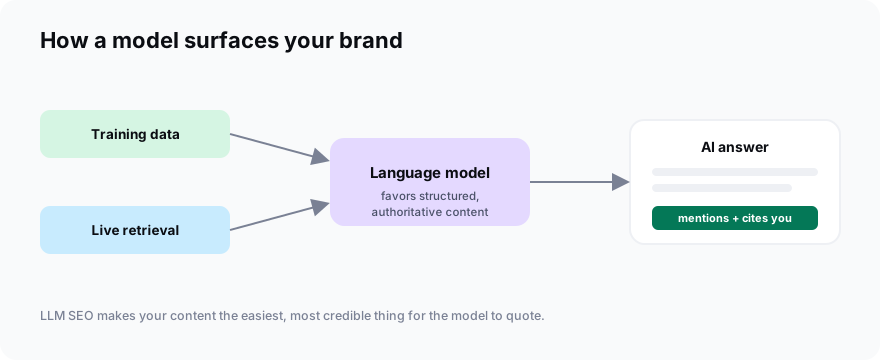
SEO earns a ranking. LLM SEO earns a citation inside the answer the user actually reads.The shift in one line
What metrics matter in LLM SEO?
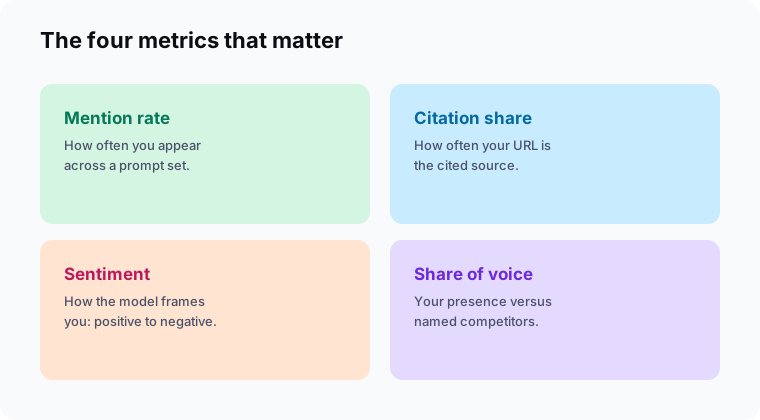
LLM SEO is measured by whether models mention and cite you, not by clicks. The four metrics that matter are mention rate (how often you appear in a prompt set), citation share (how often your URL is the source), sentiment (how you are framed), and share of voice (you versus competitors). One rollup score hides the detail, so track each model separately.
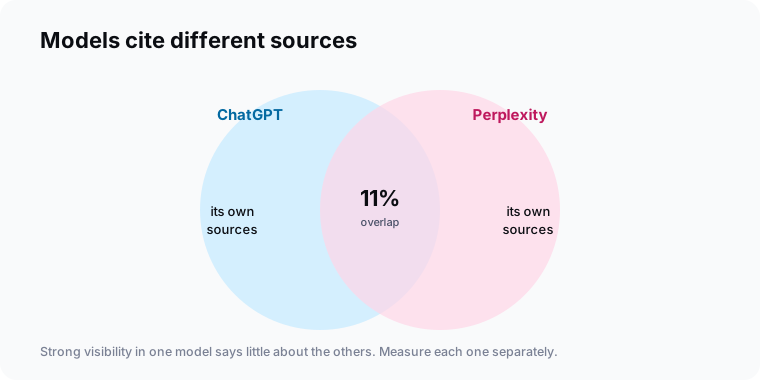
Why you have to measure every model separately
Models cite different sources, so being strong in one says little about the others. Across an analysis of hundreds of millions of citations, only about 11% of cited domains overlapped between ChatGPT and Perplexity. That gap means LLM SEO is a separate scoreboard on every model, not a single number.
How do you start with LLM SEO?
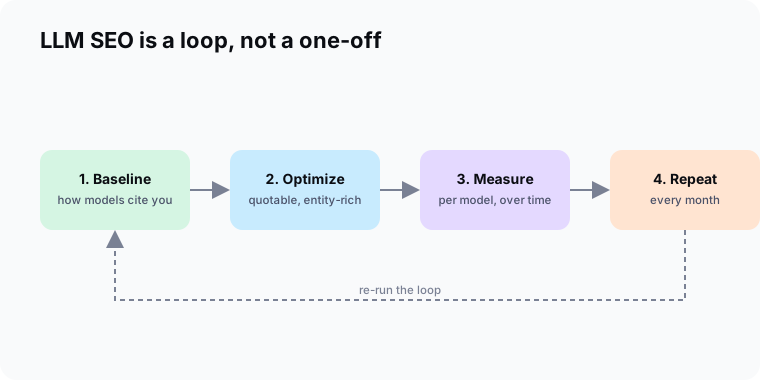
Start with a loop: baseline how models describe you, optimize your highest-value pages, then measure again. Build comprehensive, entity-rich content, lead each section with a short quotable answer, strengthen authorship and sources, and add structured data. Then re-check whether models cite you. The full citation mechanics are in our AI Overviews playbook, and the measurement method is in our AI visibility guide.
Frequently asked questions
What is LLM SEO?
Is LLM SEO the same as SEO?
Is LLM SEO the same as GEO and AEO?
How do I optimize for large language models?
How do I measure LLM SEO?
Become the source language models trust
LLM SEO is the discipline of being understood, trusted, and cited by the models your buyers now ask first. Build quotable, entity-rich, well-sourced content, then check whether the models actually cite you.
Pull your baseline across every model with MentionsAPI, fix the pages that should be cited and are not, and measure again in 30 days.