You can now buy an ad inside a ChatGPT answer. You still cannot buy the answer.
That gap is the whole story. Ads arrived in AI answers in 2026, and a lot of brands are about to spend money assuming a paid slot means the assistant will recommend them.
It does not. The ad and the recommendation are two different systems sharing one screen, and confusing them is an expensive mistake.
This piece is about that gap: where ads now show up, why a paid slot is not a citation, and what to actually do about it as a brand.
Are there really ads in AI answers now?
Yes. OpenAI began testing ads in ChatGPT in February 2026, and Google has been steadily adding ads to AI Overviews and AI Mode. Both keep the ad visually separate and labeled as sponsored. The generated answer, the part users actually read and trust, is still produced from what the model reads across the web, not from who paid.
So two things now live in the same answer window.
One is a paid slot you can buy. The other is an earned mention inside the answer that you cannot. Everything about AI visibility in 2026 comes down to telling those two apart.
An ad rents you a spot next to the answer. A citation makes you part of it.The whole piece in one line
How ads work in ChatGPT, Google, and Perplexity
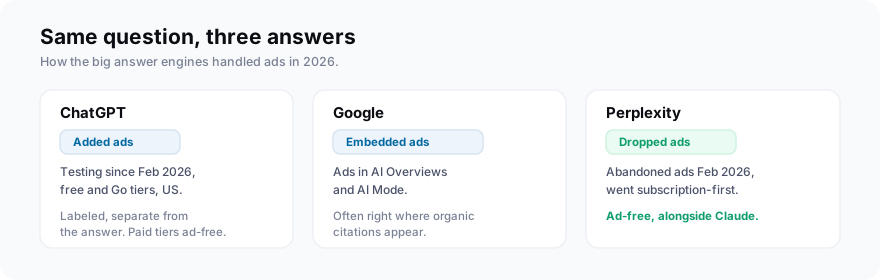
The three big answer engines took three different paths. ChatGPT added ads, Google embedded them deeper into search, and Perplexity walked away from them entirely. Each choice tells you something about where paid and earned visibility are heading.
ChatGPT is the newest to ads. OpenAI started testing them in February 2026 for logged-in adult users on the free and Go tiers in the US, then expanded to markets including the UK, Japan, and Brazil.
The paid tiers stay ad-free, ads are labeled sponsored, and OpenAI says they do not change the model's answers. Sensitive topics like health and politics are excluded, and no ads show to users under 18.
Google is further along. Its ads now sit with AI Overviews and inside AI Mode, sometimes as shopping placements right where organic citations appear. Semrush found that results pages carrying both an AI Overview and ads grew sharply toward the end of 2025, roughly doubling from a year earlier.
Google's version is the one to watch closely. Its ads can sit in the same space that used to hold only organic citations.
That means your earned mention and a paid placement can compete for the same real estate inside a single AI Overview. The answer still cites organically, but the paid slots crowd in around it, so the earned citation has to be strong enough to hold attention next to money.
Perplexity went the other way. It tested sponsored questions in 2024 and 2025, then dropped ads completely in February 2026 and went subscription-first, positioning itself with Claude as the ad-free option.
Why are ads coming to AI answers at all?
Because free AI is expensive to run, and someone has to pay for it. Every free ChatGPT or AI Overview answer costs real money in compute, and subscriptions alone do not cover hundreds of millions of free users. Ads are how the biggest engines plan to fund the free tier, the same way search ads once funded free search.
That is worth understanding, because it tells you where this goes.
The pressure to monetize is not going away, so ads in AI answers will spread, not shrink. The engines that can sell ads at scale, ChatGPT and Google, are leaning in.
The ones betting on trust instead, Perplexity and Claude, are leaning out. Both bets can work, but they push brands toward the same conclusion: the paid slot is now a permanent feature of some answers, so you have to plan for a screen that mixes bought and earned visibility.
Do ads change what the AI recommends?
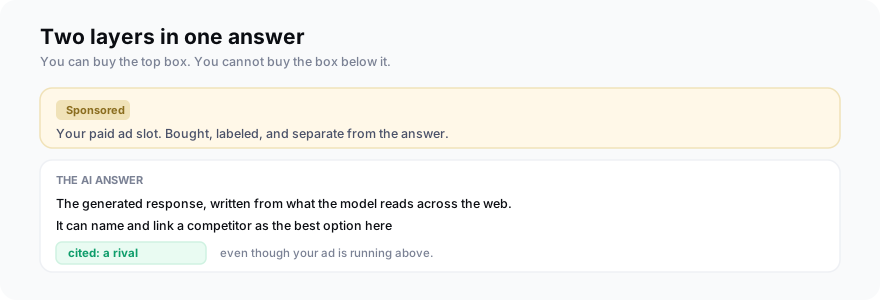
No, not directly. A sponsored placement buys you a labeled ad slot, not a place in the generated answer. The model can run your ad and still recommend a competitor, cite a third-party page, or describe you with stale information in the response itself. OpenAI and Google both say the paid layer and the answer layer stay separate.
This trips people up, so it is worth being blunt.
You can pay for an ad and lose the recommendation in the same answer. The user sees your sponsored slot, reads the assistant's actual advice, and follows the advice.
Picture a project tool buying a ChatGPT ad on the query best tool for remote teams. The ad runs at the top, clearly labeled.
Then the answer below it walks through three tools and recommends a competitor, because that competitor has the clearer, better-sourced pages. The advertiser paid for the slot and still lost the sentence that actually moves the buyer. That is the whole risk of treating an ad as if it were an endorsement.
That is not a bug. It is the design, and it is what keeps AI answers worth reading. If money could rewrite the recommendation, users would stop trusting the answer, which is the exact fear that pushed Perplexity to drop ads.
Why organic citation gets more valuable when ads arrive
Because a citation is the one thing money cannot buy. When ads fill the paid slots, the earned mention inside the answer becomes the scarce, trusted signal, the assistant vouching for you in its own words. You can outspend a competitor on ads and still lose the recommendation to them if their content is the better source.
Users already sense the difference. A labeled ad reads as a purchase.
A citation reads as the assistant's honest answer. In a screen that now mixes both, the citation carries the trust, which is exactly why it holds its value as ads spread around it.
This is the logic behind Perplexity's bet. Its team told the Financial Times that ads would make a user "start doubting everything," and that they are "in the accuracy business." Whether or not that pays off for Perplexity, it names the thing: trust in the answer is the product, and citations are how you earn a piece of it.
There is a hard number behind the soft point, too. Most people read the AI answer and never click a source link, so the mention inside the answer is often the only impression you get.
If that mention is a competitor and your name only shows in a labeled ad, the user walks away with the competitor as the recommendation and you as the sponsor they scrolled past. The earned line is where the actual decision gets made.
Ads vs citations: the two visibility layers
Here is the split every brand needs to hold in its head. Read it as two separate scoreboards, because winning one tells you nothing about the other.
| Paid ad | Earned citation | |
|---|---|---|
| How you get it | Buy it | Earn it with content |
| Where it sits | A labeled sponsored slot | Inside the AI answer |
| User reads it as | An advertisement | The assistant's recommendation |
| Can a rival outspend you | Yes | No |
| Turns off when you stop paying | Yes | No |
| Trust it carries | Lower | Higher |
What should brands do about ads in AI answers?
Treat ads and citations as two jobs, not one. Use ads for fast, measurable awareness in the labeled slot, and keep investing in the content that earns the citation inside the answer, because that is the part a competitor cannot outbid you for. The mix depends on your margins, but the earned citation is the asset that compounds.
Do not let an ad budget paper over a citation problem.
If ChatGPT runs your ad but recommends a rival, more ad spend will not fix that. Better, clearer, better-sourced pages will, because that is what the answer is built from.
There is a sequencing point here as well. Fix the citation first, then buy the ad.
An ad that drives a user to a query where the answer already recommends you compounds, because the paid awareness and the earned trust point the same way. An ad that sends people to an answer naming your competitor just pays to advertise their strength.
- Run ads where they are measurable, and read them as awareness, not endorsement.
- Audit whether the same engines that run your ad actually cite you in the answer.
- Fix the citation gap with content, since no ad spend closes it.
- Keep your presence strong on the engines that stay ad-free, like Perplexity and Claude.
- Report paid and earned visibility as two separate numbers, never blended into one.
The mechanics of earning the citation itself are in our guides on ranking in AI Overviews and how AI Overviews work.
How do you track paid and earned AI visibility?
Track them separately, because they answer different questions. Your ad platform reports impressions and clicks on the paid slot. It says nothing about whether the AI actually cited you in the answer, which is a separate check: run your buyer prompts through each engine and record who the generated response names and links.
One number cannot cover both. An ad dashboard that looks healthy can sit right next to an answer that never mentions you.
So watch the earned line on its own. Query the engines with the questions your buyers ask, parse who gets cited, and track your share over time, so you can see whether your content is winning the recommendation your ads cannot buy.
The two lines together tell a story neither tells alone. High ad spend with a flat citation line means you are renting attention you have not earned.
A strong citation line with no ads means you own the recommendation and could amplify it with paid reach if the math works. You can only see which situation you are in when you measure the paid slot and the earned mention as separate numbers.
Frequently asked questions
Are there ads in ChatGPT now?
Do AI ads change what the model recommends?
Can I pay to get cited by AI?
Does Perplexity have ads?
Is an ad in AI Overviews the same as being cited?
Should I buy AI ads or invest in getting cited?
Separate the ad from the answer, then measure both
Do this next: for your top five buyer prompts, check each engine for two things separately. Did your ad run, and did the answer actually cite you? The gap between those two is your real AI visibility problem.
Then keep them apart for good. Buy ads where they pay, invest in the content that earns the citation, and pull a per-engine citation baseline with MentionsAPI so you can watch the earned line that no budget can purchase.
Ads rent attention. Citations own it.